
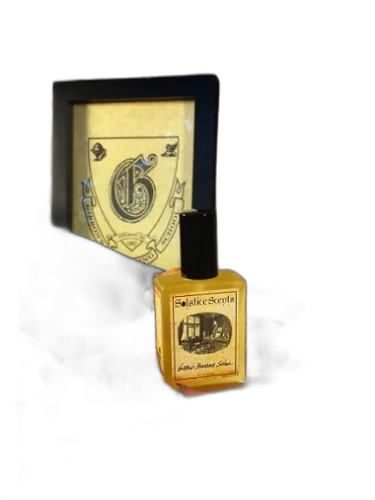

Gibbon's Boarding School Solstice Scents
Fragrance Story
Gibbon's Boarding School by Solstice Scents is a fragrance for women and men. The nose behind this fragrance is Angela St.John.
Composition Profile
About the Perfumer

Angela St.John
Angela St. John is the founder and creative force behind Solstice Scents, an independent perfume house known for its atmospheric and narrative-driven compositions. Her style blends natural and synthetic materials to evoke specific places, seasons, and moods, often with a dark, nostalgic, or gourmand bent. Notable creations from her catalog include the petrichor-laced After The Rain, the rich amber of Amber Coeur, and the woodland depth of Black Forest, each showcasing her talent for immersive storytelling through scent.
Fragrance Notes
All Notes
Complete scent profile
 Leather
 Woody Notes
 Tobacco
 Amber
Amber
 Paper
Paper
 Ozonic notes
Character Profile
The Gibbon Archetype: Portrait of Gibbon's Boarding School Solstice Scents
Essence
To wear Gibbon’s Boarding School by Solstice Scents is to carry the aura of an old library-leather-bound books, polished wood, faint traces of ink, and the quiet hum of intellectual pursuit. This fragrance is not for the restless or the frivolous; it is for the one who finds solace in structure, history, and the weight of tradition. The person who favors this scent is, at their core, a Scholar-an archetype defined by their reverence for knowledge, their disciplined mind, and their quiet but unshakable sense of order.
Shadow
Yet, for all their wisdom, the Scholar is not immune to folly. Their greatest strength-their intellect-can become their cage. They may mistake knowledge for experience, believing that understanding a thing in theory is the same as living it. This can lead to a kind of emotional austerity, a reluctance to engage with life’s messier, more unpredictable aspects.
Their love of order can curdle into rigidity. They may dismiss ideas that challenge their carefully constructed worldview, not out of malice but out of an unconscious fear of chaos. Their relationships may suffer from their tendency to overanalyze, to dissect emotions rather than feel them. At their worst, they become the aloof professor, brilliant but untouchable, more comfortable with books than with people.
Conclusion
This individual thrives in environments where intellect is currency. They are likely drawn to academia, literature, or any field where ideas are preserved and dissected. Their personal library is carefully curated, their books arranged not merely by genre but by some deeper, almost sacred system known only to them. Their taste in decor leans toward the antique-dark wood, brass accents, the faint scent of aged paper lingering in the air.
They are not a recluse, but they are selective in their social engagements. Conversation is an art, and they prefer depth to breadth. Their friendships are few but enduring, built on mutual respect and shared intellectual curiosity. Romantic partners must understand their need for solitude, their occasional detachment, and their tendency to retreat into thought.
Their philosophy is one of measured skepticism. They distrust dogma but respect tradition. They believe in the slow accumulation of wisdom rather than sudden revelation. Patience is their virtue, precision their weapon. They are the kind of person who corrects historical inaccuracies in films-not out of pedantry, but because truth matters.
Similar Fragrances
Fragrances with a comparable profile - shared accords, notes, and character.
Solstice Scents
Gibbon's Boarding School Solstice Scents
Shared accords: amber, animalic, leather

Almah Parfums 1948
Camden Stories Almah Parfums 1948
Shared accords: amber, animalic, leather
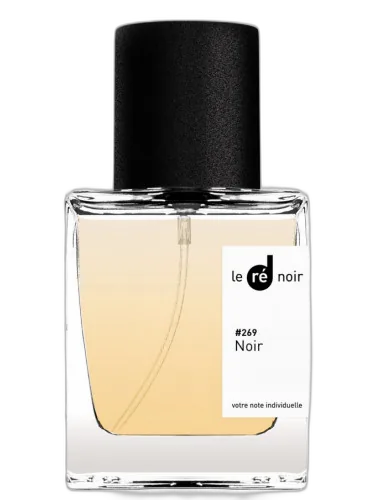
Le Ré Noir
#269 Noir Le Ré Noir
Shared accords: amber, animalic, sweet

Portland General Store
Professor Portland General Store
Shared accords: animalic, leather, smoky

Acidica Perfumes
Hygge New Year (2023) Acidica Perfumes
Shared accords: amber, animalic, leather