
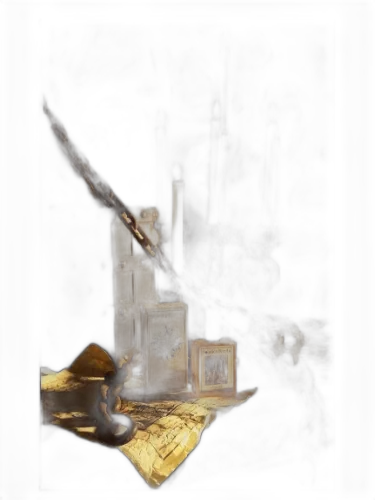

Inquisitor Solstice Scents
At a glance
Is Inquisitor Solstice Scents worth trying?
Inquisitor by Solstice Scents is a fragrance for women and men.
- Best match
- Evening wear in Fall
- Performance feel
- Excellent longevity with Strong sillage
- Signature profile
- amber, smoky, leather with Leather, Smoke, Fire
The first impression
Inquisitor by Solstice Scents is a fragrance for women and men. Inquisitor was launched in 2019. The nose behind this fragrance is Angela St.John.
What shapes the scent
The perfumer behind it

Angela St.John
Angela St. John is the founder and creative force behind Solstice Scents, an independent perfume house known for its atmospheric and narrative-driven compositions. Her style blends natural and synthetic materials to evoke specific places, seasons, and moods, often with a dark, nostalgic, or gourmand bent. Notable creations from her catalog include the petrichor-laced After The Rain, the rich amber of Amber Coeur, and the woodland depth of Black Forest, each showcasing her talent for immersive storytelling through scent.
Notes pyramid
All Notes
Complete scent profile
 Leather
 Smoke
Smoke
 Fire
Fire
 Beeswax
 Palo Santo
 Amber
Amber
 Myrrh
Myrrh
 Olibanum
 Sandalwood
 Agarwood (Oud)
 Benzoin
 Palisander Rosewood
 Vetiver
 Patchouli
The mood it creates
The Wanderer Archetype: Portrait of Inquisitor Solstice Scents
Essence
The person who favors Inquisitor by Solstice Scents is most closely aligned with the Sage-an archetype defined by relentless curiosity, intellectual rigor, and a hunger for hidden truths. Like the alchemist in their tower or the scholar poring over ancient manuscripts, they are driven by the need to know, to peel back layers of illusion and arrive at something pure, something real. The Sage does not seek knowledge for power alone, but for the clarity it brings-an understanding of the world’s mechanisms, both seen and unseen.
Yet the Sage’s shadow is dogmatism-the hardening of inquiry into rigid certainty, the transformation of wisdom into doctrine. The scent itself-dark resins, aged woods, and a whisper of something burning-hints at this duality: the sacred and the severe, the illuminated mind and the inquisitor’s flame.
Relationships
They are not unkind, but they are often distant. Their love is expressed through shared inquiry-long conversations at midnight, the exchange of books underlined in ink. They seek partners who can match their intellectual intensity, but such people are rare. More often, they find themselves alone, not from misanthropy but from the simple fact that few can keep pace with their mind.
Friendships are few but profound. They do not suffer fools, but they are fiercely loyal to those who earn their respect. Their wit is sharp, sometimes cutting; they do not soften their words for the sake of politeness. This can make them intimidating, even off-putting, to those who prefer warmth over clarity.
Shadow
When unbalanced, the Sage becomes the Zealot-a figure so convinced of their own rightness that they dismiss all dissent as ignorance. Their pursuit of truth hardens into dogma; their skepticism curdles into cynicism. They may grow contemptuous of those who do not share their exacting standards, forgetting that wisdom must sometimes bend to compassion.
The scent of Inquisitor-smoldering, austere-captures this danger. It is not a fragrance of comfort but of conviction. And conviction, untempered, can burn as easily as it illuminates.
Conclusion
Their tastes are deliberate, refined, but never ostentatious. They prefer books with cracked spines and marginalia, wines that demand contemplation, music that unfolds slowly-Gregorian chants, dark ambient soundscapes, or the measured cadence of a Bach fugue. Their home is a curated space: a desk cluttered with notes, shelves lined with esoteric texts, a single candle burning low. They do not decorate for others; every object is a tool or a talisman.
Philosophy is not an abstraction for them but a lived discipline. They might be drawn to Stoicism for its emphasis on self-mastery, or to Nietzsche for his insistence on questioning all inherited values. Truth, for them, is not a fixed point but a process-an endless interrogation. Yet this very pursuit can isolate them. Their standards are exacting, and they have little patience for those who think superficially.
If you like this, try these
Fragrances with a comparable profile - shared accords, notes, and character.
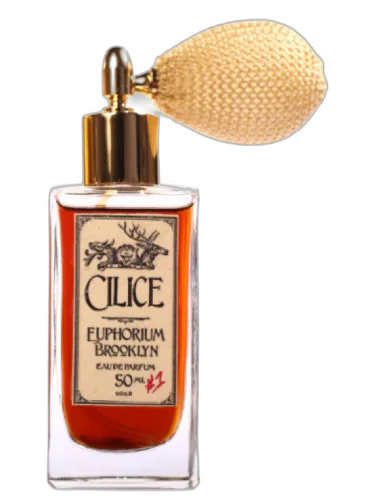
Euphorium Brooklyn
Cilice Euphorium Brooklyn
Shared top notes: agarwood (oud), beeswax, benzoin

The Dua Brand
King's Precious Oud The Dua Brand
Shared top notes: agarwood (oud), amber, leather
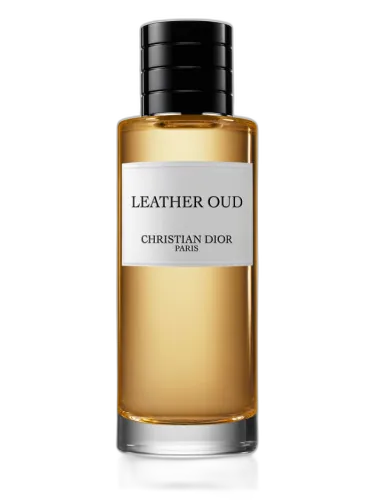
Dior
La Collection Couturier Parfumeur Leather Oud Dior
Shared top notes: agarwood (oud), amber, beeswax
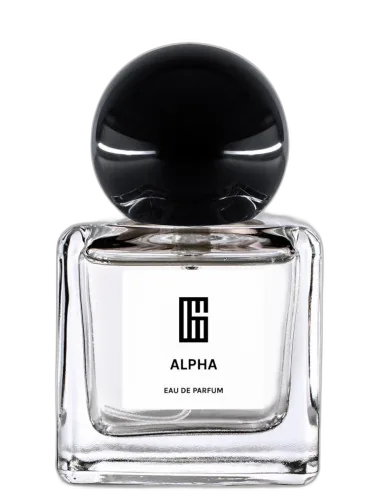
G Parfums
Alpha G Parfums
Shared top notes: agarwood (oud), amber, leather
Prin
Varuek (วฤค) Prin
Shared top notes: amber, beeswax, leather