
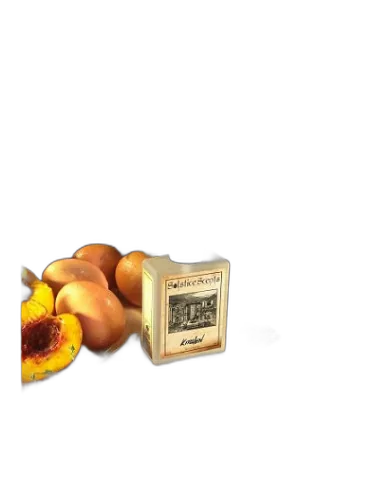

Kitchen Solstice Scents
At a glance
Is Kitchen Solstice Scents worth trying?
Kitchen by Solstice Scents is a fragrance for women and men.
- Best match
- Casual wear in Fall
- Performance feel
- Good longevity with Moderate sillage
- Signature profile
- sweet, vanilla, warm spicy with Spices, Vanilla, French pastries
The first impression
Kitchen by Solstice Scents is a fragrance for women and men. The nose behind this fragrance is Angela St.John.
What shapes the scent
The perfumer behind it

Angela St.John
Angela St. John is the founder and creative force behind Solstice Scents, an independent perfume house known for its atmospheric and narrative-driven compositions. Her style blends natural and synthetic materials to evoke specific places, seasons, and moods, often with a dark, nostalgic, or gourmand bent. Notable creations from her catalog include the petrichor-laced After The Rain, the rich amber of Amber Coeur, and the woodland depth of Black Forest, each showcasing her talent for immersive storytelling through scent.
Notes pyramid
All Notes
Complete scent profile
 Spices
 Vanilla
 French pastries
 Peach
Peach
 Caramel
 Pumpkin
 Sugar
Sugar
 Smoke
Smoke
The mood it creates
The Alchemist Archetype: Portrait of Kitchen Solstice Scents
Essence
The person who gravitates toward Kitchen Solstice Scents is most closely aligned with the Hearth-Keeper, a variant of the Mother archetype-though not in the traditional, nurturing sense. This is not the sentimental caretaker, but the alchemist of the domestic realm, the one who transforms the mundane into the sacred through scent, ritual, and memory. They are drawn to fragrances that evoke warmth, spice, and the ghost of something just beyond reach-vanilla-dusted pastries, simmering herbs, the faint smokiness of a hearth long extinguished.
Their love for this scent reveals a soul rooted in sensual nostalgia, a longing for the tactile poetry of home-not as a static place, but as an ever-shifting atmosphere they carry within themselves.
Style & Aesthetic
Their style is an extension of their scent-rich, textured, with a hint of the untamed. They favor deep, earthy tones, soft knits that carry the faint aroma of woodsmoke, jewelry with weight and history. Their home is a carefully curated sanctuary: shelves lined with well-worn books, jars of dried herbs, candles burned down to their last inch. There is always something simmering on the stove, something fermenting in a dark corner.
But beneath the warmth lies a refusal to be entirely tamed. They are not the cozy grandmother of fairy tales-they are the witch who knows which herbs heal and which ones poison. Their comfort has teeth.
Philosophy & Values
To them, life is not lived in grand gestures but in the quiet accumulation of moments-the slow unfurling of steam from a teacup, the way cinnamon sticks darken when left too long in mulled wine. They believe in the sanctity of small things, the way a scent can resurrect a forgotten afternoon, a voice, a touch. Their philosophy is one of embodied memory, where the past is not dead but preserved in sensory fragments.
Yet, this reverence for the ephemeral can also be their undoing. They risk becoming trapped in their own nostalgia, mistaking the past for something more perfect than it was. Their shadow whispers that if they could just recreate the right atmosphere-the right scent-they might finally feel at peace. But peace, like fragrance, is fleeting.
Relationships
In love and friendship, they are the steady flame-not the blazing bonfire of passion, but the slow-burning ember that outlasts storms. They express care through acts of service: a meal prepared just so, a scarf knitted with hands that remember every stitch. They are the one who remembers birthdays, anniversaries, the way you take your coffee.
Yet their shadow emerges when their devotion curdles into control. They may resent those who do not appreciate their efforts, who take their warmth for granted. They fear being unseen, and so they sometimes smother, mistaking possession for love.
Shadow
Their greatest weakness is their resistance to impermanence. They cling to what was, to what they believe should be, and in doing so, they sometimes fail to live in what is. Their nostalgia can become a prison, their rituals a way of avoiding the present.
And when life refuses to conform to their vision-when people leave, when scents fade-they risk collapsing into bitterness. The same hands that craft beauty can also clutch too tightly, leaving marks on what they love most.
Conclusion
But the Hearth-Keeper is, at their core, an alchemist. They do not merely preserve-they transform. Their gift is in taking the raw materials of existence-memory, scent, the passage of time-and distilling them into something richer.
If they can learn to release as fiercely as they hold, they become not just keepers of the flame, but the flame itself-ever-shifting, ever-renewing.
If you like this, try these
Fragrances with a comparable profile - shared accords, notes, and character.

Sweet Essentials
Pumpkin Crème Brulee Sweet Essentials
Shared top notes: caramel, pumpkin, vanilla

Hilde Soliani
Avatar Hilde Soliani
Shared top notes: caramel, sugar, vanilla

Arabesque
Malikah Arabesque
Shared top notes: caramel, vanilla

L'Entropiste
Dorian's Spleen L'entropiste
Shared top notes: caramel, smoke, spices

Il Profumiere
Caramel Vanille Il Profumiere
Shared top notes: caramel, vanilla