
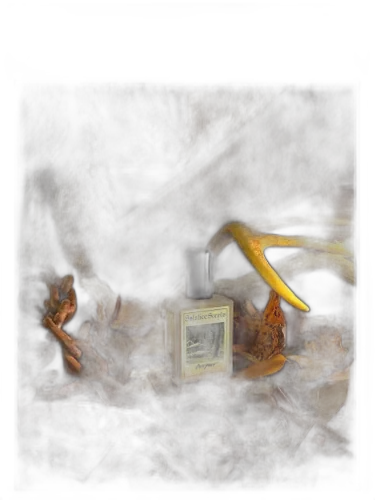

Outpost Solstice Scents
At a glance
Is Outpost Solstice Scents worth trying?
Outpost by Solstice Scents is a fragrance for women and men.
- Best match
- Casual wear in Winter
- Performance feel
- Good longevity with Moderate sillage
- Signature profile
- woody, aromatic, sweet with Spruce, Sugar, Fir
The first impression
Outpost by Solstice Scents is a fragrance for women and men. The nose behind this fragrance is Angela St.John.
What shapes the scent
The perfumer behind it

Angela St.John
Angela St. John is the founder and creative force behind Solstice Scents, an independent perfume house known for its atmospheric and narrative-driven compositions. Her style blends natural and synthetic materials to evoke specific places, seasons, and moods, often with a dark, nostalgic, or gourmand bent. Notable creations from her catalog include the petrichor-laced After The Rain, the rich amber of Amber Coeur, and the woodland depth of Black Forest, each showcasing her talent for immersive storytelling through scent.
Notes pyramid
All Notes
Complete scent profile
 Spruce
 Sugar
Sugar
 Fir
Fir
 Amber
Amber
 Woody Notes
 Mistletoe
 Myrica
The mood it creates
The Wanderer Archetype: Portrait of Outpost Solstice Scents
Essence
Archetype: The Explorer
The one who wears Outpost Solstice Scents is not bound by the well-trodden paths of convention. Their spirit is restless, their mind attuned to the call of distant horizons. This fragrance-a blend of fir, leather, smoke, and distant spices-speaks of solitude, resilience, and the quiet thrill of discovery. They are the Explorer, the archetype that seeks not just new places, but new ways of being.
Philosophy & Values
Freedom is their creed, but not in the reckless sense. Their freedom is deliberate, hard-won. They distrust dogma, preferring to test ideas against experience. If they have a religion, it is the sanctity of the unknown. They believe in self-reliance but not isolation-they understand that even the loneliest path is shaped by those who walked before them.
Their relationships are few but deep. They do not collect people; they choose companions who understand the value of silence, who do not demand constant reassurance. Love, for them, is not possession but mutual wandering-two paths intersecting, then diverging, without resentment.
Shadow
Yet the Explorer is not without flaws. Their restlessness can become a prison-always moving, never arriving. They may mistake motion for growth, fleeing discomfort instead of facing it. Commitment frightens them; they fear stagnation more than loneliness.
Their independence can curdle into detachment. They may abandon people too soon, mistaking intimacy for confinement. Their love of solitude sometimes masks a fear of vulnerability-they would rather be alone than risk being known too deeply.
And when the road runs out, when there are no more frontiers to chase, they may falter. The greatest challenge for the Explorer is not the journey outward, but the return inward-to sit with themselves, to find meaning not in the next horizon, but in the stillness they have spent a lifetime avoiding.
Conclusion
Their life is a series of departures-some literal, others philosophical. They may not always travel physically, but their mind is never still. They are drawn to landscapes that mirror their inner world: dense forests, windswept cliffs, abandoned outposts where nature slowly reclaims human traces. Their tastes reflect this-books filled with solitary journeys, music that evokes vastness, art that captures the sublime.
They dress for function over fashion, favoring sturdy boots, worn leather jackets, and fabrics that age with character. Their home is sparse but meaningful-a few well-chosen objects, each with a story. They disdain clutter, not out of minimalism for its own sake, but because excess weighs down the soul.
If you like this, try these
Fragrances with a comparable profile - shared accords, notes, and character.

DSH Perfumes
Seve De Pin Dsh Perfumes
Shared accords: amber, aromatic, conifer
Olympic Orchids Artisan Perfumes
Blackbird Olympic Orchids Artisan Perfumes
Shared top notes: amber

DSH Perfumes
The Voices Of Trees Dsh Perfumes
Shared top notes: fir, woody notes

Incarna parfums
Secret Gift Incarna Parfums
Shared top notes: amber, fir
Imaginary Authors
Cape Heartache Imaginary Authors
Shared top notes: fir, woody notes