
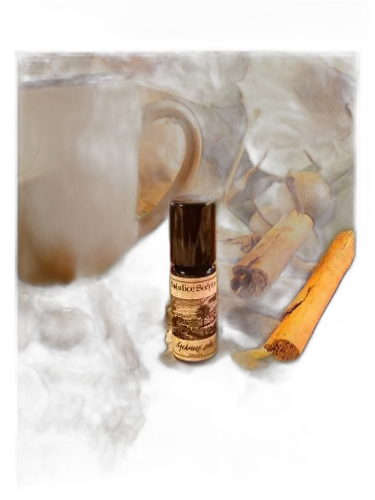

Sycamore Chai Solstice Scents
At a glance
Is Sycamore Chai Solstice Scents worth trying?
Sycamore Chai by Solstice Scents is a Oriental Spicy fragrance for women and men.
- Best match
- Casual wear in Fall
- Performance feel
- Good longevity with Moderate sillage
- Signature profile
- warm spicy, cinnamon, green with Cinnamon, Tea, Cardamom
The first impression
Sycamore Chai by Solstice Scents is a Oriental Spicy fragrance for women and men. The nose behind this fragrance is Angela St.John.
What shapes the scent
The perfumer behind it

Angela St.John
Angela St. John is the founder and creative force behind Solstice Scents, an independent perfume house known for its atmospheric and narrative-driven compositions. Her style blends natural and synthetic materials to evoke specific places, seasons, and moods, often with a dark, nostalgic, or gourmand bent. Notable creations from her catalog include the petrichor-laced After The Rain, the rich amber of Amber Coeur, and the woodland depth of Black Forest, each showcasing her talent for immersive storytelling through scent.
Notes pyramid
All Notes
Complete scent profile
 Cinnamon
 Tea
Tea
 Cardamom
 Ginger
 Vanilla
 Cloves
 Marshmallow
 Pumpkin
 Bergamot
The mood it creates
The Wanderer Archetype: Portrait of Sycamore Chai Solstice Scents
Essence
This person is, at their core, a Seeker-an archetype defined by restlessness, curiosity, and an insatiable hunger for depth. The fragrance they love, Sycamore Chai Solstice Scents, is a blend of warmth and melancholy: spiced chai, toasted vanilla, crisp autumn leaves, and a whisper of distant woodsmoke. It is neither entirely sweet nor entirely bitter, neither wholly comforting nor wholly unsettling-much like the Seeker themselves.
They are drawn to the liminal, the spaces between seasons, between certainty and mystery. Their soul resonates with the scent of transition, of something familiar yet elusive. The Seeker does not settle; they are always halfway between arrival and departure, between contentment and longing.
Style & Aesthetic
Their tastes are rich but restrained-they prefer the subtle over the obvious. They might wear layers of wool and linen in muted earth tones, favoring textures that feel lived-in rather than pristine. Their home is a sanctuary of books, dried botanicals, and well-worn ceramics. They drink black tea in the morning but savor a single square of dark chocolate in the evening, as if rationing pleasure to make it last.
Music is an intimate companion-perhaps folk melodies with haunting minor chords, or ambient soundscapes that evoke mist-covered hills. They are drawn to art that feels unfinished, leaving room for interpretation. A half-empty sketchbook sits on their desk, filled with fragments of ideas rather than completed works.
Philosophy & Values
They believe in the sacredness of solitude but fear stagnation. Their philosophy is one of becoming, not being-a constant unfolding rather than a fixed state. They value authenticity above all, yet they are acutely aware of how easily authenticity can become a performance.
They distrust dogma but are not cynical; instead, they seek meaning in small, private rituals-the way steam curls from a teacup, the sound of footsteps on fallen leaves. They are spiritual but not religious, finding the divine in the quiet moments between thoughts.
Relationships
Their relationships are deep but few. They attract others with their quiet intensity, but few stay long enough to unravel their layers. They are the confidant, the listener, the one who asks the right questions-but they rarely reveal their own vulnerabilities.
Romantically, they are drawn to those who mirror their own complexity-someone who is neither too available nor too distant. They crave intimacy but fear engulfment, so they love in cycles: drawing close, then retreating. Their partners may mistake this rhythm for indifference, when in truth it is self-preservation.
Shadow
Paralyzed by possibility-they can become so lost in searching that they never commit. Emotionally elusive-they withdraw when pressed, leaving others feeling shut out. Prone to melancholy-their love of transitions means they struggle to fully inhabit the present. Self-mythologizing-they sometimes romanticize their own solitude, mistaking isolation for depth.Conclusion
The lover of Sycamore Chai is neither fully at home in the world nor entirely detached from it. They are most alive in the golden hour, when light is neither day nor night. Their greatest strength-their refusal to be defined-is also their greatest weakness.
But perhaps this is the fate of the Seeker: to wander the edges, to live in the in-between. And though they may never arrive, they find a strange kind of peace in the journey itself.
If you like this, try these
Fragrances with a comparable profile - shared accords, notes, and character.

B96
Cinnamon Cedarwood B96
Shared top notes: cardamom, cinnamon, ginger

Hilde Soliani
Buona Sera Hilde Soliani
Shared top notes: cinnamon, cloves

Baruti
Chai Baruti
Shared top notes: cardamom, cinnamon, cloves

Possets Perfume
Gingerbread Whorehouse Perfume Oil Possets Perfume
Shared top notes: cinnamon, cloves, ginger

L'acqua di Fiori
Urban Code L'acqua Di Fiori
Shared top notes: bergamot, cardamom, cinnamon