


Whispers In The Night Solstice Scents
At a glance
Is Whispers In The Night Solstice Scents worth trying?
Whispers in the Night by Solstice Scents is a fragrance for women and men.
- Best match
- Evening wear in Fall
- Performance feel
- Very Good longevity with Moderate sillage
- Signature profile
- white floral, tuberose, vanilla with Tuberose, Vanilla, Black Vanilla Husk
The first impression
Whispers in the Night by Solstice Scents is a fragrance for women and men. The nose behind this fragrance is Angela St.John.
What shapes the scent
The perfumer behind it

Angela St.John
Angela St. John is the founder and creative force behind Solstice Scents, an independent perfume house known for its atmospheric and narrative-driven compositions. Her style blends natural and synthetic materials to evoke specific places, seasons, and moods, often with a dark, nostalgic, or gourmand bent. Notable creations from her catalog include the petrichor-laced After The Rain, the rich amber of Amber Coeur, and the woodland depth of Black Forest, each showcasing her talent for immersive storytelling through scent.
Notes pyramid
All Notes
Complete scent profile
 Tuberose
 Vanilla
Black Vanilla Husk
Vanilla
Black Vanilla Husk
 Jasmine
 Coconut
 Ylang-Ylang
White Amber
Ylang-Ylang
White Amber
 Sandalwood
 Amber
Amber
 Oakmoss
 Patchouli
Clove
Patchouli
Clove
 Star Anise
 Lavender
 Musk
Musk
 Cinnamon
 Agarwood (Oud)
 Bergamot
The mood it creates
The Mystic Archetype: Portrait of Whispers In The Night Solstice Scents
Essence
Whispers in the Night by Solstice Scents is a fragrance of hidden depths-warm vanilla, tropical florals, and a whisper of spice, evoking the quiet intensity of a moonlit garden. The person who cherishes this scent is not one for the glaring light of day but thrives in the liminal spaces between dusk and dawn. They are the Mystic, an archetype defined by their inward gaze, their hunger for meaning beyond the surface, and their ability to perceive the unseen threads weaving through life.
Style & Aesthetic
Their style is an extension of their inner world-subtle, deliberate, with an undercurrent of mystery. They favor deep jewel tones, flowing fabrics, and textures that invite touch: velvet, aged leather, silk that catches the light just so. Their jewelry is often antique or symbolic-a moonstone ring, a pendant with an obscure sigil. Their home is a sanctuary of dim lighting, incense, and carefully curated objects: a dried rose in a glass dome, a well-worn deck of tarot cards, a collection of handwritten notes tucked into the pages of journals.
They appreciate beauty, but not the obvious kind. A cracked teacup holds more meaning to them than a flawless one; a half-burned candle tells a story.
They thrive in quiet environments-a dimly lit café in the late hours, a forest path at twilight, their own bedroom with the curtains drawn against the midday sun. They may be drawn to creative or introspective professions-writing, therapy, art, or spiritual guidance. Routine bores them unless it is imbued with ritual: morning tea steeped in silence, evening walks under the stars.
But the shadow of this lifestyle is a tendency toward isolation. The Mystic can become so enamored with their own inner world that they neglect the necessity of grounding. They may romanticize melancholy, mistaking solitude for wisdom when, at times, it is merely avoidance.
Philosophy & Values
The Mystic does not merely exist; they contemplate. Reality, for them, is a layered thing-what others take at face value, they dissect, seeking the essence beneath. Their philosophy is not rigid but fluid, shaped by intuition and a quiet defiance of dogma. They believe in the power of symbols, of dreams, of the unspoken. Their values are rooted in authenticity, depth, and the pursuit of inner truth, even when it isolates them from the mundane concerns of the world.
They are drawn to the esoteric-tarot, mythology, Jungian psychology-not as mere hobbies but as languages for decoding existence. Their bookshelf is a mix of Hermann Hesse, Clarissa Pinkola Estés, and ancient poetry. They do not fear the dark; they embrace it as a teacher.
Relationships
The Mystic does not engage in shallow connections. Their relationships are intense, often marked by profound emotional and intellectual exchanges. They attract those who crave depth, but they also unsettle those who prefer simplicity. Their love is fierce but demanding-they expect their partners and friends to meet them in the realm of ideas, to wander the labyrinth of their mind.
Yet, this very depth can become their shadow. Their reluctance to engage in trivialities may come across as aloofness. They can withdraw into their inner world, leaving others feeling shut out. Their high standards for connection sometimes lead to disappointment, as few can sustain the level of intimacy they desire.
Shadow
The greatest danger for the Mystic is the seduction of their own mind. Their strength-their ability to see beyond the surface-can become a weakness if they lose touch with the tangible world. They may spiral into excessive introspection, mistaking brooding for enlightenment. Their disdain for the mundane can harden into cynicism, and their quest for meaning may blind them to the simple joys of being.
Yet, when balanced, the Mystic is a guide-a keeper of hidden truths, a voice for those who sense there is more to life than what is readily seen. They remind us that the night is not something to fear but to explore, that whispers often carry more truth than shouts.
In the end, the lover of Whispers in the Night is neither entirely of this world nor entirely apart from it. They walk the line between dream and waking, and in that tension, they find their power.
If you like this, try these
Fragrances with a comparable profile - shared accords, notes, and character.

UERMI
Oh ± Denim Uermi
Shared top notes: amber, musk, oakmoss
Zara
Tubereuse Noir Zara
Shared top notes: sandalwood, tuberose, ylang-ylang
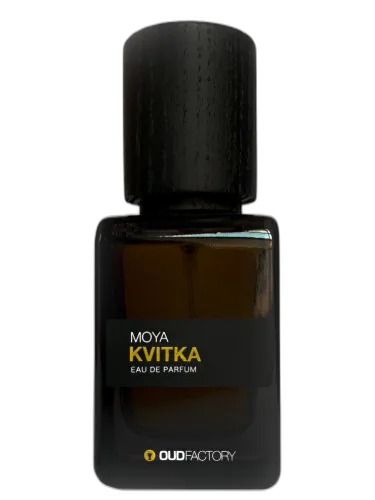
Oud Factory
Moya Kvitka Oud Factory
Shared top notes: cinnamon, sandalwood, star anise

Solstice Scents
Heat Of The Night Solstice Scents
Shared top notes: agarwood (oud), amber, bergamot
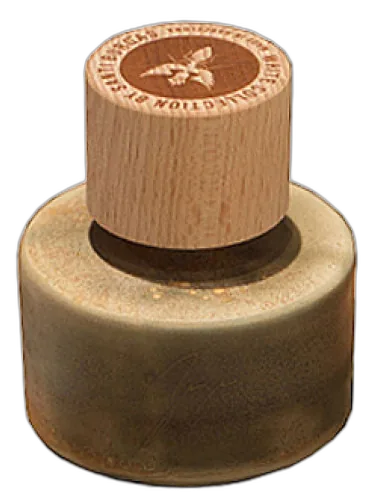
Santi Burgas
Eau Dadette Santi Burgas
Shared top notes: amber, jasmine, musk