
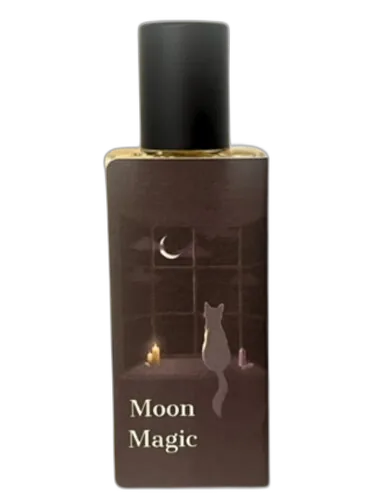

Moon Magic Sorce
At a glance
Is Moon Magic Sorce worth trying?
Moon Magic by Sorce is a Floral Fruity Gourmand fragrance for women and men.
- Best match
- Evening wear in Fall
- Performance feel
- Very Good longevity with Moderate sillage
- Signature profile
- sweet, lavender, vanilla with Lavender, Masala Chai, Sugar
The first impression
Moon Magic by Sorce is a Floral Fruity Gourmand fragrance for women and men. Moon Magic was launched in 2022. The nose behind this fragrance is Caitlin Hayes.
What shapes the scent
The perfumer behind it

Caitlin Hayes
Caitlin Hayes is an independent perfumer and founder of the Sorce brand. Her fragrances, such as 2 Am In Lafayette and Fuckery, are known for their evocative, story-driven concepts. She often uses unconventional notes to create immersive, moody olfactory experiences.
Notes pyramid
All Notes
Complete scent profile
 Lavender
 Masala Chai
 Sugar
Sugar
 Milk
Milk
 Cashmeran
 Tonka Bean
 Vanilla
 Steam Accord
 Ambroxan
The mood it creates
The Mystic Archetype: Portrait of Moon Magic Sorce
Essence
To wear Moon Magic Sorce is to embrace the liminal-the space between dusk and dawn, between the conscious and the unseen. This fragrance, with its ethereal blend of lunar florals, cool amber, and whispered spices, is not for those who walk solely in the light of day. Its wearer is a seeker, a dweller in twilight, drawn to the mysteries that flicker just beyond the edges of ordinary perception. They are, at their core, a Mystic-an archetype that thrives on intuition, symbolism, and the hidden currents of existence.
Shadow
Yet every archetype has its shadow, and the Mystic is no exception. Their gift for intuition can curdle into paranoia-they may see patterns where none exist, interpreting trivial events as cosmic signs. At times, they retreat too far into their inner world, becoming ungrounded, lost in the labyrinth of their own mind. Reality, with its banal demands, feels like an insult to their sensibilities.
Their relationships may suffer from this withdrawal. They crave deep connection but fear the vulnerability it requires, sometimes substituting mystical detachment for true intimacy. They might rationalize their isolation as spiritual necessity, but in truth, it is often fear-fear that the mundane world will never understand them, fear that their visions are mere illusions.
Conclusion
The Mystic does not merely observe life; they divine it. Their tastes are refined yet enigmatic-they favor deep jewel tones, flowing fabrics, and textures that suggest movement, like silk or crushed velvet. Their home is a sanctuary of dim lighting, candles, and carefully curated oddities: a tarot deck on the coffee table, a shelf of dog-eared books on alchemy, a single black feather resting on a windowsill. They are drawn to art that evokes the uncanny-the surrealism of Leonora Carrington, the haunting melodies of Dead Can Dance, the poetry of Rainer Maria Rilke.
Philosophy is not an abstract exercise for them but a lived experience. They believe in the unseen architecture of the universe-synchronicities, omens, the subtle language of dreams. Their spirituality is fluid, borrowing from esoteric traditions without rigid dogma. They may practice meditation, astrology, or divination, not as superstition but as tools to navigate the deeper layers of self.
If you like this, try these
Fragrances with a comparable profile - shared accords, notes, and character.
Sorce
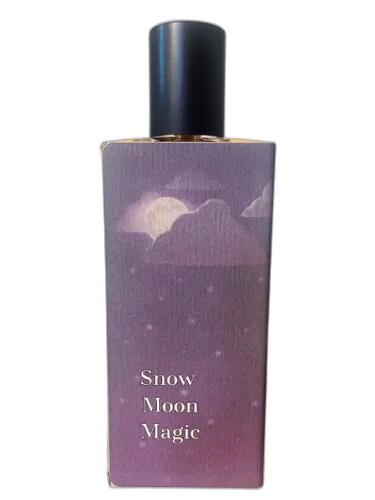
Snow Moon Magic Sorce
Shared top notes: ambroxan, cashmeran, lavender

Colornoise
Chill Colornoise
Shared top notes: lavender, sugar, tonka bean

Saint d'Ici
Saint-jeannet Saint D'ici
Shared top notes: lavender, tonka bean
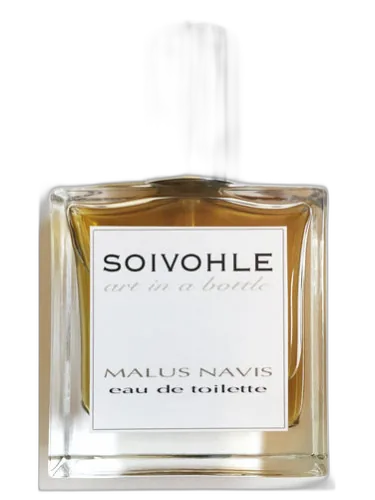
Soivohle
Malus Navis Soivohle
Shared top notes: lavender, milk, tonka bean
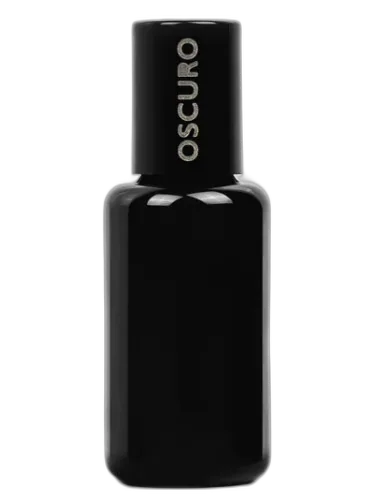
MONOM
Oscuro Monom
Shared top notes: lavender, tonka bean