
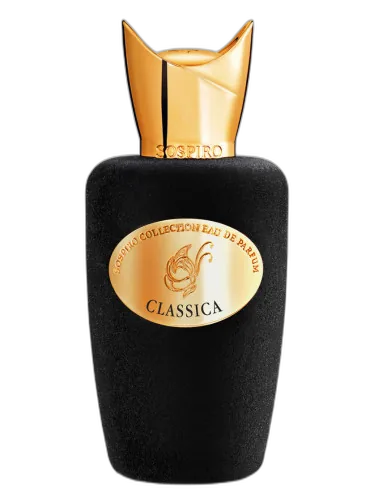

Classica Sospiro Perfumes
At a glance
Is Classica Sospiro Perfumes worth trying?
Classica by Sospiro Perfumes is a Oriental Woody fragrance for women and men.
- Best match
- Evening, Special Occasion wear in Fall, Winter
- Performance feel
- Very Good longevity with Strong sillage
- Signature profile
- amber, woody, oud with Copahu Balm, Clary Sage, Bergamot
The first impression
Classica by Sospiro Perfumes is a Oriental Woody fragrance for women and men. Classica was launched in 2014. The nose behind this fragrance is Chris Maurice. Top notes are Copahu Balm, Clary Sage and Bergamot; middle notes are Woody Notes, Cashmeran and Rose; base notes are Agarwood (Oud), Tobacco, Ambergris, Moss and Sandalwood.
What shapes the scent
The perfumer behind it

Chris Maurice
Chris Maurice is a perfumer with a wide-ranging portfolio that includes work for Aqualis, Artal Perfumes, Assaf, Astrophil & Stella, Azman, and Bey Parfum. His creations include Egoli, Forbidden Rose, Darley, Love Is Lost, Moonage Daydream, Riad Jasmine, Song For A Wanderer, and Abyssoria. His style varies from floral and romantic to dark and mysterious.
Notes pyramid
Top Notes
First impression · 15-30 min
 Copahu Balm
 Clary Sage
 Bergamot
Heart Notes
Core character · 2-4 hours
 Woody Notes
 Cashmeran
 Rose
Rose
Base Notes
Lasting impression · 4+ hours
 Agarwood (Oud)
 Tobacco
 Ambergris
 Moss
Moss
 Sandalwood
The mood it creates
The Sospiro Devotee Archetype: Portrait of Classica Sospiro Perfumes
Essence
The one who favors Classica Sospiro Perfumes is, above all, a seeker of timeless elegance-not as mere ornament, but as an extension of their inner world. Their archetype is The Sage, the thinker who values wisdom, refinement, and the quiet authority of knowledge. They do not chase trends but instead curate their existence with deliberation, as if life itself were a library of carefully chosen volumes. The fragrance-balanced, complex, neither ostentatious nor meek-mirrors their psyche: a distillation of history, intellect, and restrained passion.
Style & Aesthetic
Their wardrobe is a study in understatement: tailored but never stiff, luxurious but never gaudy. Fabrics are chosen for texture and longevity, colors for their depth rather than their brightness. They wear fragrance as an invisible signature-never announcing itself too loudly, but lingering in memory.
In art, they favor the masters but are not confined by them. A Renaissance portrait moves them, but so might a modern sculpture if it carries the same weight of intention. Music is likely classical or jazz-structured yet improvisational, a mirror of their own mind.
Their home is a sanctuary, every object chosen with intention. A well-worn leather chair, a shelf of first editions, a single painting that demands contemplation-these are not decorations but extensions of their identity. They drink aged whiskey, savor slow meals, and prefer handwritten letters to digital chatter.
They are disciplined, almost ritualistic, in their routines. Mornings begin with quiet reflection; evenings end with deliberate unwinding. This order grants them clarity, but it can also become a cage. When life disrupts their carefully constructed world, they may react not with adaptability but with frustration, as if chaos were a personal affront.
Philosophy & Values
They believe in the permanence of certain truths-beauty, craftsmanship, the weight of tradition-yet they are no mere traditionalist. Their reverence for the past is not blind nostalgia but a selective admiration, like a scholar who keeps only the most illuminating texts. They are drawn to the idea that refinement is an act of resistance against the disposable nature of modernity.
Yet, this philosophy has its shadow. Their insistence on timelessness can harden into rigidity, an unwillingness to embrace the raw, the unpolished, the imperfectly human. They may mistake aesthetic discernment for moral superiority, quietly dismissing those who lack their cultivated tastes.
Relationships
They are not gregarious, but neither are they reclusive. Their friendships are few but enduring, built on mutual respect rather than convenience. Romantic partners must meet an unspoken standard-not of wealth or status, but of depth. Superficial charm repels them; they are drawn to those who speak in layers, who understand silence as another form of conversation.
Yet here, too, lies a flaw: their exacting nature can become a barrier. They may withdraw from those who fail to meet their expectations, mistaking their own standards for universal truths. Loneliness, when it comes, is self-inflicted-a byproduct of their refusal to compromise.
Shadow
The Sage’s greatest danger is the slide into pedantry-when discernment becomes dogma, when the love of knowledge hardens into intellectual pride. They may catch themselves correcting others not to enlighten but to assert dominance. Their disdain for the vulgar can curdle into contempt, isolating them further.
Yet, if they recognize this tendency, they can temper it. True wisdom lies not in the rejection of the imperfect but in understanding its place. The finest perfumes, after all, are blends-harmonies of light and dark, sharp and sweet. So too must they learn to balance their ideals with the messy reality of being human.
Conclusion
Classica Sospiro is more than a scent to them; it is an emblem of their inner world-structured yet nuanced, enduring yet alive. They are the kind of person who leaves an impression not through force but through presence, like a fragrance that lingers in a room long after they have left.
But let them remember: even the most exquisite perfume must eventually fade. The challenge is not to mourn its passing, but to appreciate its beauty while it lasts.
If you like this, try these
Fragrances with a comparable profile - shared accords, notes, and character.
Filigree & Shadow
Wax & Wane Filigree & Shadow
Shared top notes: bergamot

MAISON ASRAR
Emessa Maison Asrar
Shared top notes: bergamot
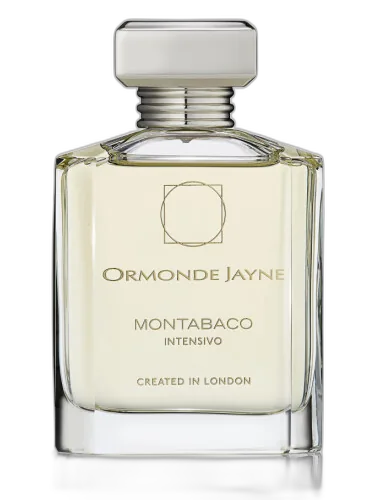
Ormonde Jayne
4. Montabaco Intensivo Ormonde Jayne
Shared top notes: bergamot, clary sage
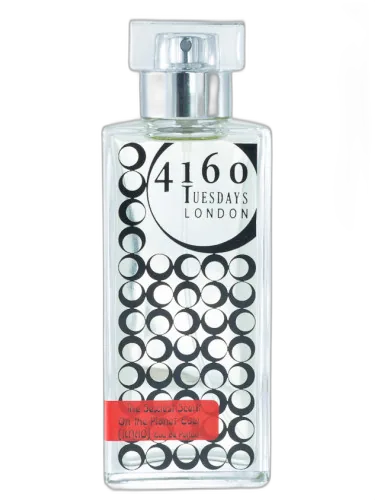
4160 Tuesdays
The Sexiest Scent On The Planet. Ever. Imho 4160 Tuesdays
Shared top notes: bergamot
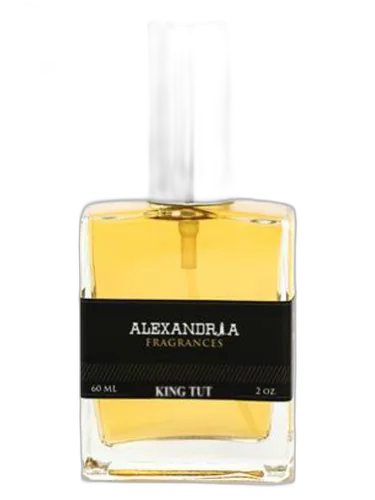
Alexandria Fragrances
King Tut Alexandria Fragrances
Shared top notes: bergamot