
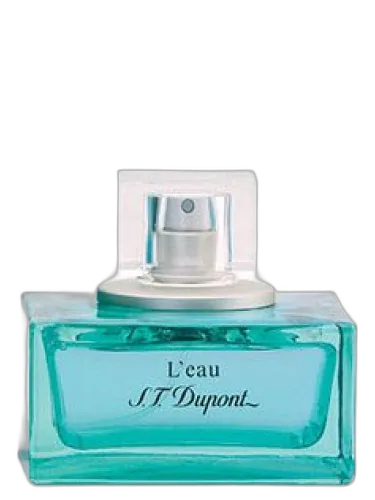

L'eau De S.t. Dupont Pour Homme S.t. Dupont
Fragrance Story
L'Eau de S.T. Dupont pour Homme by S.T. Dupont is a Floral Woody Musk fragrance for men. L'Eau de S.T. Dupont pour Homme was launched in 2004. The nose behind this fragrance is Antoine Maisondieu. Top notes are Mint, Mandarin Orange and Bergamot; middle notes are Violet, Freesia, Lavender and Cardamom; base notes are Sequoia, Amber, Musk and Cedar.
Composition Profile
About the Perfumer

Antoine Maisondieu
Antoine Maisondieu is a French perfumer and a senior vice president at Givaudan, where he has worked for decades. He is known for creating refined, modern compositions that balance natural elegance with subtle complexity. His work includes the woody, leathery Bottega Veneta Pour Homme and the fresh, floral Acqua di Parma Magnolia Nobile.
Fragrance Notes
Top Notes
First impression · 15-30 min
 Mint
Mint
 Mandarin Orange
 Bergamot
Heart Notes
Core character · 2-4 hours
 Violet
 Freesia
 Lavender
 Cardamom
Base Notes
Lasting impression · 4+ hours
 Sequoia
 Amber
Amber
 Musk
Musk
 Cedar
Cedar
L'eau De S.t. Dupont Pour Homme S.t. Dupont by S.T. Dupont offers a distinctive olfactory experience that stands out from other fragrances in its category.
Crafted with the finest ingredients and a blend of traditional and modern perfumery techniques, this fragrance represents the pinnacle of the perfumer's art.
L'eau De S.t. Dupont Pour Homme S.t. Dupont embodies the distinctive style of S.T. Dupont while adding a unique chapter to their fragrance portfolio.
Character Profile
The Archetype Archetype: Portrait of L'eau De S.t. Dupont Pour Homme S.t. Dupont
Essence
This man is ruled by the Sovereign archetype-a figure of quiet authority, self-possession, and understated elegance. He does not demand attention; he commands it effortlessly. The Sovereign is not a tyrant but a natural leader, one who understands that true power lies in restraint rather than force. His choice of fragrance, L’eau De S.t. Dupont Pour Homme, reflects this-a scent that is refined, timeless, and subtly assertive, blending citrus, woods, and spices without overwhelming.
Relationships
He is not a man of many friends, but those he keeps are bound to him by unspoken loyalty. His relationships are built on mutual respect, not neediness. He does not cling; he appreciates independence in others as much as he demands it in himself. Romantic partners are drawn to his quiet confidence, though some may mistake his reserve for coldness.
Yet, intimacy is a challenge. The Sovereign’s strength is also his limitation-he struggles to surrender control, to be vulnerable. His love is steady, but rarely effusive. He expects those close to him to understand him without explanation, and when they fail to, he withdraws rather than clarifies.
Shadow
Beneath the polished exterior lies the shadow of the Sovereign-the ruler who has grown too accustomed to solitude. His self-sufficiency can harden into detachment. He may dismiss emotions as weakness, seeing vulnerability as a flaw rather than a necessity for depth. At his worst, he becomes a man who stands above others but beside no one, an island of competence that no one dares to approach.
He may also harbor a quiet disdain for those who lack his discipline, mistaking their openness for naivety. His high standards can turn into impatience, his self-assurance into arrogance. The Sovereign must remember that even kings need counsel, that strength is meaningless if it cannot bend.
Conclusion
His tastes are cultivated but never ostentatious. He prefers tailored suits that whisper rather than shout, watches that tell time with quiet precision, and leather-bound books whose spines have softened with use. He does not chase trends; he selects what endures. His home is a sanctuary of order-dark wood, clean lines, a well-stocked bar where the whiskey is always aged just right.
Philosophically, he believes in merit over spectacle. He admires those who achieve without fanfare, who let their work speak for itself. His values are rooted in discipline, integrity, and self-mastery. He does not suffer fools, but neither does he mock them-he simply moves past them, as one steps around an obstacle in the road.
Similar Fragrances
Fragrances with a comparable profile - shared accords, notes, and character.

Mercedes-Benz
Mercedes Benz Sport Mercedes-benz
Shared accords: aromatic, citrus, floral
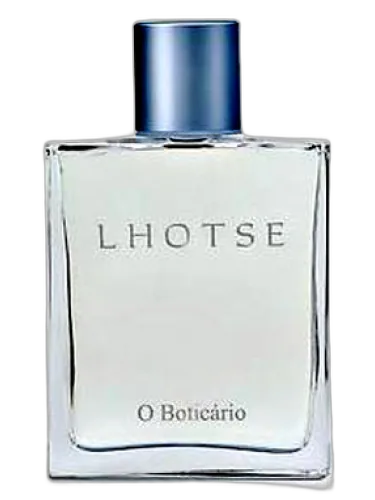
O Boticário
Lhotse O Boticário
Shared accords: amber, aromatic, citrus

Nosegasm
Odins Rose Nosegasm
Shared accords: amber, aromatic, citrus
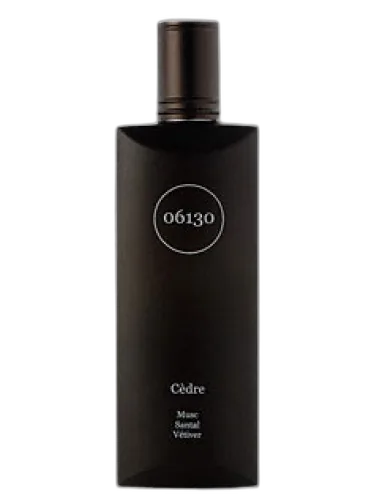
Parfums 06130
Cedre Parfums 06130
Shared accords: amber, aromatic, citrus
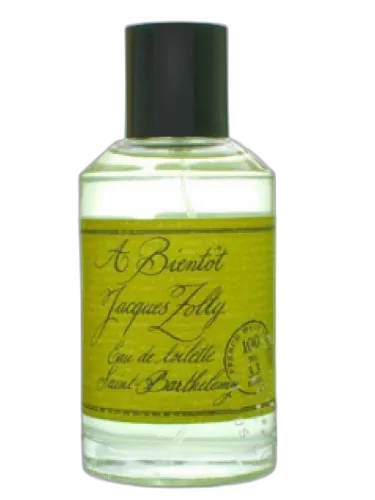
Jacques Zolty
A Bientot Jacques Zolty
Shared accords: amber, aromatic, citrus