


Ashara Stone & Wit
At a glance
Is Ashara Stone & Wit worth trying?
Ashara by Stone & Wit is a fragrance for women and men.
- Best match
- Evening wear in Fall
- Performance feel
- Good longevity with Moderate sillage
- Signature profile
- oud, aromatic, sweet with Ink, White Oud, Black Tea
The first impression
Ashara by Stone & Wit is a fragrance for women and men. Ashara was launched in 2020. The nose behind this fragrance is R Bagley.
What shapes the scent
The perfumer behind it

R Bagley
R Bagley is a perfumer associated with the Stone & Wit brand, creating a range of artistic fragrances. Their catalog includes Ashara, Beloved, and Wandering Star, among others. Bagley's work is known for its narrative-driven, often unconventional blends of gourmand, woody, and botanical notes.
Notes pyramid
All Notes
Complete scent profile
 Ink
Ink
 White Oud
 Black Tea
 Dates
Dates
 Camellia
The mood it creates
The Lover Archetype: Portrait of Ashara Stone & Wit
Essence
To wear Ashara Stone & Wit is to embrace contradiction-a fragrance that balances earth and fire, stone and wit, weight and levity. The person who chooses this scent is not merely drawn to its notes but to the tension within them. They are an Alchemist, a seeker who transmutes the raw into the refined, the mundane into the meaningful. Their life is an experiment, a crucible where experience is distilled into wisdom.
The Alchemist is defined by transformation-not as escape, but as mastery. They are drawn to the hidden connections between things, the subtle threads that bind the material and the mystical. Their mind is a workshop where ideas are forged, tested, and reshaped. They do not accept the world as it is; they seek to refine it, to uncover its latent possibilities.
Their tastes reflect this duality. They appreciate the rough-hewn beauty of raw materials-stone, leather, aged wood-but also the precision of wit, the sharpness of intellect. They might wear tailored clothing with an unexpected texture, or surround themselves with objects that bear the marks of time yet feel deliberate. Their home is a curated space, neither sterile nor cluttered, where every item has been chosen for its resonance.
Philosophically, they reject absolutes. Truth, to them, is a process, not a destination. They are drawn to thinkers who embrace paradox-Nietzsche, Jung, Lao Tzu-those who see wisdom in tension rather than resolution. They believe in the power of symbols, in the way a scent, a word, or an image can contain multitudes.
Shadow
Yet the Alchemist’s pursuit of depth can become a prison. Their fascination with transformation can tip into a refusal to accept things as they are-always searching for the hidden meaning, always restless for the next revelation. They may grow impatient with those who do not share their intensity, dismissing simpler joys as superficial.
Their wit, once a tool for insight, can turn corrosive. They may use irony to distance themselves, to avoid vulnerability. They risk becoming the observer rather than the participant, analyzing life instead of living it. Their relationships may suffer from their reluctance to settle into the mundane, the unexamined.
At their worst, they become the failed alchemist-one who spends their life chasing gold but never finds it, forever refining, never arriving. They may grow cynical, mistaking detachment for wisdom, isolation for independence.
Conclusion
The Alchemist’s greatest strength is their ability to see beyond surfaces. They perceive the potential in people, in situations, in discarded fragments of experience. They are the friend who listens not just to respond, but to understand, to draw out the unspoken truth. Their relationships are deep but few; they do not scatter their energy but invest it where transformation is possible.
They are drawn to art that rewards patience-poetry, abstract painting, ambient music. They prefer books that demand rereading, films that linger in the mind long after the screen fades to black. Their humor is dry, layered, often self-deprecating. They do not suffer fools, but they suffer earnestness even less-irony is their shield against sentimentality.
In work, they thrive where creativity meets structure. They might be a designer who balances form and function, a writer who weaves philosophy into fiction, or a scientist fascinated by the elegance of systems. They are not content with rote execution; they must reshape what they touch.
If you like this, try these
Fragrances with a comparable profile - shared accords, notes, and character.

Mandarina Duck
The Mandariner For Her Mandarina Duck
Shared top notes: black tea
4160 Tuesdays
Up The Apples & Pears 4160 Tuesdays
Shared accords: aromatic, fresh, fruity

4160 Tuesdays
Be Careful What You Wish For 4160 Tuesdays
Shared top notes: white oud

Acidica Perfumes
Slovenian Wine Acidica Perfumes
Shared accords: aromatic, fruity, green
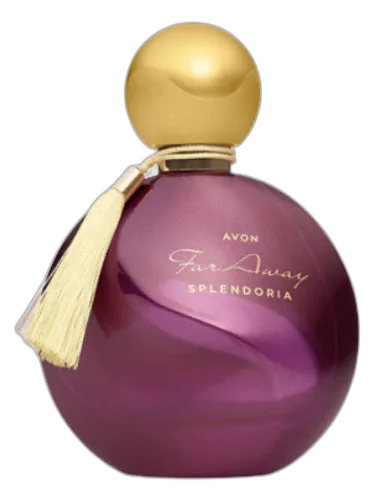
Avon
Far Away Splendoria Avon
Shared top notes: white oud