


Oliver Strangers Parfumerie
At a glance
Is Oliver Strangers Parfumerie worth trying?
Oliver by Strangers Parfumerie is a Citrus fragrance for women and men.
- Best match
- Casual wear in Summer
- Performance feel
- Good longevity with Moderate sillage
- Signature profile
- citrus, aromatic, woody with Petitgrain, Bitter Orange, Mojito
The first impression
Oliver by Strangers Parfumerie is a Citrus fragrance for women and men. Oliver was launched in 2018. The nose behind this fragrance is Prin Lomros.
What shapes the scent
The perfumer behind it

Prin Lomros
Prin Lomros is a Thai perfumer and founder of the Prin brand, recognized for bold, complex compositions that often blend natural and synthetic materials. Their portfolio includes works for Azman and Der Duft, as well as their own line featuring scents like Ahuizotl and Aran. Lomros is known for pushing boundaries with rich, animalic, and resinous accords.
Notes pyramid
All Notes
Complete scent profile
 Petitgrain
 Bitter Orange
 Mojito
 Bergamot
 Sea Salt
 Orange Blossom
 Grapefruit
 Clary Sage
 Magnolia
 Apricot
 Cypress
 Oakmoss
 Mastic or Lentisque
 Fig
Fig
 Basil
Basil
 Grass
Grass
 Mandarin Orange
 Grape leaves
 Lime (Linden) Blossom
 Quince
 Ambergris
 Pink Pepper
 Vetiver
 Orris Root
 Coriander
 Patchouli
 Ambrette (Musk Mallow)
 Olive
Olive
 Mahogany
 Tobacco
Rose de Mai
Tobacco
Rose de Mai
 Sandalwood
 Leather
The mood it creates
The Wanderer Archetype: Portrait of Oliver Strangers Parfumerie
Essence
The one who chooses Oliver Strangers Parfumerie is not merely selecting a fragrance-they are embracing an ethos. This scent, with its elusive blend of the familiar and the foreign, speaks to the soul of the Explorer, an archetype that thrives on novelty, independence, and the pursuit of uncharted emotional and intellectual landscapes. The Explorer does not settle; they are drawn to the edges of experience, where the known world dissolves into mystery.
Style & Aesthetic
Their wardrobe is a curated mosaic-vintage leather jackets, tailored linen, perhaps a single piece of jewelry with an obscure history. They favor textures that tell stories: well-worn boots, a scarf from a Moroccan market, a watch that belonged to a grandfather they never knew. They dress not for trends but for atmosphere, as if each day were a scene from a film only they are directing.
In art, they gravitate toward the surreal or the impressionistic-Dali’s melting clocks, Wong Kar-wai’s neon-lit longing, the haunting melodies of Nick Cave. They appreciate works that resist easy interpretation, that demand engagement rather than passive consumption.
They are likely to live in cities that pulse with energy-Berlin, Tokyo, Lisbon-or in quiet, offbeat towns where they can observe life without fully belonging to it. Their home is a carefully curated sanctuary, filled with objects that evoke memories of places they’ve been or places they dream of going. A shelf of half-read books, a record player spinning vinyl from the 1970s, a single candle burning at odd hours.
They thrive on spontaneity-midnight drives, last-minute flights, conversations with strangers in dimly lit bars. Routine is their enemy; they see it as a slow death of the spirit. Yet this aversion can lead to self-sabotage, a refusal to build anything lasting for fear of stagnation.
Philosophy & Values
To them, life is an experiment, a series of encounters rather than a fixed path. They reject dogma, favoring instead a personal philosophy stitched together from fragments of art, travel, and fleeting conversations. They believe in the aesthetics of experience-that beauty is not static but found in movement, in the way light shifts on a foreign street or in the scent of rain on unfamiliar soil.
Their values are fluid, shaped by curiosity rather than tradition. They may admire Stoic resilience but also Romantic abandon, Nietzschean will but also Zen detachment. What binds these contradictions is their insistence on authenticity-not in the banal sense of "being oneself," but in the refusal to be confined by any single identity.
Relationships
They attract others effortlessly, their charm lying in their unpredictability. Friends and lovers are drawn to their magnetic restlessness, the sense that at any moment, they might disappear into another adventure. But this same quality makes intimacy difficult. They are prone to emotional nomadism, forming deep connections only to withdraw when things become too settled.
Their relationships are often intense but ephemeral, like a fire that burns brightly but leaves little warmth behind. They may struggle with commitment, not out of malice but because the idea of permanence feels like a cage. Their shadow here is emotional detachment-a fear that if they stay too long, they will lose the very freedom that defines them.
Shadow
Beneath their adventurous exterior lies a quieter struggle-the fear that they are running not toward something, but away from themselves. Their greatest strength-their refusal to be pinned down-can become their greatest weakness. Without roots, even the most beautiful tree will eventually topple.
They may wrestle with moments of existential emptiness, wondering if their endless seeking is merely a distraction from deeper questions. When the thrill of the new fades, they are left with the unsettling thought: What if the journey itself is the destination?
Conclusion
The lover of Oliver Strangers Parfumerie is neither hero nor fool, but a figure suspended between worlds. They are the modern-day Odysseus, not searching for home but for the next horizon. Their life is a poem written in vanishing ink-beautiful precisely because it cannot last.
To know them is to understand that some souls are not meant to be still. They are the ones who remind us that the map is never the territory, that the scent of a stranger’s perfume can be the most intoxicating thing of all.
If you like this, try these
Fragrances with a comparable profile - shared accords, notes, and character.
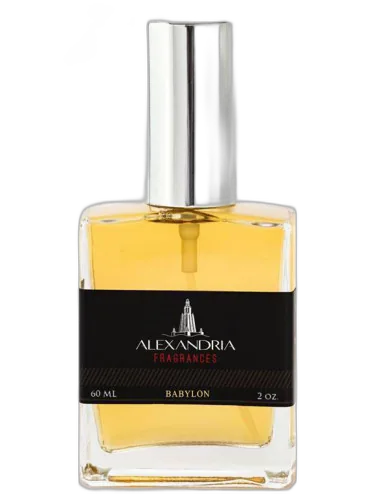
Alexandria Fragrances
Babylon Alexandria Fragrances
Shared top notes: bergamot, cypress, mandarin orange
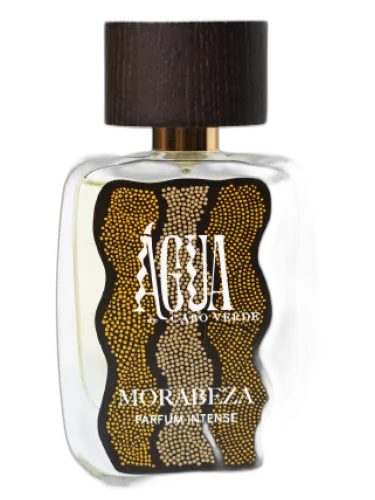
Água de Cabo Verde
Morabeza Água De Cabo Verde
Shared top notes: bergamot, grapefruit

Azzaro
Eau Belle D'azzaro Azzaro
Shared top notes: bergamot, mandarin orange
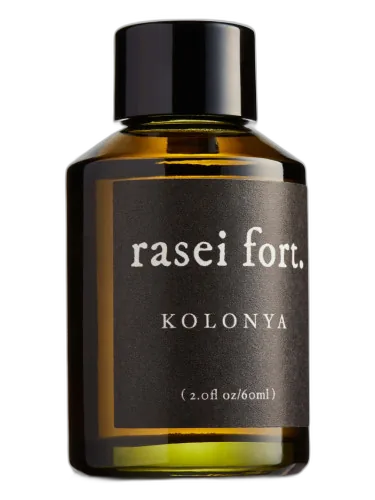
Rasei Fort
Kolonya Rasei Fort
Shared top notes: bergamot, bitter orange, coriander
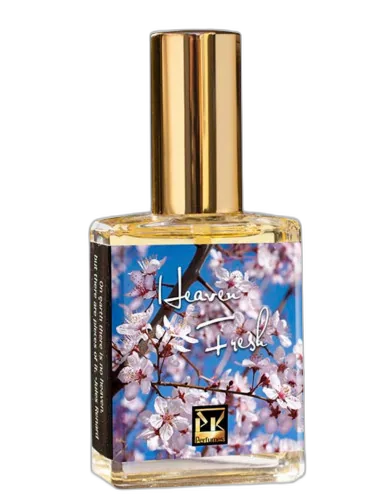
PK Perfumes
Heaven Fresh Pk Perfumes
Shared top notes: basil, clary sage, mahogany