
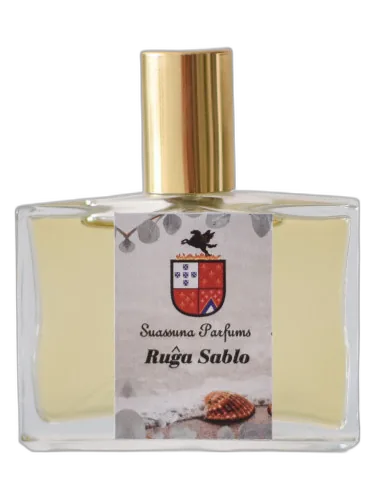

Ruĝa Sablo Suassuna Parfums
Fragrance Story
Ruĝa Sablo by Suassuna Parfums is a Aromatic Aquatic fragrance for women and men. Ruĝa Sablo was launched in 2020. The nose behind this fragrance is Nilton Suassuna. Top note is Fruit Salad; middle notes are Sea Notes, Neroli, Lily, Jasmine and Violet; base notes are Ambergris, Musk, Tonka Bean, Vanilla, Benzoin and Sandalwood.
Composition Profile
About the Perfumer

Nilton Suassuna
Nilton Suassuna is a perfumer and the creative force behind Suassuna Parfums, with fragrances such as Aŭtuna Ekvinokso, Dolĉa Aŭgusto, Imperia Mango, Princino, Renkontiĝo, Ruĝa Jasmeno, Ruĝa Sablo, and Teo Rozoj. His scents often feature fruity, floral, and gourmand notes. His work reflects a personal, artisanal approach to perfumery.
Fragrance Notes
Top Notes
First impression · 15-30 min
 Fruit Salad
Heart Notes
Core character · 2-4 hours
 Sea Notes
 Neroli
 Lily
Lily
 Jasmine
 Violet
Base Notes
Lasting impression · 4+ hours
 Ambergris
 Musk
Musk
 Tonka Bean
 Vanilla
 Benzoin
 Sandalwood
Character Profile
The Lover Archetype: Portrait of Ruĝa Sablo Suassuna Parfums
Essence
The one who favors Ruĝa Sablo by Suassuna Parfums is a creature of deep sensuality, drawn to the interplay of warmth and spice, earth and fire. Their archetype is The Hedonist, a soul who worships at the altar of pleasure-not merely in indulgence, but in the art of living fully. Like Dionysus, they embrace the ecstatic, the tactile, the intoxicating. Yet, as with all archetypes, there is a shadow-excess, indulgence without purpose, a hunger that can never be sated.
Style & Aesthetic
Their world is rich with texture: the rough grain of aged leather, the smooth weight of dark amber, the flicker of candlelight on skin. They prefer the decadent over the austere, the bold over the timid. Their wardrobe is a study in contrasts-linen that drapes like liquid, silk that whispers against the body, perhaps a single piece of jewelry with a weight that reminds them of their own presence.
In music, they are drawn to the deep resonance of cello, the slow burn of jazz, the primal pulse of tribal rhythms. Their taste in art leans toward the baroque, the lush, the unapologetically sensual-Caravaggio’s chiaroscuro, Klimt’s gold-kissed figures, Frida Kahlo’s raw, unfiltered passion.
Their home is a temple to the senses-low lighting, rich fabrics, the scent of oud or tobacco lingering in the air. They cook not out of necessity but for the ritual of it, the way spices bloom in oil, the way wine reduces into something deeper.
They may drift between cities-Paris for its decadence, Marrakech for its spice-laden air, Tokyo for its precision in pleasure. Routine is their enemy; stagnation, their fear.
Philosophy & Values
To them, life is not a problem to be solved but an experience to be savored. They reject asceticism as a denial of the self, seeing beauty in the fleeting-the way light catches in a glass of wine, the scent of rain on hot pavement, the slow unfurling of a lover’s breath. Their philosophy is one of immersion: If you do not feel, you do not live.
Yet, this pursuit of pleasure is not without discipline. They understand that true hedonism is not mindless consumption but the cultivation of refined taste. Excess for its own sake is vulgar; true pleasure is an art.
Relationships
They are magnetic, drawing others in with an effortless allure. Their presence is intoxicating-not because they perform charm, but because they embody it. In love, they are passionate but demanding, seeking partners who can match their intensity. They do not suffer indifference gladly.
Friendships with them are deep but often transient, as they move through social circles like a flame, illuminating and then moving on. They inspire devotion but may struggle with constancy-the shadow of the Hedonist is a restless spirit, always chasing the next sensation.
Shadow
But beneath the surface, there is a danger. The Hedonist, when unbalanced, becomes a slave to sensation. They may find themselves trapped in cycles of indulgence, seeking fulfillment in experiences that leave them emptier than before. The shadow whispers: More, always more-yet no amount of beauty, no depth of pleasure, can fill the void if they do not also cultivate meaning beyond the self.
Their greatest challenge is to temper their hunger with wisdom-to learn that pleasure is not an escape but a celebration, and that true richness comes not from endless consumption but from depth of presence.
Conclusion
The lover of Ruĝa Sablo is neither saint nor sinner, but a seeker of the sublime in the sensory. They walk the line between ecstasy and excess, between passion and dissolution. Their life is a dance-one that demands both abandon and control. To know them is to understand that pleasure, in its highest form, is not indulgence but devotion.
Similar Fragrances
Fragrances with a comparable profile - shared accords, notes, and character.
Suassuna Parfums
Ruĝa Sablo Suassuna Parfums
Shared accords: amber, animalic, aromatic
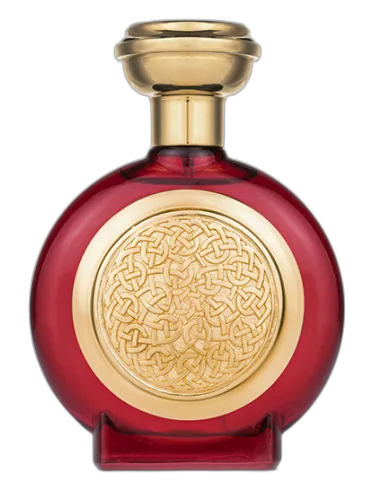
Boadicea the Victorious
Rouge Temptation Boadicea The Victorious
Shared accords: amber, balsamic, fruity

Ricardo Ramos Perfumes de Autor
Candy Darling Candy Says Ricardo Ramos Perfumes De Autor
Shared accords: amber, aromatic, balsamic

Pell Wall Perfumes
1953 Eau De Toilette Pell Wall Perfumes
Shared accords: amber, animalic, musky

Oakcha
Desert Glass Oakcha
Shared accords: amber, animalic, aromatic