
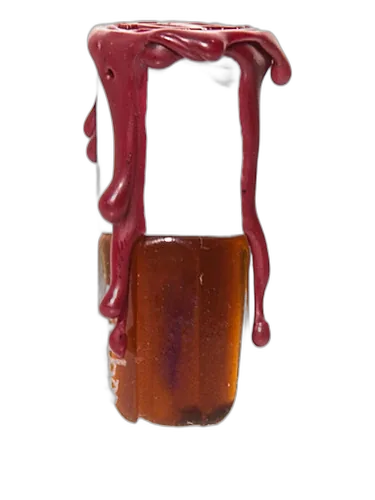

Fougere Du Paradis Sultan Pasha Attars
At a glance
Is Fougere Du Paradis Sultan Pasha Attars worth trying?
Fougere du Paradis by Sultan Pasha Attars is a Aromatic Fougere fragrance for women and men.
- Best match
- Evening wear in Fall
- Performance feel
- Excellent longevity with Strong sillage
- Signature profile
- amber, aromatic, citrus with Lavender, Clary Sage, elemi
The first impression
Fougere du Paradis by Sultan Pasha Attars is a Aromatic Fougere fragrance for women and men. Fougere du Paradis was launched in 2016. The nose behind this fragrance is Sultan Pasha. Top notes are Lavender, Clary Sage, elemi, Lemon and Lime; middle notes are Jasmine and Tonka Bean; base notes are White Oud, Ambergris, Siam Benzoin and Castoreum.
What shapes the scent
The perfumer behind it

Sultan Pasha
Sultan Pasha is a British perfumer known for his luxurious attars and complex ambergris-based compositions. His work often features rich, animalic notes and rare natural ingredients, drawing on traditional Middle Eastern perfumery techniques. The Coronation Ambergris series showcases his mastery of ambergris in varied interpretations, while his Al Hareem and Al Lail attars explore opulent floral and resinous blends.
Notes pyramid
Top Notes
First impression · 15-30 min
 Lavender
 Clary Sage
 elemi
elemi
 Lemon
Lemon
 Lime
Lime
Heart Notes
Core character · 2-4 hours
 Jasmine
 Tonka Bean
Base Notes
Lasting impression · 4+ hours
 White Oud
 Ambergris
Siam Benzoin
Ambergris
Siam Benzoin
 Castoreum
The mood it creates
The Alchemist Archetype: Portrait of Fougere Du Paradis Sultan Pasha Attars
Essence
This person is most closely aligned with the Alchemist archetype-a seeker of transformation, depth, and hidden truths. Like the perfumer who distills rare essences into sublime harmony, they are drawn to the interplay of complexity and refinement. Fougère du Paradis, with its intricate layers of lavender, oakmoss, and spices, mirrors their own psyche: multifaceted, evolving, and steeped in an almost mystical pursuit of beauty.
The Alchemist does not merely experience the world; they transmute it. They are not content with surface impressions-they crave the alchemical process of turning raw experience into wisdom, chaos into order, the mundane into the extraordinary.
Style & Aesthetic
Their tastes are deliberate, almost ritualistic. They prefer the rare over the common, the textured over the smooth, the enigmatic over the obvious. In art, they gravitate toward symbolism-the works of Odilon Redon, the poetry of Rilke, the films of Tarkovsky. They appreciate craftsmanship, whether in a hand-bound book, a bespoke suit, or an aged whiskey sipped in silence.
Fougère du Paradis is their olfactory signature because it is not merely a scent-it is an experience. Its evolution on the skin mirrors their own inner shifts: the initial brightness of bergamot giving way to the earthy depth of oakmoss, the warmth of tonka bean lingering like a half-remembered dream.
Their daily life is a blend of discipline and indulgence. They may rise early to meditate or write, yet lose themselves for hours in a book or a creative project. Their home is curated, not sterile-each object chosen for its resonance, not its trendiness. They enjoy solitude but are not hermits; they need moments of retreat to replenish their energy.
They may have a fascination with the past-antique shops, forgotten philosophies, vintage fragrances-yet they are not nostalgic. They see history as a wellspring of wisdom, not an escape.
Philosophy & Values
They believe in the sanctity of inner transformation. To them, life is not about accumulation but refinement-peeling away illusions to reveal the essential. They may be drawn to esoteric traditions, not as dogma but as maps for the soul’s journey. Stoicism appeals to them in moments of discipline; romanticism, in moments of passion.
Their values are rooted in authenticity. They despise pretension but admire mastery. They can be fiercely independent, resisting societal pressures to conform, yet they are not anarchic-they seek a higher order, one that harmonizes intellect and intuition.
Relationships
They are selective in love and friendship, valuing depth over breadth. Their relationships are intense, sometimes demanding, because they expect others to meet them at the level of their own introspection. They are not cruel, but they can be exacting-disappointed by superficiality, yet profoundly loyal to those who prove genuine.
Romantically, they are drawn to partners who are equally complex, who understand that love, like perfume, has top notes and base notes-moments of brilliance and moments of quiet endurance. They may struggle with vulnerability, preferring to analyze emotions rather than surrender to them.
Shadow
Every alchemist risks becoming lost in their own laboratory. Their greatest strength-their depth-can become their greatest flaw. When unbalanced, they may withdraw too far, mistaking solitude for enlightenment. Their pursuit of the sublime can turn into disdain for the ordinary, making them impatient with those who do not share their intensity.
Perfectionism is another shadow. In seeking the ideal, they may dismiss the good. A relationship, a project, or even a moment can be ruined by their own impossible standards. They must learn that alchemy is not just about purification-it is also about integration.
Conclusion
To live fully, they must remember that transformation is not only for themselves but for the world. Their insights are worthless if hoarded; their beauty, if unseen. The true test of the Alchemist is not in the solitude of their craft but in the sharing of its fruits.
Fougère du Paradis, then, is more than a fragrance-it is a mirror. In its depths, they see themselves: ever-evolving, ever-seeking, ever on the verge of revelation.
If you like this, try these
Fragrances with a comparable profile - shared accords, notes, and character.
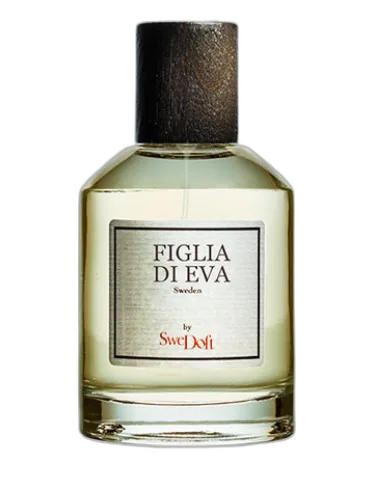
SweDoft
Figlia Di Eva Swedoft
Shared heart notes: jasmine, tonka bean
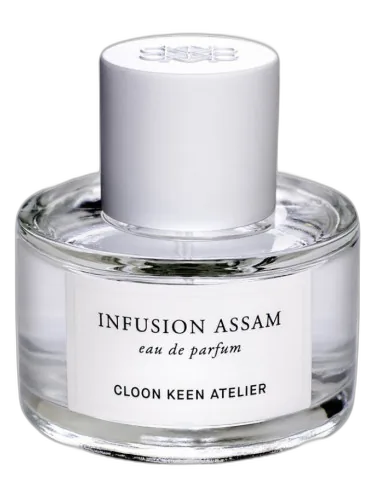
Cloon Keen Atelier
Infusion Assam Cloon Keen Atelier
Shared heart notes: jasmine, tonka bean

Zadig & Voltaire
Girls Can Be Crazy Zadig & Voltaire
Shared heart notes: jasmine, tonka bean
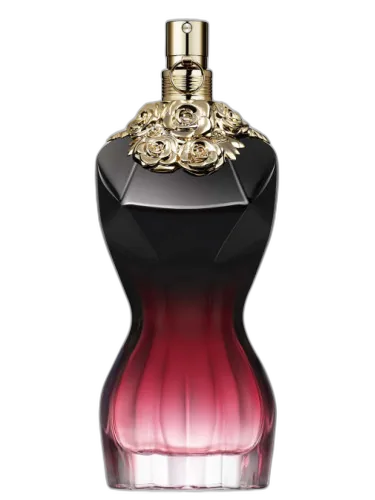
Jean Paul Gaultier
La Belle Le Parfum Jean Paul Gaultier
Shared heart notes: jasmine, tonka bean
Aulentissima
Unknownfemale Aulentissima
Shared heart notes: jasmine, tonka bean