
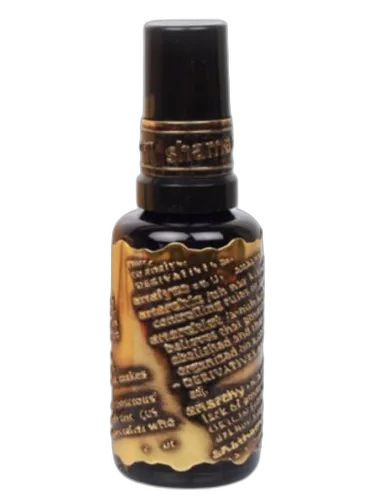
Code Noir The Anarchist
At a glance
Is Code Noir The Anarchist worth trying?
Code Noir by The Anarchist is a Oriental Vanilla fragrance for women and men.
- Best match
- Evening, Special Occasion wear in Fall, Winter
- Performance feel
- Very Good longevity with Strong sillage
- Signature profile
- sweet, warm spicy, vanilla with Vanilla, Cacao, Sugar Cane
The first impression
Code Noir by The Anarchist is a Oriental Vanilla fragrance for women and men. This is a new fragrance. Code Noir was launched in 2022. The nose behind this fragrance is Chris Maurice.
What shapes the scent
The perfumer behind it

Chris Maurice
Chris Maurice is a perfumer with a wide-ranging portfolio that includes work for Aqualis, Artal Perfumes, Assaf, Astrophil & Stella, Azman, and Bey Parfum. His creations include Egoli, Forbidden Rose, Darley, Love Is Lost, Moonage Daydream, Riad Jasmine, Song For A Wanderer, and Abyssoria. His style varies from floral and romantic to dark and mysterious.
Notes pyramid
All Notes
Complete scent profile
 Vanilla
 Cacao
Sugar Cane
Tobacco Leaf
Cacao
Sugar Cane
Tobacco Leaf
 Coffee
Haitian Vetiver
Coffee
Haitian Vetiver
 Agarwood (Oud)
 Incense
The mood it creates
The Explorer Archetype: Portrait of Code Noir The Anarchist
Essence
The one who wears Code Noir The Anarchist is not merely a person but a statement-an embodied defiance of convention. Their spirit aligns most closely with the Outlaw archetype, the one who rejects imposed order in favor of self-made truth. They do not destroy for destruction’s sake, but because they see the hypocrisy in systems that claim authority yet lack authenticity. Their rebellion is not chaos, but a deliberate undoing of illusions.
This archetype thrives in the tension between creation and destruction, between the will to dismantle and the desire to rebuild. They are not the mindless revolutionary, but the one who questions every rule, every expectation, every unspoken demand of society. Their fragrance-dark, smoky, with an undercurrent of spice-mirrors this duality: it seduces before it unsettles, drawing others in before revealing its refusal to conform.
Style & Aesthetic
Their appearance is a manifesto. Leather jackets, sharp lines, a deliberate asymmetry-nothing about them is accidental. They favor textures that suggest resilience: worn denim, heavy boots, fabrics that have weathered storms. Their style is not about trends but about presence, an unspoken challenge to those who mistake polish for substance.
They are drawn to the interplay of light and shadow, both in fashion and in life. A monochrome palette with sudden bursts of deep red or ink-black accents reflects their nature: controlled intensity. Jewelry is minimal but meaningful-perhaps a ring with an obscure symbol, a token of allegiance to something unseen.
They are drawn to vocations that allow autonomy-artists, writers, entrepreneurs, or those who operate in the margins of society. A 9-to-5 feels like a slow death. They thrive in environments where they can challenge norms, whether through creative expression, activism, or simply living on their own terms.
Their tastes in music, literature, and art reflect their inner world: raw, unfiltered, often unsettling. They prefer the poetry of Bukowski over polished verses, the dissonance of industrial music over predictable harmonies. They find beauty in the broken, meaning in the margins.
Philosophy & Values
To them, freedom is not a luxury but a necessity. They do not seek permission to exist; they carve their own space. Their philosophy is one of radical self-ownership-a belief that no institution, no tradition, no dogma has the right to dictate their identity. They are drawn to thinkers like Nietzsche, Camus, or even the more subversive mystics who saw through the facades of power.
Yet, their rebellion is not without purpose. They do not reject all structure, only the structures that serve oppression. They may admire the rogue artist, the hacker, the lone wolf who operates outside the system. Their values are rooted in authenticity, even when it burns bridges. They would rather stand alone than kneel in false unity.
Relationships
They do not collect friends; they forge alliances. Their inner circle is small, bound by mutual respect rather than obligation. They despise small talk, preferring conversations that cut to the bone. To earn their trust is rare, but once given, it is fierce and unshakable.
Romantically, they are magnetic but elusive. They do not love lightly, nor do they tolerate possessiveness. Their relationships are partnerships of equals-anything less feels like chains. Yet, their independence can be isolating. They may push others away before they can be left, a defense mechanism masquerading as strength.
Shadow
Every archetype has its dark twin. For the Outlaw, the shadow is the Tyrant-the one who mistakes destruction for liberation, who confuses defiance with wisdom. When unbalanced, they become the very thing they despise: dogmatic in their rejection of dogma, rigid in their hatred of rules.
Their greatest flaw is their refusal to bend. They mistake compromise for surrender, and this can lead to self-sabotage. They may burn opportunities simply because they smell of convention. Their strength-unyielding authenticity-can become a prison if they forget that even rebels must sometimes build rather than break.
Conclusion
To wear Code Noir The Anarchist is to embody a contradiction: the one who destroys in order to create, who isolates in order to connect. They are not for everyone, nor do they wish to be. Their life is an experiment in radical freedom, a refusal to be defined by anything but their own will.
But the true test of their spirit is not in how fiercely they rebel, but in whether they can build something worthy once the old structures have fallen. The greatest Outlaws are not just destroyers-they are the ones who dare to imagine what comes after.
If you like this, try these
Fragrances with a comparable profile - shared accords, notes, and character.
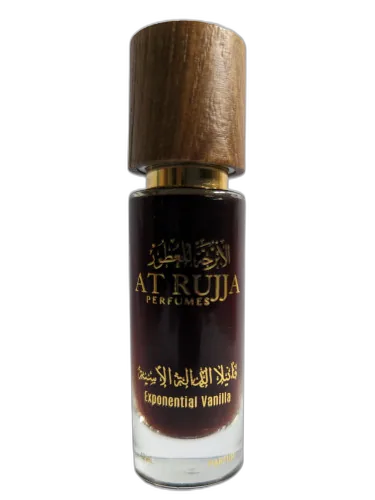
Atrujja
Exponential Vanilla Atrujja
Shared top notes: cacao, coffee, sugar cane
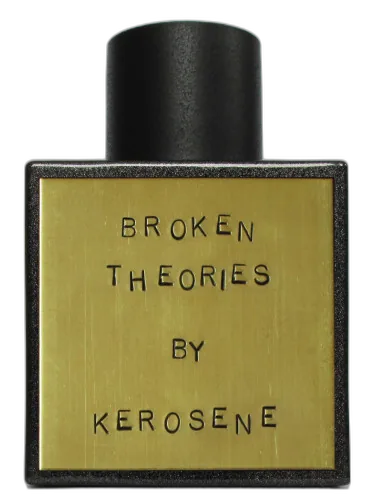
Kerosene
Broken Theories Kerosene
Shared top notes: agarwood (oud), incense, vanilla
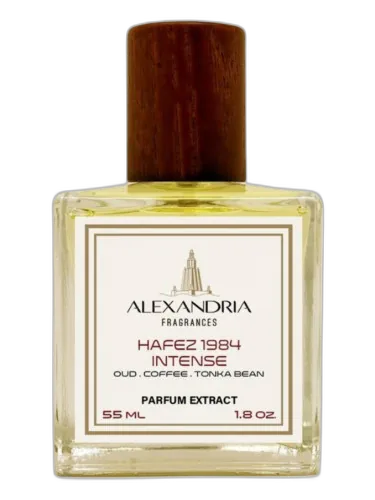
Alexandria Fragrances
Hafez 1984 Intense Alexandria Fragrances
Shared top notes: agarwood (oud), coffee
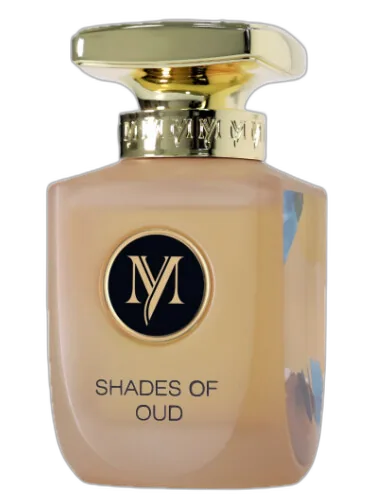
My Perfumes Select
Shades Of Oud My Perfumes Select
Shared top notes: incense
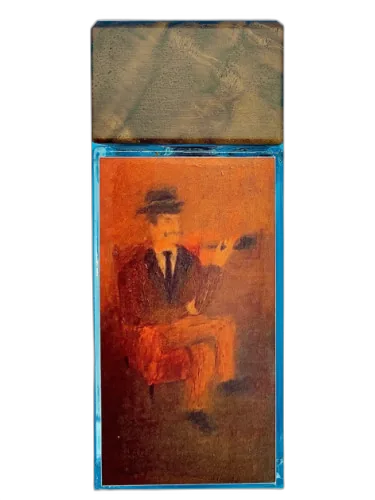
TSVGA Parfums
Pipe Tsvga Parfums
Shared top notes: cacao, coffee, vanilla