
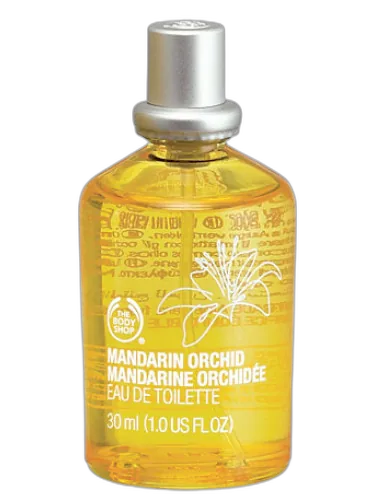

Mandarin Orchid The Body Shop
At a glance
Is Mandarin Orchid The Body Shop worth trying?
Mandarin Orchid by The Body Shop is a Floral fragrance for women.
- Best match
- Casual wear in Spring
- Performance feel
- Moderate longevity with Moderate sillage
- Signature profile
- citrus, fresh, fruity with Mandarin Orange, Orange, Guava
The first impression
Mandarin Orchid by The Body Shop is a Floral fragrance for women. Mandarin Orchid was launched in 2008. Top notes are Mandarin Orange, Orange and Guava; middle notes are Lily-of-the-Valley and Orchid; base notes are Ginger, Musk and Mahogany.
What shapes the scent
The perfumer behind it

Unknown Perfumer
Notes pyramid
Top Notes
First impression · 15-30 min
 Mandarin Orange
 Orange
 Guava
Guava
Heart Notes
Core character · 2-4 hours
 Lily-of-the-Valley
 Orchid
Base Notes
Lasting impression · 4+ hours
 Ginger
 Musk
Musk
 Mahogany
The mood it creates
The Lover Archetype: Portrait of Mandarin Orchid The Body Shop
Essence
A person who gravitates toward Mandarin Orchid by The Body Shop is drawn to its delicate yet vibrant duality-citrusy brightness softened by the lush warmth of orchid. This fragrance mirrors their inner world: a balance of playfulness and depth, sensuality and refinement. They embody the Lover archetype, one who seeks beauty, connection, and pleasure in all aspects of life. Their existence is an ode to the senses, a pursuit of harmony between passion and grace.
Style & Aesthetic
Their tastes are curated with an instinct for elegance-not the cold austerity of minimalism, but the kind that thrums with life. They favor flowing fabrics in earthy tones, accented by the occasional bold hue, much like the fragrance itself-subtle yet arresting. Their home is a sanctuary of textures: velvet cushions, hand-thrown ceramics, shelves lined with poetry and art books. They are drawn to music that evokes emotion-jazz, classical, or the melancholic strum of a Spanish guitar.
Philosophically, they believe in the transformative power of beauty. Not as mere decoration, but as a force that elevates the mundane into the sacred. They see love-romantic, platonic, even the love of a fleeting moment-as the highest form of human experience. Their values are rooted in empathy, hedonism in its noblest sense: the pursuit of joy without exploitation, pleasure without heedlessness.
Relationships
To know them is to be enveloped in warmth. They listen with an intensity that makes others feel truly seen, their laughter infectious, their touch reassuring. Romantic partners are drawn to their ability to make even ordinary evenings feel like rituals-candlelit dinners, spontaneous dances in the kitchen. Yet, their shadow lurks in their idealism. They may grow disillusioned when others fail to match their depth of feeling, withdrawing into melancholy when love proves imperfect.
Friendships are cherished, but they are selective. Superficial connections drain them; they crave bonds that are soulful, conversations that linger past midnight. Their flaw here is a tendency to romanticize people, projecting depth where there may only be passing charm. When reality shatters the illusion, they retreat, nursing a quiet bitterness.
Shadow
The Lover’s greatest strength-their capacity for devotion-can become their undoing. They risk losing themselves in the pursuit of connection, molding their identity to fit the desires of others. At their worst, they may indulge in emotional indulgence, mistaking intensity for authenticity. Their hedonism, if unchecked, slips into escapism-too much wine, too many fleeting romances, all in search of a feeling that never quite lasts.
Yet, even their flaws are born from an excess of what makes them remarkable. Their melancholy is the price of their sensitivity; their occasional flightiness, the side effect of a soul that refuses to settle for the mundane.
Conclusion
They are not meant for rigid routines or sterile environments. Their ideal life is one of fluidity-travel, art, deep conversations under starry skies. They thrive when they embrace their nature without apology, recognizing that their hunger for beauty is not frivolity, but a kind of wisdom.
In the end, the lover of Mandarin Orchid is a reminder that life, at its best, is to be tasted, touched, and treasured-not merely endured. Their existence is an invitation: to feel more deeply, to love more fiercely, and to find the extraordinary in the everyday.
If you like this, try these
Fragrances with a comparable profile - shared accords, notes, and character.

Jennifer Lopez
Love & Glamour Jennifer Lopez
Shared top notes: guava, mandarin orange

Frederic M
Le Temps D'aimer Frederic M
Shared top notes: mandarin orange, orange

Victoria's Secret
Love Is Heavenly (2016) Victoria's Secret
Shared top notes: orange

Natura
Amis <3 Natura
Shared top notes: mandarin orange
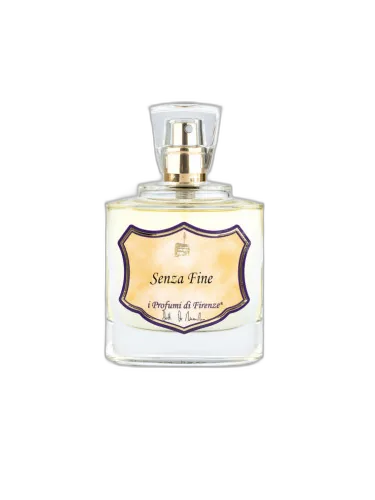
I Profumi di Firenze
Senza Fine I Profumi Di Firenze
Shared top notes: mandarin orange