
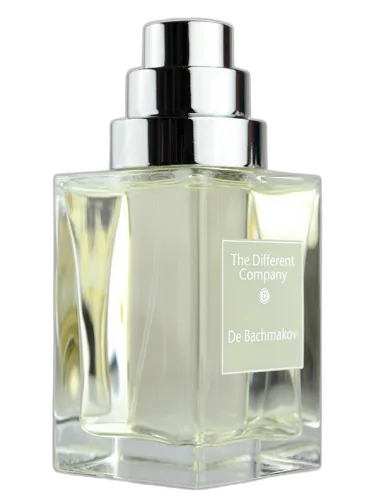

De Bachmakov The Different Company
At a glance
Is De Bachmakov The Different Company worth trying?
De Bachmakov by The Different Company is a Woody Aromatic fragrance for women and men.
- Best match
- Casual wear in Spring, Summer
- Performance feel
- Moderate longevity with Moderate sillage
- Signature profile
- aromatic, fresh spicy, citrus with Bergamot, Coriander, Fig
The first impression
De Bachmakov by The Different Company is a Woody Aromatic fragrance for women and men. De Bachmakov was launched in 2010. The nose behind this fragrance is Celine Ellena. Top notes are Bergamot, Coriander and Fig; middle notes are Shiso, Freesia and Nutmeg; base notes are Cedar and Amber.
What shapes the scent
The perfumer behind it

Celine Ellena
Celine Ellena is a French perfumer who has created fragrances for 100 Bon, E. Marinella, and Fragonard. Her portfolio includes the warm Ambre & Tonka and the floral Mon Lys for Fragonard. She often explores natural ingredients like lavender and iris, resulting in elegant and accessible scents.
Notes pyramid
Top Notes
First impression · 15-30 min
 Bergamot
 Coriander
 Fig
Fig
Heart Notes
Core character · 2-4 hours
 Shiso
Shiso
 Freesia
 Nutmeg
Base Notes
Lasting impression · 4+ hours
 Cedar
Cedar
 Amber
Amber
The mood it creates
The Lover Archetype: Portrait of De Bachmakov The Different Company
Essence
The one who wears De Bachmakov by The Different Company is most closely aligned with The Aesthete, an archetype that embodies a refined, almost hedonistic pursuit of beauty, sensation, and emotional richness. This is not mere indulgence, but a philosophy-an insistence that life must be felt deeply, tasted fully, and adorned with meaning. The Aesthete does not simply exist; they experience, with an intensity that borders on the sacred.
Yet, like all archetypes, The Aesthete has its shadow-a tendency toward excess, a fragility in the face of the mundane, and a sometimes paralyzing fear of banality.
Philosophy & Values
For them, truth is found in sensation, not dogma. They distrust rigid systems, preferring instead the fluidity of emotion and intuition. They believe in the sacredness of small moments-the way a lover’s fingers trace a jawline, the warmth of a shared silence, the slow burn of a well-aged whiskey.
Yet this devotion to beauty can become its own prison. They may disdain practicality, seeing it as a betrayal of their ideals. They might grow impatient with those who do not share their depth of feeling, dismissing them as shallow. Their values, though noble, can isolate them-a life lived in pursuit of the sublime is not always a life lived among others.
Relationships
They do not love lightly. To be close to them is to be drawn into a world of heightened emotion, where every touch, every glance, is weighted with meaning. They seek partners who are equally attuned to nuance-those who understand that love is not just spoken but composed, through shared rituals, whispered confessions, the slow unfurling of vulnerability.
But here, too, the shadow lurks. Their intensity can overwhelm; their need for emotional resonance may become a demand rather than an invitation. They may mistake turbulence for passion, conflating drama with depth. And when reality fails to match their inner vision, they may withdraw, disillusioned.
Shadow
The Aesthete’s greatest weakness is their refusal of the ordinary. Life cannot always be poetry; sometimes it is prose. When faced with mundanity-the drudgery of routine, the disappointments of flawed humanity-they may crumble, or worse, become disdainful. Their pursuit of beauty, if unchecked, can curdle into elitism, a quiet arrogance that dismisses what is simple, unadorned, or imperfect.
Yet even this flaw is born of a noble impulse: the refusal to settle for a life unlived. The challenge for them is not to abandon their ideals, but to learn that beauty exists even in the cracks, even in the ordinary.
Conclusion
De Bachmakov is not for the indifferent. It is for those who see fragrance as an act of self-definition, a way of moving through the world with intention. The one who wears it is both poet and wanderer, seeking not just to live, but to feel living.
They are not without their contradictions-their passion can burn too brightly, their standards can become chains. But in their best moments, they remind us that life is not just to be endured, but to be savored. And in a world that often favors the practical over the profound, that is no small rebellion.
If you like this, try these
Fragrances with a comparable profile - shared accords, notes, and character.
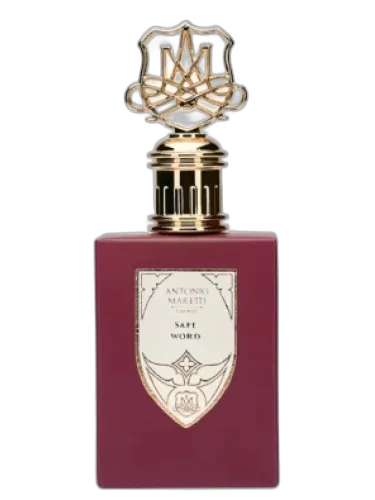
Antonio Maretti
Safe Word Antonio Maretti
Shared top notes: bergamot
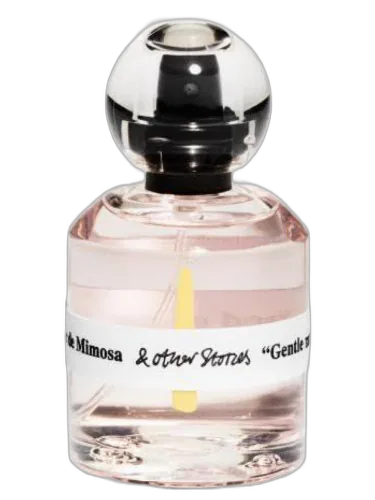
And Other Stories
Fleur De Mimosa And Other Stories
Shared top notes: bergamot
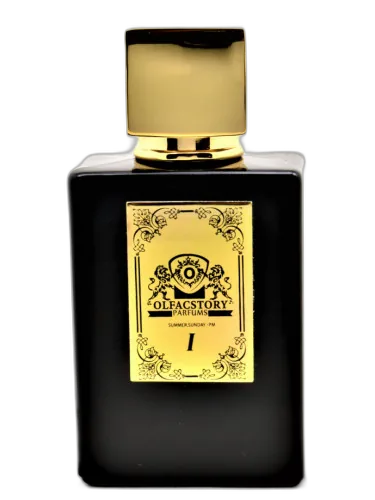
Olfacstory Parfums
I Summer Sunday 3pm Olfacstory Parfums
Shared top notes: bergamot

Calvin Klein
Eternity Summer 2016 Calvin Klein
Shared top notes: bergamot, coriander

Parfum Buro
To Whom It May Concern Parfum Buro
Shared top notes: bergamot