
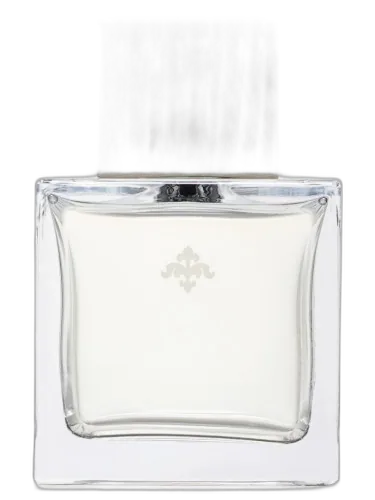

No. 14 The Fragrance Design Studio
At a glance
Is No. 14 The Fragrance Design Studio worth trying?
No.
- Best match
- Casual, Office wear in Spring, Summer
- Performance feel
- Moderate longevity with Moderate sillage
- Signature profile
- floral, rose, citrus with Mandarin Leaf, Peony, Rose
The first impression
No. 14 by The Fragrance Design Studio is a Floral Woody Musk fragrance for women and men. No. 14 was launched in 2012. The nose behind this fragrance is Cecile Hua.
What shapes the scent
The perfumer behind it

Cecile Hua
Cecile Hua has composed fragrances for 4711, Amouroud, Arielle Shoshana, and Atelier Cologne. Her work ranges from fresh citrus blends like 4711 Acqua Colonia Pink Pepper & Grapefruit to deeper floral and woody creations such as Dark Orchid. She is known for her ability to balance clarity with complexity across different styles.
Notes pyramid
All Notes
Complete scent profile
 Mandarin Leaf
 Peony
Peony
 Rose
Rose
 Orange
 Black Currant
 Water Lily
White Cedar Extract
Water Lily
White Cedar Extract
The mood it creates
The Archetype Archetype: Portrait of No. 14 The Fragrance Design Studio
Essence
To wear No. 14 by The Fragrance Design Studio is to embrace a scent that is at once refined and enigmatic-a composition of bergamot, jasmine, and sandalwood, with an undercurrent of something darker, perhaps leather or smoke. This fragrance does not announce itself with brashness but lingers in the air like an unspoken thought, demanding attention only from those who care to notice. The person who chooses it is not one for the obvious or the superficial; they are drawn to the interplay of light and shadow, both in scent and in life.
Their archetype is unmistakably The Sage-the seeker of wisdom, the observer who values knowledge, depth, and the unseen layers beneath appearances. But like all archetypes, the Sage has its shadow, and this person is no exception. They walk the line between enlightenment and detachment, between insight and isolation.
Style & Aesthetic
Their appearance is understated but intentional-nothing is accidental. They favor clean lines, muted tones, and textures that reward closer inspection: a well-worn leather notebook, a wool coat that has weathered years of use, a single piece of jewelry with personal significance. Their style is not about trends but about essence-each item chosen because it resonates with something deeper within them.
Their living space reflects the same philosophy: bookshelves filled with well-loved volumes, a few carefully selected art pieces, perhaps a vintage record player spinning something melancholic yet beautiful. They are drawn to objects with history, things that carry the weight of time and human hands.
Their days are structured but not rigid. They rise early, savoring the quiet hours before the world wakes. Coffee is a ritual, not a habit-they take it black, strong, without distraction. They might journal, sketch, or simply sit in contemplation. Work, for them, must have meaning; they are not suited to mindless routine. Whether they are an artist, a scholar, or a strategist, they approach their craft with a mix of precision and passion.
They are drawn to places of quiet intensity-libraries at dusk, empty galleries, the edge of a forest where the light filters through in fragments. They travel not for escapism but for expansion, seeking experiences that challenge their understanding of the world.
Philosophy & Values
Their mind is a landscape of ideas, always turning over questions of meaning, purpose, and the nature of existence. They are not content with easy answers; they prefer the tension of paradox, the unresolved mystery. They might quote Nietzsche: "One must still have chaos in oneself to be able to give birth to a dancing star." For them, truth is not a fixed point but an ongoing pursuit-one that requires solitude, reflection, and a willingness to question even their own beliefs.
They value authenticity above all else-not the performative kind, but the raw, unvarnished honesty of a mind that refuses to deceive itself. They despise dogma, hypocrisy, and blind conformity. If they have a creed, it is this: Think deeply, act deliberately, and never mistake certainty for truth.
Relationships
They are not a person of many friends, but the ones they keep are bound by intellectual kinship and mutual respect. Conversation with them is never small talk; it is an excavation of ideas, a dance of perspectives. They listen more than they speak, but when they do speak, their words carry weight.
Romantically, they are drawn to those who can match their depth-someone who is unafraid of the dark corners of thought and emotion. They do not love lightly; when they commit, it is with intensity, but they also demand space for solitude. Their shadow here is a tendency toward emotional detachment-they can become so lost in thought that they forget the warmth of human connection.
Shadow
For all their wisdom, they are not immune to folly. Their greatest strength-their intellect-can become their prison. They risk overanalyzing life until it loses its spontaneity, its joy. They may disdain those who live by instinct rather than reason, forgetting that not all truth can be dissected.
Their detachment, while a shield against superficiality, can also be a barrier to intimacy. They may rationalize their emotions until they are rendered bloodless, mistaking coldness for clarity. And in their quest for depth, they sometimes overlook the beauty in simplicity-the uncomplicated pleasure of laughter, the warmth of touch without analysis.
Conclusion
The Sage is not meant to live in the mind alone. Their journey is one of integration-learning to let thought and feeling coexist, to value intuition as much as reason. When they achieve this balance, they become not just a thinker but a guide-someone who illuminates without arrogance, who shares wisdom without condescension.
The fragrance they wear is a mirror of this duality: luminous yet mysterious, structured yet alive with hidden depths. It does not seek to dominate but to linger, to provoke thought, to leave a trace long after they have gone. And so too does this person-not loud, not obvious, but unforgettable to those who truly see them.
If you like this, try these
Fragrances with a comparable profile - shared accords, notes, and character.

Faberlic
Charmante Faberlic
Shared top notes: black currant, mandarin leaf, orange

Adopt Parfums
Mûre Figue Adopt Parfums
Shared top notes: black currant, orange

Place des Lices
Pivoine Place Des Lices
Shared top notes: peony

Yves Saint Laurent
In Love Again Yves Saint Laurent
Shared top notes: black currant

Elen'a Parfum
Freshness Elen'a Parfum
Shared top notes: black currant, orange