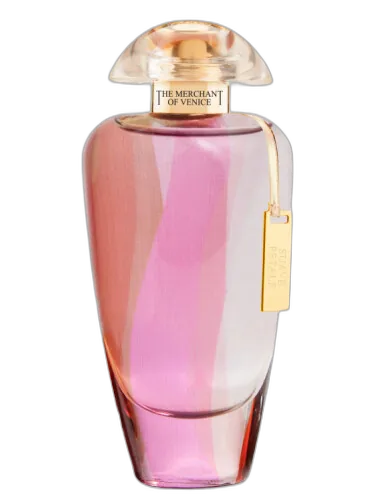
Suave Petals The Merchant Of Venice
At a glance
Is Suave Petals The Merchant Of Venice worth trying?
Suave Petals by The Merchant of Venice is a Floral fragrance for women.
- Best match
- Evening wear in Spring
- Performance feel
- Good longevity with Moderate sillage
- Signature profile
- woody, powdery, fruity with Nectarine blossom, Nectarine, Pineapple
The first impression
Suave Petals by The Merchant of Venice is a Floral fragrance for women. Suave Petals was launched in 2013. Top notes are Nectarine blossom, Nectarine, Pineapple, Apple and Bergamot; middle notes are White Rose, Orris, Orange Blossom and Tuberose; base notes are Patchouli, Sandalwood, Vanilla and Amber.
What shapes the scent
The perfumer behind it

Notes pyramid
Top Notes
First impression · 15-30 min
 Nectarine blossom
 Nectarine
 Pineapple
 Apple
Apple
 Bergamot
Heart Notes
Core character · 2-4 hours
 White Rose
Orris
White Rose
Orris
 Orange Blossom
 Tuberose
Base Notes
Lasting impression · 4+ hours
 Patchouli
 Sandalwood
 Vanilla
 Amber
Amber
The mood it creates
The Lover Archetype: Portrait of Suave Petals The Merchant Of Venice
Essence
To wear Suave Petals by The Merchant of Venice is to embrace a paradox-a fragrance that is at once delicate and commanding, floral yet profound. The person who chooses this scent is not one for loud declarations or brash displays of power. Instead, they move through the world with the quiet confidence of someone who understands allure as an art form, not a weapon. Their archetype is unmistakably The Enchantress-a figure who wields influence through grace, mystery, and an unshakable sense of self.
Style & Aesthetic
Their presence is magnetic, though never ostentatious. They favor fabrics that whisper rather than shout-cashmere, silk, linen-each chosen for texture rather than trend. Their wardrobe is a carefully curated gallery of muted tones with occasional bursts of deep jewel tones, much like the fragrance itself, which balances powdery florals with woody depth.
In their home, every object holds meaning. A Venetian glass vase catches the light just so; an antique mirror reflects not just their face but the weight of history. They are drawn to the baroque not for its excess but for its intricacy-the way beauty reveals itself in layers.
They do not chase success; they orchestrate it. Their career-whether in art, diplomacy, or enterprise-is built on an intuitive understanding of human nature. They excel in roles where perception is currency: a curator, a strategist, a storyteller. Their work is never merely functional; it is always an act of creation.
Yet this devotion to aesthetics can become a cage. At times, they prioritize form over substance, mistaking appearance for truth. They may surround themselves with beauty yet feel an emptiness they cannot name-a hollowness that no amount of refinement can fill.
Philosophy & Values
They believe in the power of subtlety. To them, persuasion is not about force but suggestion-a glance, a pause, a well-placed word. They navigate social hierarchies with ease, not because they crave dominance, but because they understand the delicate dance of human connection. Their philosophy is one of controlled revelation: they reveal only what serves the moment, keeping the rest veiled.
Yet this mastery of influence comes with a shadow. Their ability to enchant can slip into manipulation, not out of malice but habit. They know how to shape perceptions, and sometimes, they do so without fully considering the consequences. Their greatest moral challenge is knowing when to drop the act and be truly seen.
Relationships
In love, they are both tender and elusive. They draw others in with an almost poetic attentiveness-remembering favorite wines, the way someone’s voice softens when they’re tired. But their relationships often follow a pattern: intense beginnings, followed by a slow retreat into mystery. Partners may feel they are chasing a ghost, always one step behind the truth of them.
Their friendships are similarly layered. They attract admirers effortlessly, but few ever penetrate their inner circle. Those who do find a fiercely loyal confidant-one who listens with rare depth and offers advice like a sage. Yet even these intimates may sense an unbridgeable distance, as though part of them remains forever untouchable.
Shadow
The Enchantress’s greatest weakness is her own mystique. In crafting an image of effortless grace, she risks forgetting who she is beneath it. There are moments-rare, but piercing-when she wonders if she has spent her life performing for an audience that never truly knew her.
The antidote lies in vulnerability. Only by allowing the mask to slip can she discover whether she is loved for her illusions or her true self. It is a terrifying prospect, for what if, once seen fully, she is found wanting?
If you like this, try these
Fragrances with a comparable profile - shared accords, notes, and character.