
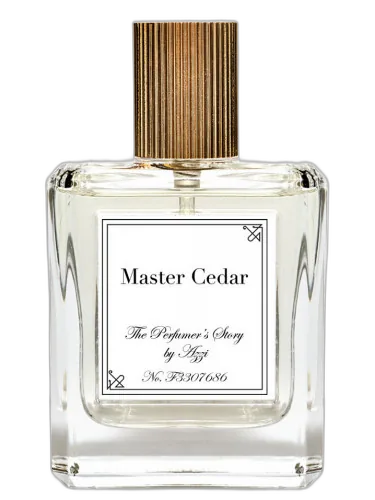

Master Cedar The Perfumer's Story By Azzi
Fragrance Story
Master Cedar by The Perfumer's Story by Azzi is a Oriental Woody fragrance for men. Master Cedar was launched in 2015. The nose behind this fragrance is Azzi Glasser. Top notes are elemi, Bay essence and Pimento; middle notes are Incense, Vetiver and Labdanum; base notes are Myrrh, Agarwood (Oud) and Amber.
Composition Profile
About the Perfumer

Azzi Glasser
Azzi Glasser is a British perfumer known for her work with fashion and lifestyle brands, including Bella Freud and Laura Ashley. Her style is characterized by bold, narrative-driven scents that often blend unexpected notes to evoke emotion and memory. She created the distinctive leather-and-incense fragrance Ginsberg Is God for Bella Freud and the fresh, floral Emma for Laura Ashley, showcasing her range from edgy to elegant.
Fragrance Notes
Top Notes
First impression · 15-30 min
 elemi
elemi
 Bay essence
 Pimento
Heart Notes
Core character · 2-4 hours
 Incense
 Vetiver
 Labdanum
Base Notes
Lasting impression · 4+ hours
 Myrrh
Myrrh
.jpg) Agarwood (Oud)
Agarwood (Oud)
 Amber
Amber
Master Cedar The Perfumer's Story By Azzi by The Perfumer's Story by Azzi offers a distinctive olfactory experience that stands out from other fragrances in its category.
Crafted with the finest ingredients and a blend of traditional and modern perfumery techniques, this fragrance represents the pinnacle of the perfumer's art.
Master Cedar The Perfumer's Story By Azzi embodies the distinctive style of The Perfumer's Story by Azzi while adding a unique chapter to their fragrance portfolio.
Character Profile
The Sage Archetype: Portrait of Master Cedar The Perfumer's Story By Azzi
Essence
The one who wears Master Cedar by The Perfumer’s Story is a seeker of depth, a quiet force of wisdom, and a guardian of timeless truths. Their soul resonates with the Sage archetype, the eternal student and teacher, the one who values knowledge not as mere accumulation but as a way of being. Cedar, with its grounding warmth and austere elegance, mirrors their nature-rooted yet expansive, ancient yet alive.
This is not a person who chases trends or loud affirmations of identity. Their presence is understated, their influence subtle. They do not dominate a room; they deepen it. The Sage does not merely think-they contemplate. They do not merely speak-they weigh. Their mind is a forest of ideas, where every thought is allowed to grow, mature, and, if necessary, fall away.
Shadow
Yet, wisdom has its burdens. The Sage’s greatest strength-their detachment-can become their flaw. In their pursuit of understanding, they may retreat too far into the mind, forgetting the pulse of raw, unexamined life. Their measured nature can harden into aloofness, their patience into passivity. They may mistake observation for participation, watching the world rather than shaping it.
There is also the danger of intellectual pride. The Sage, so accustomed to seeing clearly, may grow impatient with those who do not. Their quiet confidence can curdle into subtle condescension, a silent judgment of those who live by instinct rather than reason.
But the true Sage knows that wisdom is not static. The cedar does not resist the wind; it bends, it adapts, it grows. The one who wears Master Cedar understands that knowledge must be tempered with humility, that insight is worthless if it does not serve life. Their journey is not toward perfection but toward integration-the marriage of thought and action, solitude and connection.
They are not a hermit, though they may sometimes feel like one. They are a keeper of fires, a guardian of what endures. And in the quiet embers of their presence, others find warmth, clarity, and the rare gift of being truly seen.
Conclusion
Their tastes are refined but never ostentatious. They prefer the patina of well-worn leather over glossy newness, the texture of raw linen over synthetic sheen. Their wardrobe is a study in muted tones-charcoal, deep greens, the brown of aged paper-colors that whisper rather than shout. They might collect rare books, not for display, but for the quiet communion with minds long gone.
Philosophy is not an abstract exercise for them; it is the lens through which they navigate existence. Stoicism, Zen, or existentialism may shape their worldview, but they wear these influences lightly. They do not preach; they observe. Their values are rooted in authenticity, intellectual honesty, and the quiet dignity of self-containment.
Relationships are few but profound. They do not crave constant companionship, yet those who earn their trust find a well of loyalty. Their love is not effusive but steady-like the slow burn of cedarwood, warming without consuming. They are drawn to those who can match their depth, who understand that silence is not emptiness but a form of conversation.
Similar Fragrances
Fragrances with a comparable profile - shared accords, notes, and character.
The Perfumer's Story by Azzi
Master Cedar The Perfumer's Story By Azzi
Shared accords: amber, aromatic, balsamic

Boadicea the Victorious
Greenwich Boadicea The Victorious
Shared accords: amber, aromatic, balsamic

Amouage
Interlude Man Amouage
Shared accords: amber, balsamic, fresh spicy
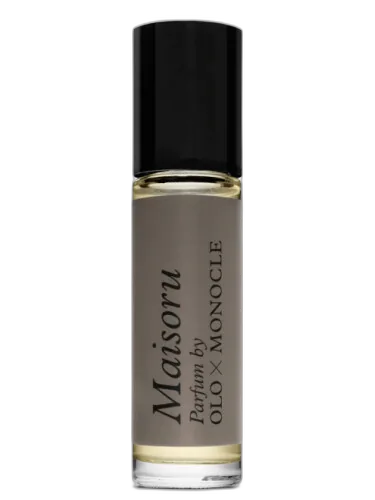
OLO
Maisoru Olo
Shared accords: amber, aromatic, balsamic

Afnan
Supremacy Incense Afnan
Shared accords: amber, aromatic, balsamic