


Tiffany Tiffany
At a glance
Is Tiffany Tiffany worth trying?
Tiffany by Tiffany is a Floral fragrance for women.
- Best match
- Evening wear in Spring
- Performance feel
- Good longevity with Moderate sillage
- Signature profile
- woody, white floral, powdery with Black Currant, Mandarin Orange, Taif Rose
The first impression
Tiffany by Tiffany is a Floral fragrance for women. Tiffany was launched in 1987. The nose behind this fragrance is François Demachy. Top notes are Black Currant and Mandarin Orange; middle notes are Taif Rose, Ylang-Ylang, African Orange Flower, Iris, Jasmine, Violet Leaf and Lily-of-the-Valley; base notes are Sandalwood, Amber, Vetiver and Vanille.
What shapes the scent
The perfumer behind it

François Demachy
François Demachy is a renowned French perfumer best known for his long tenure as the in-house perfumer for Dior, but he has also created extensively for Acqua di Parma. His work for Acqua di Parma includes the Blu Mediterraneo line, such as Arancia La Spugnatura and Mirto Di Panarea, as well as luxury leather and oud compositions. Demachy's style is characterized by classic elegance, natural ingredients, and a mastery of Mediterranean and woody accords.
Notes pyramid
Top Notes
First impression · 15-30 min
 Black Currant
 Mandarin Orange
Heart Notes
Core character · 2-4 hours
 Taif Rose
 Ylang-Ylang
 African Orange Flower
 Iris
Iris
 Jasmine
 Violet Leaf
 Lily-of-the-Valley
Base Notes
Lasting impression · 4+ hours
 Sandalwood
 Amber
Amber
 Vetiver
 Vanille
The mood it creates
The Lover Archetype: Portrait of Tiffany Tiffany
Essence
To wear Tiffany Tiffany is to embrace an aura of refined elegance-a fragrance that balances luminous florals with a hint of sparkling citrus, wrapped in a polished, almost crystalline sophistication. The person who chooses this scent does not merely seek to smell pleasant; they curate an impression, an extension of their inner world. They are, above all, a Lover-not in the trivial sense of romantic pursuit, but in the Jungian sense of one who seeks beauty, harmony, and deep emotional resonance in all things.
Style & Aesthetic
Their surroundings reflect their devotion to the aesthetic. Their home is not cluttered, nor is it austere-it is considered. A carefully arranged bouquet of peonies rests on a marble table; their wardrobe is a study in timeless silhouettes, favoring clean lines, soft neutrals, and the occasional bold jewel tone. They understand that elegance is not about excess but about precision-each piece must serve a purpose, whether functional or emotional.
They are drawn to art that evokes feeling-perhaps a Rothko for its depth of color, a Klimt for its sensual golds, or a Japanese woodblock print for its delicate balance of nature and craftsmanship. Music, too, is chosen with care: Debussy for its fluidity, Sade for its smoky warmth, or modern jazz that plays with tension and release.
They thrive in environments that allow for both structure and spontaneity-a well-planned dinner party that gives way to impassioned conversation, a meticulously organized travel itinerary that leaves room for serendipity. Routine comforts them, but they are not rigid; they understand that the most exquisite moments often arise from slight deviations.
Professionally, they gravitate toward fields where aesthetics and emotion intersect-design, art curation, hospitality, or even psychology. They are not suited for purely analytical roles unless they can infuse them with a sense of meaning.
Philosophy & Values
For them, life is not merely to be lived but to be felt. They reject the cold utilitarianism of modern efficiency, believing instead that beauty and emotion are necessities, not luxuries. Their philosophy leans toward the romantic-not in naivety, but in the insistence that love, in its broadest sense, is the highest form of human expression.
They value loyalty, depth, and authenticity in relationships. Superficial interactions exhaust them; they crave conversations that linger into the night, where laughter and vulnerability intertwine. Yet, they are not indiscriminate-their circle is small, curated like their perfume collection.
Relationships
In love, they are both generous and demanding. They give freely-affection, attention, thoughtfulness-but they also expect reciprocity. Their ideal partner is not merely a companion but a co-creator of a shared aesthetic life. They are drawn to those who appreciate nuance, who understand that a glance can carry as much weight as a declaration.
Yet, this intensity can become their shadow. When disappointed, they may retreat into melancholy or, worse, become possessive. The Lover’s fear is irrelevance-to be forgotten, to have their devotion go unreciprocated. In darker moments, they may cling to fading connections or romanticize past loves beyond reason.
Shadow
The Lover’s greatest weakness is their capacity for idealization. They may mistake infatuation for destiny, confuse aesthetic perfection with emotional truth. When reality fails to match their vision, they may grow disillusioned, even bitter. Their pursuit of harmony can tip into avoidance-of conflict, of ugliness, of the raw edges of life that cannot be polished away.
At their worst, they become the Tragic Romantic, clinging to a fantasy rather than engaging with the imperfect, living world. But when balanced, they are the ones who remind us that life, in all its chaos, is worth savoring-not despite its flaws, but because of them.
If you like this, try these
Fragrances with a comparable profile - shared accords, notes, and character.
Maitre Parfumeur et Gantier
Vocalise Extravagante Maitre Parfumeur Et Gantier
Shared top notes: black currant
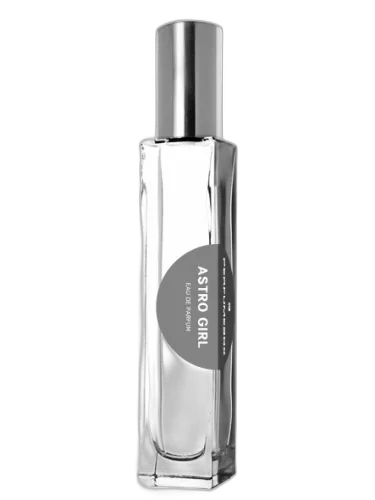
PerfumeBox
Astro Girl Perfumebox
Shared top notes: black currant, mandarin orange
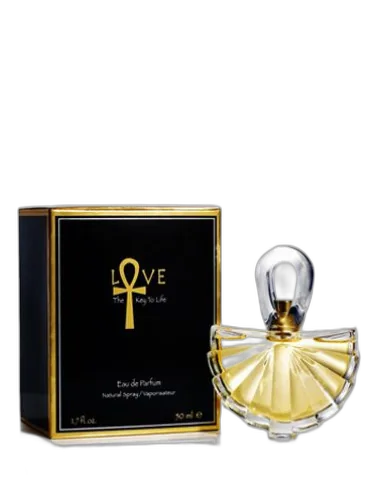
Love The Key to Life
Love The Key To Life Love The Key To Life
Shared top notes: black currant

Oribe
Cote D'azur Oribe
Shared top notes: black currant

Balenciaga
Eau De Cristobal Balenciaga
Shared top notes: black currant, mandarin orange