
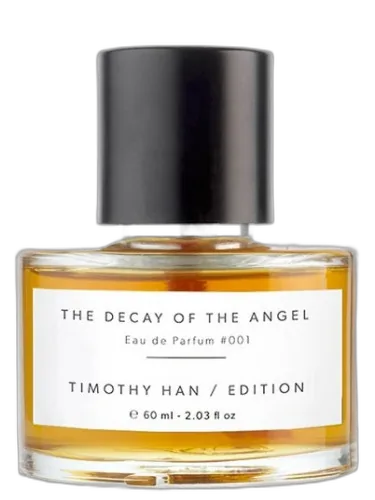

The Decay Of The Angel Timothy Han Edition Perfumes
At a glance
Is The Decay Of The Angel Timothy Han Edition Perfumes worth trying?
The Decay Of The Angel by Timothy Han Edition Perfumes is a Oriental Woody fragrance for women and men.
- Best match
- Evening wear in Fall
- Performance feel
- Very Good longevity with Strong sillage
- Signature profile
- woody, fresh spicy, aromatic with Kyara Incense, Mandarin Orange, Rose
The first impression
The Decay Of The Angel by Timothy Han Edition Perfumes is a Oriental Woody fragrance for women and men. The Decay Of The Angel was launched in 2017. Top notes are Kyara Incense, Mandarin Orange, Rose and Neroli; middle notes are Cade oil, Jasmine Sambac and Acácia; base notes are Patchouli, Agarwood (Oud), Cedar, Labdanum and Tonka Bean.
What shapes the scent
The perfumer behind it

Notes pyramid
Top Notes
First impression · 15-30 min
 Kyara Incense
 Mandarin Orange
 Rose
Rose
 Neroli
Heart Notes
Core character · 2-4 hours
 Cade oil
Jasmine Sambac
Cade oil
Jasmine Sambac
 Acácia
Base Notes
Lasting impression · 4+ hours
 Patchouli
 Agarwood (Oud)
 Cedar
Cedar
 Labdanum
 Tonka Bean
The mood it creates
The Lover Archetype: Portrait of The Decay Of The Angel Timothy Han Edition Perfumes
Essence
The one who wears The Decay of the Angel is not seduced by the obvious. Their soul is drawn to the scent of transformation-the moment when beauty begins to rot, when the sacred bleeds into the profane. This fragrance, with its notes of burnt wood, incense, and something faintly animalistic, mirrors their inner world: a place where elegance and ruin dance together. They are an Alchemist, one who seeks meaning in the transmutation of things, who believes that decay is not an end but a metamorphosis.
Style & Aesthetic
Their wardrobe is a carefully curated contradiction. Vintage leather jackets softened by time, silk shirts with frayed edges, jewelry tarnished just enough to suggest history. They prefer muted tones-deep burgundies, charcoal grays-but with a single, deliberate flourish: a ring of oxidized silver, a scarf dyed with indigo that still smells faintly of the vat. They do not follow trends; they haunt them, picking through the remnants of past eras like an archaeologist of style.
Their living space is a sanctuary of controlled chaos. Books on alchemy, botany, and forgotten religions line the shelves. A dried bouquet sits in a corner, petals brittle but still holding their shape. Candles burn low, their wax pooling in uneven layers. They are not afraid of dust; they see it as evidence of time’s passage, a quiet collaborator in the slow art of entropy.
Philosophy & Values
To them, life is an experiment. They do not fear impermanence; they court it. Their philosophy is rooted in the belief that destruction is necessary for creation, that the most profound truths are found in what society discards. They may quote Heraclitus-"No man steps in the same river twice"-but they do so not as a melancholic reflection, but as a challenge. They are drawn to the occult, not out of superstition, but because it represents the hidden mechanics of existence. They value depth over dogma, intuition over doctrine.
Yet, their reverence for decay can sometimes slip into nihilism. They flirt with the void, and if unchecked, they may mistake detachment for wisdom. Their shadow whispers that nothing truly matters, that all things are equal in their eventual disintegration. This is their danger: the temptation to dissolve rather than transform.
Relationships
They do not seek crowds, but they are not a recluse. They attract those who sense something hidden beneath the surface-the poets, the seekers, the ones who are also drawn to the edges of things. Their love is intense but transient; they are more fascinated by the process of connection than its permanence. They may leave lovers with a book of esoteric symbols or a vial of strange perfume, a relic of their presence.
Yet, their detachment can wound. They may vanish without explanation, not out of cruelty, but because they believe all bonds must eventually dissolve. Their shadow is the fear of being consumed-by love, by expectation, by the weight of another’s need. They guard their solitude fiercely, sometimes at the cost of intimacy.
Conclusion
They walk the line between creation and decay, between the sacred and the profane. The Decay of the Angel is their scent because it is a reminder: everything must rot before it can become something new. The question is whether they will let themselves be transformed in the process-or if they will remain forever in the liminal space, a ghost among ruins.
If you like this, try these
Fragrances with a comparable profile - shared accords, notes, and character.
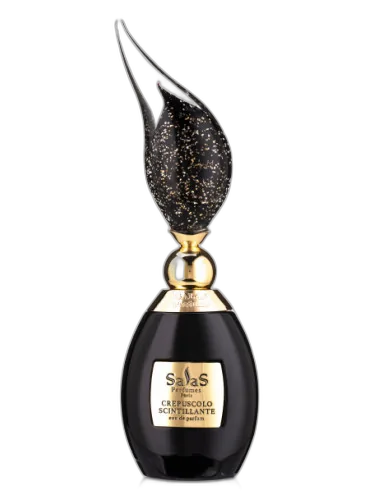
Salas
Crepuscolo Scintillante Salas
Shared heart notes: jasmine sambac
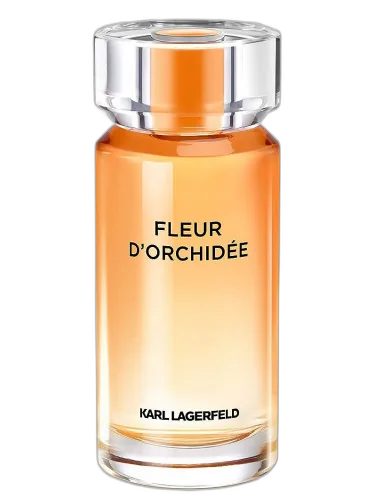
Karl Lagerfeld
Fleur D'orchidee Karl Lagerfeld
Shared top notes: neroli

Viktor&Rolf
Bonbon Couture Viktor&rolf
Shared top notes: mandarin orange, neroli
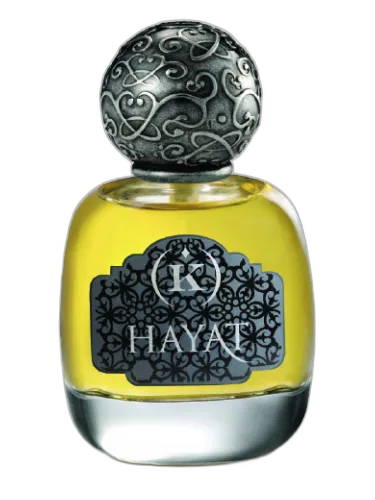
Kemi Blending Magic
Hayat Kemi Blending Magic
Shared base notes: agarwood (oud), cedar, patchouli
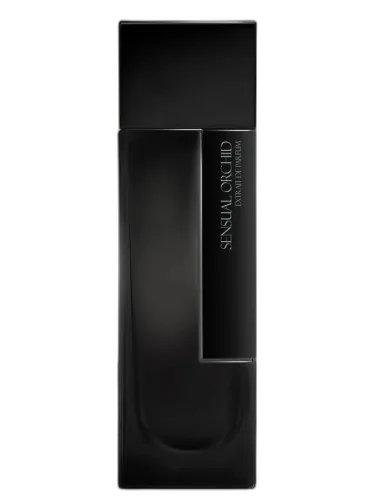
Laurent Mazzone Parfums
Sensual Orchid Laurent Mazzone Parfums
Shared top notes: mandarin orange, neroli