
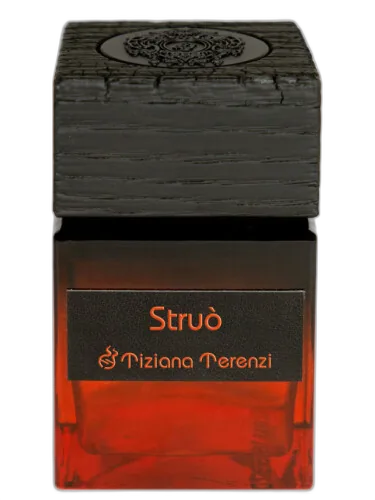

Struò Tiziana Terenzi
Fragrance Story
Struò by Tiziana Terenzi is a fragrance for women and men. This is a new fragrance. Struò was launched in 2024. The nose behind this fragrance is Paolo Terenzi. Top notes are Calabrian bergamot, Sicilian Mandarin, Labdanum and Saffron; middle notes are Cambodian Oud, Green Tea, Cardamom, Cedar and Cloves; base notes are Beeswax, Laotian Oud, Ambergris, Leather, Birch and Tobacco.
Composition Profile
About the Perfumer

Paolo Terenzi
Paolo Terenzi is a perfumer known for his work with Antonio Croce, creating a range of fragrances including Ardente, Incantevole, Meraviglia, Perfetta, Sofisticata, Straordinaria, and Unica. He also composed 1+7 Extrait De Parfum for D'OTTO. Terenzi's style is characterized by bold, opulent compositions that often feature rich florals and warm resins.
Fragrance Notes
Top Notes
First impression · 15-30 min
 Calabrian bergamot
Sicilian Mandarin
Calabrian bergamot
Sicilian Mandarin
 Labdanum
 Saffron
Heart Notes
Core character · 2-4 hours
 Cambodian Oud
Green Tea
Cambodian Oud
Green Tea
 Cardamom
 Cedar
Cedar
 Cloves
Base Notes
Lasting impression · 4+ hours
 Beeswax
 Laotian Oud
 Ambergris
 Leather
 Birch
Birch
 Tobacco
Struò Tiziana Terenzi by Tiziana Terenzi offers a distinctive olfactory experience that stands out from other fragrances in its category.
Crafted with the finest ingredients and a blend of traditional and modern perfumery techniques, this fragrance represents the pinnacle of the perfumer's art.
Struò Tiziana Terenzi embodies the distinctive style of Tiziana Terenzi while adding a unique chapter to their fragrance portfolio.
Character Profile
The Lover Archetype: Portrait of Struò Tiziana Terenzi
Essence
To wear Struò by Tiziana Terenzi is to embrace the intoxicating dance between passion and restraint, between the ephemeral and the eternal. This fragrance-rich with dark florals, smoky woods, and a whisper of spice-is not for the timid. It is for those who understand that life is to be tasted, savored, and occasionally devoured. The person who chooses this scent is, at their core, a Lover-not merely in the romantic sense, but in the Jungian archetypal sense: one who seeks deep connection, beauty, and transcendence through sensory and emotional experience.
Shadow
Yet, like all archetypes, the Lover has its darker currents. Their pursuit of beauty can tip into obsession-chasing an ideal that does not exist, mourning the impermanence of even the most perfect moments. They are prone to melancholy, a quiet sorrow that lingers after the last note of a song fades, after a lover departs, after the scent of Struò evaporates from their skin.
At their worst, they can become lost in sensation, mistaking intensity for meaning. They may indulge too deeply in wine, in passion, in the thrill of the new-not out of recklessness, but because they fear the flatness of a life unlived. Their hunger for connection can sometimes overwhelm those who cannot match their depth, leaving them feeling isolated even in a crowded room.
And then there is the danger of vanity-not in the shallow sense, but in the way they sometimes mistake aesthetics for substance. They may grow impatient with those who do not share their reverence for the sublime, dismissing practicality as vulgarity.
Conclusion
Their world is one of heightened sensation. They surround themselves with textures that beg to be touched-velvet drapes, aged leather, silk that slips through fingers like water. Their home is a sanctuary of dim lighting and deep hues, where candles burn low and music plays just loud enough to be felt in the bones. They are drawn to art that unsettles as much as it enchants-Caravaggio’s chiaroscuro, the fevered poetry of Baudelaire, the melancholic chords of a late-night jazz record.
In matters of taste, they reject the ordinary with quiet defiance. Their wardrobe is a study in controlled decadence: tailored suits with a single undone button, dresses that cling just enough to suggest rather than reveal. They prefer the weight of vintage jewelry, pieces that carry the ghosts of previous owners, over the sterile shine of something new.
Philosophically, they believe in the sacredness of pleasure-not as hedonism, but as a form of wisdom. To them, beauty is not frivolous; it is a rebellion against the mundane. They see love, in all its forms, as the closest thing to divinity a mortal can touch.
Similar Fragrances
Fragrances with a comparable profile - shared accords, notes, and character.
Tiziana Terenzi
Struò Tiziana Terenzi
Shared accords: amber, animalic, beeswax
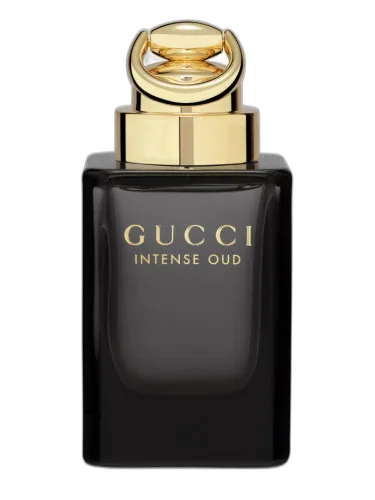
Gucci
Intense Oud Gucci
Shared accords: amber, animalic, leather

Abdul Karim Al Faransi
Oud Hindi Abdul Karim Al Faransi
Shared accords: amber, animalic, honey

Pineward Perfumes
Funerie Pineward Perfumes
Shared accords: amber, animalic, leather
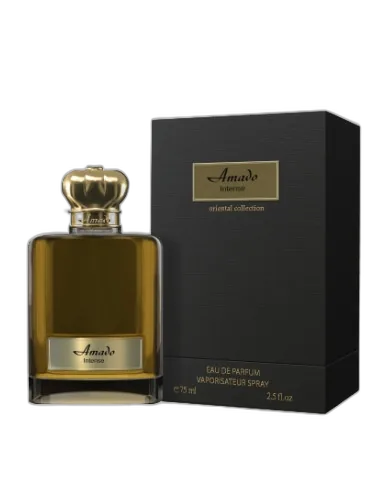
Amado
Amado Intense Amado
Shared accords: amber, animalic, citrus