


Dolce Narciso Torre Of Tuscany
At a glance
Is Dolce Narciso Torre Of Tuscany worth trying?
Dolce Narciso by Torre of Tuscany is a Floral Fruity Gourmand fragrance for women and men.
- Best match
- Evening wear in Fall, Winter
- Performance feel
- Good longevity with Moderate sillage
- Signature profile
- fruity, sweet, green with Big Strawberry, Galbanum, Dried Plum
The first impression
Dolce Narciso by Torre of Tuscany is a Floral Fruity Gourmand fragrance for women and men. Dolce Narciso was launched in 2012. The nose behind this fragrance is Arturetto Landi. Top notes are Big Strawberry, Galbanum, Dried Plum and Aldehydes; middle notes are Narcissus, Gardenia and Iris; base notes are Vanilla, Ambergris, Powdery Notes and Tonka Bean.
What shapes the scent
The perfumer behind it

Arturetto Landi
Arturetto Landi is an Italian perfumer known for his work with brands like Adjiumi and Al-Jazeera Perfumes. His style balances classic structure with bold contrasts, often blending rich resins with unexpected floral or gourmand notes. Notable creations include the complex 1918 Parfum National series and the intense, darkly sweet Adjiumi Incubo.
Notes pyramid
Top Notes
First impression · 15-30 min
 Big Strawberry
 Galbanum
 Dried Plum
 Aldehydes
Heart Notes
Core character · 2-4 hours
 Narcissus
 Gardenia
 Iris
Iris
Base Notes
Lasting impression · 4+ hours
 Vanilla
 Ambergris
 Powdery Notes
 Tonka Bean
The mood it creates
The Lover Archetype: Portrait of Dolce Narciso Torre Of Tuscany
Essence
This person is most closely aligned with The Aesthete-a figure who lives for beauty, sensuality, and refinement. The Aesthete does not merely observe beauty; they embody it, curate it, and demand it from life. Dolce Narciso Torre of Tuscany, with its delicate white florals, powdery softness, and understated elegance, is the olfactory signature of someone who seeks harmony in all things. They are drawn to the subtle rather than the loud, the timeless rather than the fleeting.
Yet, like all archetypes, The Aesthete has its shadow. When beauty becomes an obsession, it can lead to detachment from the raw, imperfect world. The pursuit of perfection may render them intolerant of disorder, and their love of refinement may slip into vanity or superficiality.
Style & Aesthetic
Their world is a carefully composed tableau. They favor muted tones-creams, soft grays, and deep ivories-colors that whisper rather than shout. Their wardrobe is tailored but never stiff, flowing but never careless. They appreciate fabrics that feel as good as they look: cashmere, silk, fine linen.
In art, they are drawn to the Renaissance-Botticelli’s ethereal figures, the delicate interplay of light in Vermeer’s interiors. Music is an intimate affair: Chopin’s nocturnes, the melancholic warmth of a cello. They do not chase trends but instead cultivate a personal canon of beauty, one that transcends the noise of the moment.
Their home is a sanctuary, a place where every object has been chosen with intention. A vintage decanter on the sideboard, a single stem in a slender vase, the faintest trace of their fragrance lingering in the air. They are not materialistic in the vulgar sense-they do not accumulate for status-but they believe in surrounding themselves with things that elevate the spirit.
They move through the world with quiet confidence, neither seeking attention nor shunning it. Their presence is felt not through force but through an unspoken magnetism, the kind that makes people lean in when they speak.
Philosophy & Values
For them, life is not merely to be lived but to be felt. They reject the utilitarian mindset that reduces existence to function. Instead, they believe in the sacredness of the senses-the way sunlight filters through a glass of wine, the weight of a well-bound book in the hands, the quiet pleasure of a perfectly brewed cup of tea.
They value depth over breadth, quality over quantity. Relationships, too, must meet this standard: they seek connections that are rich in meaning, not merely convenient. Superficial chatter exhausts them; they crave conversations that linger like the scent of their favorite fragrance-subtle, complex, and impossible to forget.
Relationships
They do not love carelessly. Their affections are deliberate, cultivated like a rare orchid. When they choose someone, it is with full awareness-not out of desperation or loneliness, but because the other person has stirred something in them that feels essential.
Yet, their high standards can become a barrier. They may dismiss others too quickly for lacking refinement, mistaking polish for substance. Their shadow emerges when their love of beauty hardens into elitism, when they forget that even the most exquisite rose has thorns.
Shadow
The Aesthete’s greatest weakness is their intolerance for the unrefined. Life is messy, chaotic, and often ugly-but they may retreat from this reality, seeking refuge in their curated world. In doing so, they risk becoming detached, mistaking aesthetic perfection for true depth.
Their disdain for the ordinary can also make them impatient with those who do not share their sensibilities. They may grow frustrated with loved ones who fail to appreciate the nuances they cherish, forgetting that beauty is subjective.
Conclusion
To wear Dolce Narciso Torre of Tuscany is to declare a quiet allegiance to beauty-not as mere decoration, but as a way of being. This person is neither hedonist nor ascetic; they are a harmonizer, one who seeks to balance the sensual and the spiritual.
Yet, like all who live by an ideal, they must guard against its excesses. For beauty, when worshipped too devoutly, can become a gilded cage. The challenge for The Aesthete is to love the world not only when it is perfect, but also when it is flawed-to find grace even in the cracks.
If you like this, try these
Fragrances with a comparable profile - shared accords, notes, and character.
L'Occitane en Provence
Vanille & Narcisse L'occitane En Provence
Shared heart notes: gardenia, narcissus

Thera Cosméticos
Levitha Thera Cosméticos
Shared heart notes: gardenia

M. Micallef
Gardenia No 41 M. Micallef
Shared heart notes: gardenia
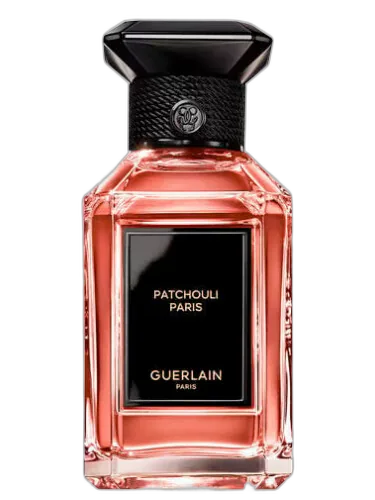
Guerlain
Patchouli Paris Guerlain
Shared top notes: aldehydes
IrisAgro Ltd. Bulgaria
Zmey Irisagro Ltd. Bulgaria
Shared heart notes: gardenia, narcissus