
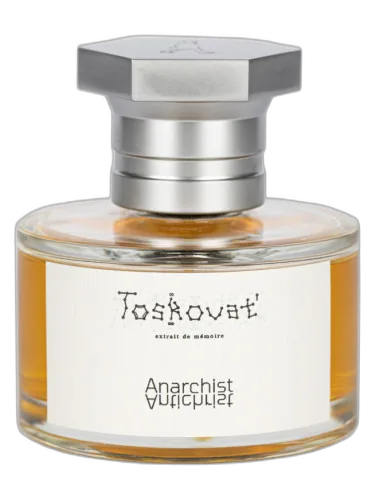

Anarchist A- Toskovat'
Fragrance Story
Anarchist A- by Toskovat' is a Aromatic fragrance for women and men. This is a new fragrance. Anarchist A- was launched in 2022. The nose behind this fragrance is David-Lev Jipa-Slivinschi. Top notes are Credit Cards, Whiskey and Snow; middle notes are Money, Candle Wax and Ink; base notes are Plastic Bag, Priest’s Clothes, Holy Water, Olibanum Sacra Resin Green and Precious Woods.
Composition Profile
About the Perfumer

David-Lev Jipa-Slivinschi
David-Lev Jipa-Slivinschi is a perfumer whose work appears under Adi Ale Van, Ataraxia Perfumery, and Caeleste Parfums. His catalog includes Gethsemane - Elixir Of Faith, Grapa R Fume 1 and 2, and Amaretto Jazz In The Melting Room. Jipa-Slivinschi’s style is eclectic, often exploring gourmand, smoky, and spiritual themes.
Fragrance Notes
Top Notes
First impression · 15-30 min
 Credit Cards
 Whiskey
 Snow
Snow
Heart Notes
Core character · 2-4 hours
 Money
Money
 Candle Wax
 Ink
Ink
Base Notes
Lasting impression · 4+ hours
 Plastic Bag
 Priest’s Clothes
 Holy Water
 Olibanum Sacra Resin Green
 Precious Woods
Anarchist A- Toskovat' by Toskovat' offers a distinctive olfactory experience that stands out from other fragrances in its category.
Crafted with the finest ingredients and a blend of traditional and modern perfumery techniques, this fragrance represents the pinnacle of the perfumer's art.
Anarchist A- Toskovat' embodies the distinctive style of Toskovat' while adding a unique chapter to their fragrance portfolio.
Character Profile
The Rebel Archetype: Portrait of Anarchist A- Toskovat'
Essence
The Rebel archetype lives in defiance of systems, norms, and expectations. Anarchist A- captures this spirit through a scent that smells like a revolution: the cold bite of snow, the metallic tang of credit cards, and the warmth of whiskey on a desperate breath. It is the fragrance of someone who has walked away from the table, who finds poetry in the discarded and the forbidden.
This is not a perfume for blending in. It announces a refusal to be categorized, a commitment to chaos as a creative force. The wearer carries the scent of holy water and plastic bags, of money and candle wax-a paradox that mirrors the Rebel’s truth: destruction and creation are the same act.
Style & Aesthetic
The Rebel dresses in layers of contradiction: a priest’s cassock over ripped jeans, a leather jacket lined with silk. Their wardrobe is a collage of thrift-store finds and deliberate stains, each piece a statement against consumerism. They favor black, grey, and the occasional flash of red-a blood orange or a cherry, but always with a smoky edge.
Their aesthetic is raw, unfinished, and deeply intentional. They might wear a single silver ring on a chapped finger, or carry a notebook filled with ink-smudged manifestos. Every accessory is a tool for disruption, every fabric a flag of dissent.
Philosophy & Values
The Rebel believes that true freedom comes from rejecting all authority, including the authority of the self. They value authenticity over comfort, and see comfort as a trap. Their philosophy is one of constant questioning: why this rule? Who benefits? What happens if we burn it down?
They are drawn to the sacred in the profane-the holy water that blesses a protest, the incense that masks the smell of tear gas. They believe in the power of the collective, but also in the necessity of the individual act of defiance. For them, every choice is a political statement.
Relationships
Relationships with the Rebel are intense, volatile, and transformative. They attract those who are tired of the ordinary, who see in the Rebel a mirror of their own hidden fire. But the Rebel’s loyalty is to the cause, not to the person; they can be distant, disappearing into their own world of ideas and actions.
They love fiercely but conditionally, demanding that their partners also be willing to break the rules. A relationship with a Rebel is a partnership in revolution, a shared mission rather than a quiet domesticity. They are magnetic, but their shadow can leave others feeling used or abandoned.
Lifestyle
The Rebel’s life is a series of rituals that defy convention. They wake early to write in a journal by candlelight, or stay up late in smoky bars, arguing philosophy. Their home is a sanctuary of found objects: a stack of books on anarchist theory, a collection of vinyl records, a shrine made of melted candle wax and dried flowers.
They move through the world with a purposeful stride, always scanning for signs of injustice or beauty. They might work as a bartender, a street artist, or a community organizer-any role that keeps them close to the edge. Their daily life is a performance of resistance.
Shadow
The Rebel’s shadow is the risk of becoming the very thing they oppose. Their defiance can harden into dogma, their creativity into destruction for its own sake. They may alienate those who love them, mistaking loyalty for weakness, and find themselves alone in the ruins of their own making.
There is also the danger of performative rebellion-wearing the costume of an anarchist while benefiting from the systems they claim to hate. The shadow whispers that the fight is futile, that all revolutions are co-opted, and that the only true act is to burn everything down.
Conclusion
Anarchist A- is a portrait of the Rebel in full bloom: a scent that smells like the end of the world and the beginning of something new. It is for those who are willing to walk through the fire of their own contradictions, who find holiness in the broken and the profane. To wear it is to declare that you are not a product of your society, but its undoing.
Similar Fragrances
Fragrances with a comparable profile - shared accords, notes, and character.
Toskovat'
Anarchist A- Toskovat'
Shared accords: aromatic, fresh, whiskey

Recensione Negativa
Lanterne A Roma Recensione Negativa
Shared accords: aromatic, fresh, woody

Goutal
Eau D'hadrien Goutal
Shared accords: aromatic, fresh, woody
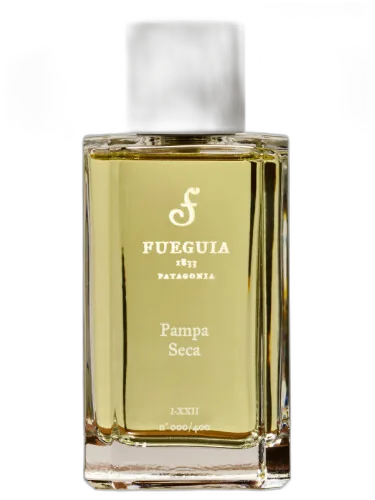
Fueguia 1833
Pampa Seca Fueguia 1833
Shared accords: aromatic, fresh, woody
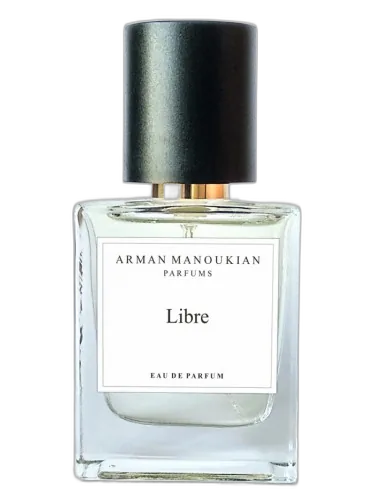
Arman Manoukian Parfums
Libre Arman Manoukian Parfums
Shared accords: aromatic, fresh, woody