


Ind. Smoke Urban Outfitters
At a glance
Is Ind. Smoke Urban Outfitters worth trying?
Ind.
- Best match
- Evening wear in Fall
- Performance feel
- Good longevity with Moderate sillage
- Signature profile
- woody, amber, anis with Star Anise, Cashmere Wood, Amberwood
The first impression
Ind. Smoke by Urban Outfitters is a fragrance for women and men.
What shapes the scent
The perfumer behind it

Notes pyramid
All Notes
Complete scent profile
 Star Anise
 Cashmere Wood
 Amberwood
 Orange
 Vetiver
The mood it creates
The Alchemist Archetype: Portrait of Ind. Smoke Urban Outfitters
Essence
The one who favors Ind. Smoke by Urban Outfitters is not merely drawn to a fragrance-they are drawn to an atmosphere, a mood, a whispered rebellion. This scent, with its smoky, woody, and slightly burnt undertones, speaks of a soul who thrives in the liminal spaces of life, where the raw meets the refined, where the past lingers like embers in the present. The dominant archetype here is The Wanderer-the seeker, the outsider, the one who resists being pinned down by convention.
The Wanderer is not lost; they are deliberately untethered. They move through the world with a quiet intensity, collecting experiences like fragments of a mosaic they may never complete. Their life is an experiment, a series of impressions rather than a fixed narrative.
Style & Aesthetic
Their aesthetic is a carefully curated dissonance-vintage leather jackets paired with minimalist black sweaters, worn-in boots that have seen too many streets, a silver ring that carries the weight of some forgotten story. They prefer textures that tell tales: distressed denim, unpolished metals, the roughness of raw wood. Their home, if they stay in one place long enough to call it that, is a mix of industrial and bohemian-exposed brick, a few well-chosen books, a record player spinning something melancholic yet defiant.
They do not chase trends; they absorb what resonates and discard the rest. Their taste in music leans toward the atmospheric-post-punk, dark folk, or the kind of electronic music that feels like wandering through a city at 3 AM. Films that unsettle and provoke stay with them longer than tidy narratives.
They thrive in cities, where anonymity and possibility collide. They are the ones who know the best underground venues, the hidden cafés, the alleys where street art blooms overnight. Their work, if they have a conventional job at all, is something that allows movement-freelancing, creative pursuits, or a trade that keeps their hands busy but their mind wandering.
They are nocturnal by inclination, most alive when the world sleeps. Cigarettes (or the occasional contemplative pipe) are less a habit than a ritual-a way to mark time, to pause, to exhale the weight of thought.
Philosophy & Values
Freedom is their highest ideal, but not in the reckless sense-rather, the freedom to define themselves on their own terms. They distrust dogma, whether it comes from tradition or the latest cultural wave. Their philosophy is fluid, shaped by encounters, books left half-finished, and conversations with strangers in dimly lit bars.
They value authenticity, though they are aware of its paradox-how can one be "authentic" when identity is always shifting? This tension keeps them questioning, keeps them moving. They are drawn to those who have lived deeply, who carry scars and stories, who do not apologize for their edges.
Yet, their independence can harden into isolation. They may mistake detachment for depth, avoiding commitments that might anchor them too firmly. Their shadow is the Exile-the one who drifts so far they forget how to return.
Relationships
Their relationships are intense but often transient. They attract others with their mystery, their refusal to be fully known. Lovers find them magnetic but elusive; friendships are deep but sporadic. They do not fear solitude-they cultivate it. But there is a cost: intimacy requires vulnerability, and the Wanderer sometimes confuses solitude with strength.
They are drawn to kindred spirits-artists, misfits, those who live on the periphery. But they struggle with the mundane demands of sustained connection. Promises feel like chains; routine suffocates. Their challenge is to learn that roots need not be cages-that belonging can be chosen, not just inherited.
Shadow
The danger for the Wanderer is that motion becomes evasion. They may mistake restlessness for growth, mistaking new scenery for new selves. Their avoidance of permanence can harden into a fear of depth-always skimming the surface, never diving.
They may also romanticize their own detachment, seeing themselves as tragically misunderstood when, in truth, they have simply refused to be understood. The shadow of the Wanderer is the ghost-present but intangible, leaving traces but never a full imprint.
Conclusion
The fragrance they wear is ephemeral, like them-lingering but never staying. Yet, the finest smoke carries the memory of fire. The challenge for this soul is not to abandon their wandering spirit, but to let it burn with purpose rather than scatter into the wind.
They are not here to settle. But perhaps, in time, they will learn that some roots are carried within.
If you like this, try these
Fragrances with a comparable profile - shared accords, notes, and character.

DSH Perfumes
Fire Opal (orange 2; Natural) Dsh Perfumes
Shared top notes: star anise

Premiere Note
Java Wood Premiere Note
Shared top notes: star anise

24
24 Platinum 24
Shared top notes: orange

Kenzo
Air Kenzo
Shared top notes: vetiver
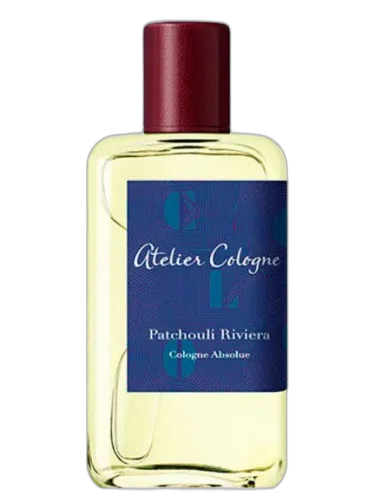
Atelier Cologne
Patchouli Riviera Atelier Cologne
Shared top notes: star anise