
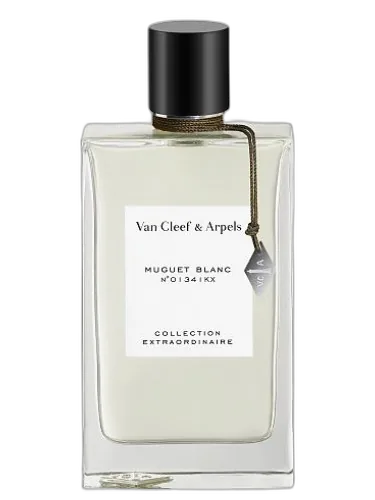

Muguet Blanc Van Cleef & Arpels
At a glance
Is Muguet Blanc Van Cleef & Arpels worth trying?
Muguet Blanc by Van Cleef & Arpels is a Floral fragrance for women.
- Best match
- Casual wear in Spring
- Performance feel
- Moderate longevity with Moderate sillage
- Signature profile
- white floral, fresh, green with Lily-of-the-Valley, Peony, Green Notes
The first impression
Muguet Blanc by Van Cleef & Arpels is a Floral fragrance for women. Muguet Blanc was launched in 2009. The nose behind this fragrance is Antoine Maisondieu.
What shapes the scent
The perfumer behind it

Antoine Maisondieu
Antoine Maisondieu is a French perfumer and a senior vice president at Givaudan, where he has worked for decades. He is known for creating refined, modern compositions that balance natural elegance with subtle complexity. His work includes the woody, leathery Bottega Veneta Pour Homme and the fresh, floral Acqua di Parma Magnolia Nobile.
Notes pyramid
All Notes
Complete scent profile
 Lily-of-the-Valley
 Peony
Peony
 Green Notes
 Neroli
 White Cedar Extract
The mood it creates
The Innocent Archetype: Portrait of Muguet Blanc Van Cleef & Arpels
Essence
To wear Muguet Blanc by Van Cleef & Arpels is to embrace an aura of delicate purity-a fragrance that whispers of lily-of-the-valley, tender greens, and a soft, powdery vanilla. The person who adores this scent is not one who seeks the bold or the brash; they are drawn to the quiet elegance of the ephemeral. Their soul resonates with the Innocent archetype, one who finds solace in simplicity, harmony, and an almost childlike faith in beauty.
This is not naivety, but a conscious choice-a refusal to let cynicism taint their perception of the world. They believe in kindness as a force, in grace as a discipline, and in the small, luminous moments that make life worth living.
Relationships
In love and friendship, they are devoted, often to a fault. Their loyalty is unwavering, but this can become their undoing-they sometimes mistake patience for virtue, enduring what they should walk away from. Their optimism blinds them to malice until it is too late, and their reluctance to engage in conflict means they swallow grievances until they curdle into resentment.
They attract those who crave their warmth but may exploit their gentleness. Their greatest fear is disillusionment-the moment when their faith in others shatters. Yet when they learn to temper their innocence with discernment, they become not fragile, but quietly formidable.
Shadow
Their flaw is their aversion to darkness-both in the world and within themselves. They refuse to acknowledge their own capacity for pettiness, envy, or spite, believing these emotions beneath them. But what is repressed does not vanish; it festers. When pushed too far, their kindness can turn passive-aggressive, their idealism into a brittle moralism that judges those who do not meet their standards of purity.
They must learn that true innocence is not ignorance-it is the choice to remain kind despite knowing the world’s cruelty.
Conclusion
To live alongside this person is to be reminded of life’s quiet joys-the first sip of tea in the morning, the scent of rain on warm earth, the comfort of a well-loved melody. They are not warriors or rebels; they are the keepers of softness in a world that often forgets its value.
And if they can embrace their own shadows without losing their light, they become something rare: not merely innocent, but wise.
If you like this, try these
Fragrances with a comparable profile - shared accords, notes, and character.
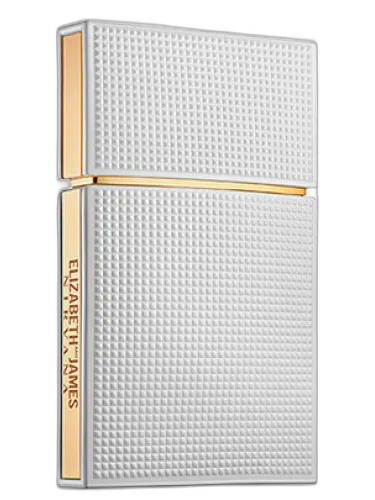
Elizabeth and James
Nirvana White Elizabeth And James
Shared top notes: lily-of-the-valley, peony

Scent of Finland
Kajo Scent Of Finland
Shared top notes: lily-of-the-valley

Cartier
Pur Muguet Cartier
Shared top notes: green notes, lily-of-the-valley

Kenzo
Parfum D'ete 2002 Kenzo
Shared top notes: green notes, lily-of-the-valley
Новая Заря (The New Dawn)
Помпон (pompon) Новая Заря (the New Dawn)
Shared top notes: green notes, lily-of-the-valley