


Seashell Wamaq
At a glance
Is Seashell Wamaq worth trying?
Seashell by WAMAQ is a Floral Aquatic fragrance for women and men.
- Best match
- Casual wear in Summer
- Performance feel
- Good longevity with Moderate sillage
- Signature profile
- animalic, marine, amber with Bergamot, Cardamom, Olibanum
The first impression
Seashell by WAMAQ is a Floral Aquatic fragrance for women and men. This is a new fragrance. Seashell was launched in 2024. The nose behind this fragrance is Amer Alradhi. Top notes are Bergamot, Cardamom and Olibanum; middle notes are Sea water, Salt, Magnolia and Rose; base notes are Choya Nakh, Seashells, Ambergris, Patchouli, Musk and Haitian Vetiver.
What shapes the scent
The perfumer behind it

Amer Alradhi
Amer Alradhi is a perfumer known for his work with Amer Perfumes and the WAMAQ line. His style blends traditional Middle Eastern ingredients like oud and jasmine with modern, transparent compositions. Notable creations include Arabian Jasmine, Charred Oud, and Mandaroud, which showcase his ability to balance rich, smoky notes with fresh citrus and floral accords.
Notes pyramid
Top Notes
First impression · 15-30 min
 Bergamot
 Cardamom
 Olibanum
Heart Notes
Core character · 2-4 hours
Sea water
 Salt
Salt
 Magnolia
 Rose
Rose
Base Notes
Lasting impression · 4+ hours
 Choya Nakh
Seashells
Choya Nakh
Seashells
 Ambergris
 Patchouli
 Musk
Haitian Vetiver
Musk
Haitian Vetiver
The mood it creates
The Lover Archetype: Portrait of Seashell Wamaq
Essence
The one who is drawn to Seashell Wamaq is ruled by the Wanderer archetype-a soul forever in motion, not in body alone but in spirit. This fragrance, with its marine freshness, salt-kissed florals, and whispers of driftwood, speaks to a being who finds solace in the liminal, the spaces between land and sea, stability and change.
The Wanderer is not merely a traveler but a philosopher of horizons. They do not flee from life but seek to embrace it in all its forms, believing that truth is found not in permanence but in the act of movement itself. Their essence is fluid, their identity shaped by experience rather than dogma.
Philosophy & Values
To live as the Wanderer is to reject the tyranny of the fixed self. They are drawn to the transient-morning tides, shifting dunes, the scent of rain on warm stone. Their philosophy is one of impermanence, yet not in a nihilistic sense. Rather, they see beauty in the fleeting, wisdom in the unfinished.
Their tastes reflect this: they favor raw, organic textures-linen that wrinkles, unpolished wood, ceramics shaped by hand. Their home is sparse but deliberate, filled with objects that carry stories-a seashell from a distant shore, a book of poetry with sand still caught in its pages. They read Rilke, Pessoa, and the Tao Te Ching, finding in them the same quiet reverence for the unknown.
In conversation, they are neither aloof nor overly effusive. They listen deeply, but their thoughts often drift beyond the immediate, as if half-attuned to some distant call. Their humor is dry, their insights unexpected. They do not argue to win but to explore, and they are as comfortable in silence as in speech.
Relationships
The Wanderer loves, but not in the way of those who seek to possess. Their relationships are marked by a gentle distance, an understanding that to hold too tightly is to suffocate. They are drawn to kindred spirits-those who, like them, value freedom over security.
Yet this very quality can be their shadow. Their reluctance to plant roots may leave others feeling unmoored, as if they are always one step from departure. They may mistake avoidance for independence, fleeing when closeness threatens their cherished autonomy. Their partners may admire their spirit but ache for something more solid, more anchored.
Shadow
The Wanderer’s greatest strength-their refusal to be confined-can curdle into rootlessness. When untempered, their love of movement becomes evasion. They may mistake restlessness for growth, mistaking new shores for deeper understanding when, in truth, they are merely running from themselves.
At their worst, they become the Drifter, a ghost of their own potential, always seeking but never arriving. They may grow cynical, dismissing commitment as weakness, mistaking detachment for wisdom. The sea, once a symbol of freedom, becomes a prison of endless wandering.
Conclusion
Yet when the Wanderer integrates their shadow, they become the Wayfarer-one who moves with purpose, not escape. They learn that true freedom is not the absence of ties but the ability to choose them consciously. They carry their home within them, finding stillness even in motion.
The lover of Seashell Wamaq is neither entirely of the land nor the sea. They are the one who walks the shoreline, feet in two worlds, forever drawn to the next horizon-but now, perhaps, with the wisdom to know when to stay.
If you like this, try these
Fragrances with a comparable profile - shared accords, notes, and character.
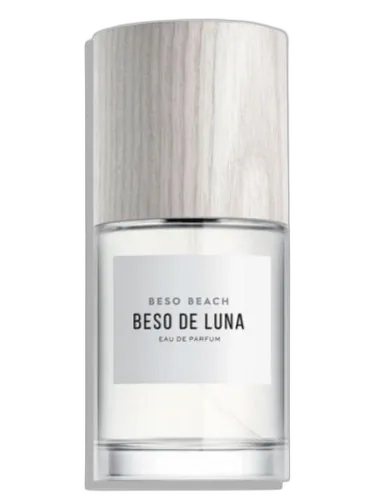
Beso Beach Perfumes
Beso De Luna Beso Beach Perfumes
Shared top notes: bergamot

Ted Baker
Second Skin Ted Baker
Shared top notes: bergamot, cardamom

Jusbox
Live 'n' Loud Jusbox
Shared top notes: bergamot, cardamom

Tree Of Life
Illuminating Rose Tree Of Life
Shared top notes: bergamot, cardamom

Oneiros
Floritura Oneiros
Shared top notes: bergamot, cardamom