
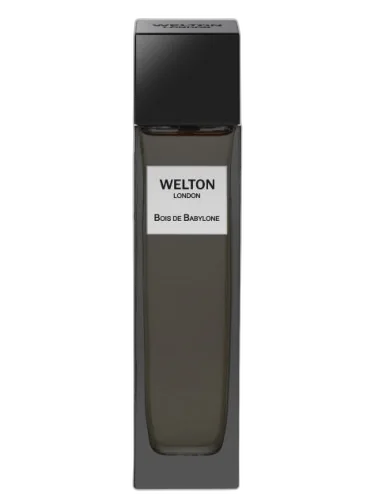

Bois De Babylone Eau De Parfum Welton London
At a glance
Is Bois De Babylone Eau De Parfum Welton London worth trying?
Bois de Babylone Eau de Parfum by Welton London is a Leather fragrance for women and men.
- Best match
- Evening wear in Fall
- Performance feel
- Good longevity with Moderate sillage
- Signature profile
- woody, ozonic, aquatic with Violet Leaf, Elemi resin, Fig Blossom
The first impression
Bois de Babylone Eau de Parfum by Welton London is a Leather fragrance for women and men. Bois de Babylone Eau de Parfum was launched in 2017. The nose behind this fragrance is John-Paul Welton. Top notes are Violet Leaf, Elemi resin and Fig Blossom; middle notes are Leather, Freesia and Incense; base notes are Cashmere Wood and Cedar.
What shapes the scent
The perfumer behind it

John-Paul Welton
John-Paul Welton is a perfumer and the founder of Welton London, a niche fragrance house. He has created a diverse range of scents for the brand, including Baicha, Bel Iris, Bois De Babylone, Cuir Insolite, Essence De Bois Précieux, Iconic Amber Oud, Jasmin Sacre, and Keemun. Welton's style blends traditional perfumery with modern, artistic touches, often featuring tea, iris, leather, and oud notes.
Notes pyramid
Top Notes
First impression · 15-30 min
 Violet Leaf
 Elemi resin
 Fig Blossom
Heart Notes
Core character · 2-4 hours
 Leather
 Freesia
 Incense
Base Notes
Lasting impression · 4+ hours
Cashmere Wood
 Cedar
Cedar
The mood it creates
The Alchemist Archetype: Portrait of Bois De Babylone Eau De Parfum Welton London
Essence
This person is, above all, a seeker-one who values wisdom, transformation, and the hidden depths of existence. The fragrance Bois De Babylone-with its rich, woody, resinous, and subtly smoky character-speaks to someone who is drawn to the ancient, the intellectual, and the mysterious. The Sage archetype fits them perfectly: they are a thinker, a philosopher, a collector of knowledge, but not in a dry or detached way. Their pursuit of understanding is sensual, almost alchemical-they seek to transmute raw experience into meaning.
Style & Aesthetic
Their surroundings reflect a deliberate curation of the timeless. They favor dark woods, aged leather, and the weight of well-worn books. Their wardrobe leans toward understatement-tailored but not ostentatious, with textures that reward closer inspection: cashmere, raw silk, perhaps a vintage watch with a story behind it. They appreciate craftsmanship, not as a status symbol, but as evidence of human ingenuity.
In taste, they gravitate toward the complex and layered-single-malt whisky, bitter chocolate, the kind of coffee that demands attention. Music is likely an eclectic mix: baroque compositions, jazz that lingers in minor keys, or the occasional haunting folk melody. They are not afraid of melancholy; they find beauty in it.
Philosophy & Values
They believe in the power of knowledge, but not in the sterile, academic sense. For them, wisdom is something lived, something that seeps into the bones. They may be drawn to esoteric traditions-alchemy, Hermeticism, Jungian psychology-not as dogma, but as maps for navigating the unseen. They value depth over speed, insight over convenience.
Their morality is not rigid but fluid, shaped by introspection. They distrust absolutes, preferring the tension of paradox. They might say, "Truth is not a fixed point, but a process of distillation." Yet this very flexibility can sometimes make them seem elusive, even to those closest to them.
Relationships
They are not a social butterfly, but neither are they a recluse. Their friendships are few but profound, built on mutual respect for depth and authenticity. Romantic partners must understand their need for solitude-they will not be possessed, nor will they possess. Love, for them, is a meeting of minds as much as bodies.
Yet here lies a shadow: their intellectual detachment can become emotional distance. They may analyze feelings rather than surrender to them, turning intimacy into a puzzle to solve rather than an experience to embrace. Their partners may at times feel like students in their private academy of thought.
Shadow
Every Sage risks becoming lost in their own labyrinth. When unbalanced, they may slip into excessive skepticism, dismissing what cannot be dissected. Their love of complexity can turn into contrarianism-they may reject simplicity not because it is false, but because it does not satisfy their hunger for depth.
Worse still, they may fall into the trap of knowing without doing. The alchemist who never leaves the study becomes a mere collector of theories. Their greatest fear? To be a spectator of life rather than a participant.
Conclusion
For this person, growth lies in grounding their wisdom in action. To step out of the library, the study, the mind-and into the world. To let their knowledge breathe, to risk being wrong, to embrace the messiness of lived experience. When they do, their Sage archetype becomes not just a thinker, but a guide-one who illuminates the path for others, not through dogma, but through the quiet authority of a life deeply examined.
Bois De Babylone is their scent because it is a fragrance of history, of depth, of something that lingers long after the first encounter. And so, too, is their presence-subtle, enduring, impossible to forget.
If you like this, try these
Fragrances with a comparable profile - shared accords, notes, and character.

Tommy Hilfiger
The Girl Tommy Hilfiger
Shared top notes: violet leaf
Aerin
Tuberose Le Jour Aerin
Shared base notes: cashmere wood, cedar
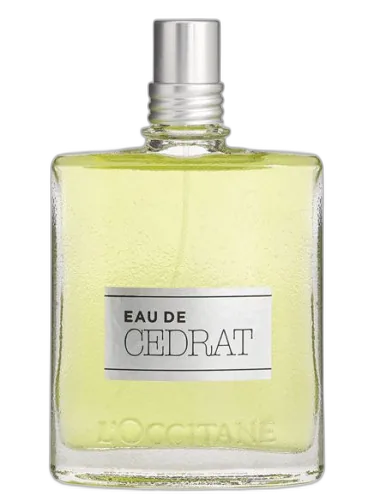
L'Occitane en Provence
Eau De Cedrat L'occitane En Provence
Shared base notes: cashmere wood, cedar
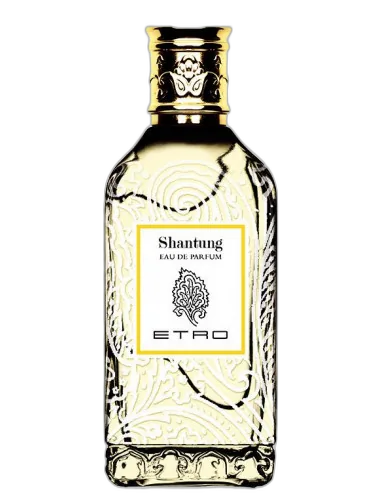
Etro
Shantung Etro
Shared heart notes: incense

Pierre Balmain
Balmain Homme Pierre Balmain
Shared heart notes: leather