


The Scent Of Banat Wesker
At a glance
Is The Scent Of Banat Wesker worth trying?
The Scent of Banat by Wesker is a Leather fragrance for women and men.
- Best match
- Evening wear in Fall
- Performance feel
- Very Good longevity with Strong sillage
- Signature profile
- leather, woody, earthy with Olibanum, Blackberry, Patchouli
The first impression
The Scent of Banat by Wesker is a Leather fragrance for women and men. The Scent of Banat was launched in 2021. Top notes are Olibanum, Blackberry, Patchouli and Cistus Incanus; middle notes are Oak, Tobacco Blossom, Roasted Coffee Beans and Chamomile; base notes are Suede, Castoreum, Soil Tincture and Oakmoss.
What shapes the scent
The perfumer behind it

Wesker
Wesker is a perfumer recognized for their distinctive and evocative scent creations. Their work includes The Scent Of Banat, which showcases a unique and memorable olfactory profile. Wesker's approach often leans toward bold, unconventional compositions that stand out in the fragrance world. Their artistry reflects a dedication to crafting scents with depth and individuality.
Notes pyramid
Top Notes
First impression · 15-30 min
 Olibanum
 Blackberry
 Patchouli
 Cistus Incanus
Heart Notes
Core character · 2-4 hours
 Oak
Oak
 Tobacco Blossom
Roasted Coffee Beans
Tobacco Blossom
Roasted Coffee Beans
 Chamomile
Base Notes
Lasting impression · 4+ hours
 Suede
Suede
 Castoreum
Soil Tincture
Castoreum
Soil Tincture
 Oakmoss
The mood it creates
The Archetype Archetype: Portrait of The Scent Of Banat Wesker
Essence
This individual is defined by the Alchemist archetype-a seeker of transformation, a weaver of mystery, and a connoisseur of the obscure. They do not merely wear a fragrance; they wield it as an elixir, a distillation of their essence. The Scent of Banat Wesker, with its enigmatic blend of dark florals, smoky resins, and an undercurrent of something indefinable, mirrors their own nature: complex, layered, and resistant to easy interpretation.
Like the alchemists of old, they are drawn to the liminal-the spaces between light and shadow, the sacred and the profane. They do not seek to be understood, but to provoke understanding in others. Their presence is an invitation to look deeper, to question the obvious.
Style & Aesthetic
Their appearance is a carefully composed paradox-elegant but unsettling, refined but with an edge of decay. They favor textures that suggest history: aged leather, velvet with a faint sheen of wear, silver tarnished just enough to hint at secrets. Their palette leans toward the nocturnal-deep burgundies, charcoal grays, blacks that swallow light.
They are drawn to fragrances that evoke memory and mystery, which is why The Scent of Banat Wesker resonates with them. It is not a perfume for the crowd, but for those who linger in the margins, who understand that allure is often a whisper, not a shout.
Their life is a curated experiment. They may keep odd hours, finding the night more hospitable to thought. Their home is a cabinet of curiosities-antique books, strange artifacts, a collection of half-finished sketches and handwritten notes. They are not hoarders, but selectors, believing that objects carry energy and must be chosen with intention.
They indulge in ritual: the slow preparation of coffee, the deliberate lighting of candles, the precise application of fragrance. These are not mere habits, but acts of devotion to the idea that the mundane can be sacred.
Philosophy & Values
They live by a personal creed: reality is malleable, and identity is a crafted illusion. They reject the notion of fixed truths, preferring instead the fluidity of perception. This is not mere relativism, but a deliberate embrace of paradox-they believe that contradictions contain the richest truths.
Their values are unconventional, shaped by a blend of aesthetic rigor and intellectual curiosity. Beauty, to them, is not merely in harmony but in tension-the way a dissonant note can make a melody more haunting. They are drawn to the decadent, the baroque, the slightly grotesque, seeing in these things a deeper honesty than in sanitized perfection.
Yet, beneath this philosophical detachment lies a quiet yearning-for meaning, for transcendence. They are not nihilists, but seekers who distrust easy answers.
Relationships
They do not form bonds lightly. Their relationships are few but intense, built on mutual fascination rather than convenience. They attract those who are drawn to enigmas, who find comfort in the unresolved. Their lovers are often artists, poets, or fellow wanderers-people who appreciate that love, like alchemy, requires both fire and patience.
Yet, their shadow looms here: they can be elusive to the point of cruelty, withdrawing just as intimacy deepens. They fear being fully known, for to be known is to be fixed-and fixation is the antithesis of transformation.
Shadow
Every alchemist risks becoming a deceiver-not of others, but of themselves. Their love of mystery can curdle into obscurantism, their detachment into emotional evasion. They may begin to mistake ambiguity for depth, mystique for substance.
There is also a danger of self-mythologizing, of becoming so enamored with their own persona that they lose touch with the raw, unrefined self beneath. The greatest challenge for this individual is to allow vulnerability-to accept that even alchemists must sometimes dissolve before they can transform.
Conclusion
They are neither saint nor cynic, but something more intriguing-a soul in perpetual metamorphosis. The Scent of Banat Wesker is their armor and their confession, a fragrance that does not reveal but suggests. They walk the world as both artist and artifact, forever crafting themselves into something new.
And perhaps, in the end, that is the most honest way to live-not as a fixed being, but as an ongoing experiment in becoming.
If you like this, try these
Fragrances with a comparable profile - shared accords, notes, and character.

Chanel
Antaeus Chanel
Shared base notes: castoreum, oakmoss
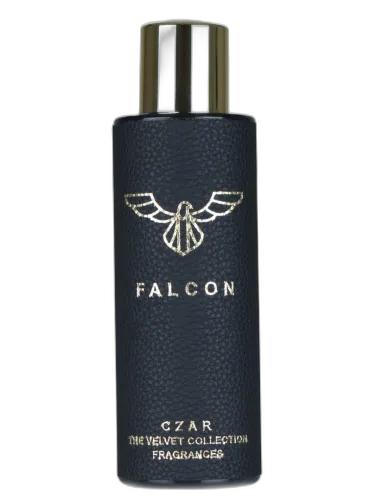
CZAR
Falcon X Aslan Gülçiçek Czar
Shared top notes: olibanum, patchouli

FUMparFUM
Theatre Scent No 1 Fumparfum
Shared top notes: blackberry, olibanum
Nishane
Unutamam Nishane
Shared base notes: castoreum, oakmoss

Les Folies Du Parfum
Nemea Les Folies Du Parfum
Shared base notes: castoreum, oakmoss