


Ocean Eyes Who Is Elijah
At a glance
Is Ocean Eyes Who Is Elijah worth trying?
Ocean Eyes by Who is Elijah is a Aromatic Aquatic fragrance for women and men.
- Best match
- Casual wear in Summer
- Performance feel
- Good longevity with Moderate sillage
- Signature profile
- citrus, woody, aromatic with Sea Salt, Grapefruit, Mandarin Orange
The first impression
Ocean Eyes by Who is Elijah is a Aromatic Aquatic fragrance for women and men. This is a new fragrance. Ocean Eyes was launched in 2024. The nose behind this fragrance is Raquel Bouris.
What shapes the scent
The perfumer behind it

Raquel Bouris
Raquel Bouris is the founder and perfumer of the Australian niche brand Who is Elijah. She creates fragrances that are inspired by nature and modern minimalism, often using sustainable and natural ingredients. Her collection includes scents like Haze, Muse, and Nightcap, which are designed to be unisex and evoke a sense of calm and sophistication.
Notes pyramid
All Notes
Complete scent profile
 Sea Salt
 Grapefruit
 Mandarin Orange
 Amberwood
 Juniper
 Musk
Musk
The mood it creates
The Wanderer Archetype: Portrait of Ocean Eyes Who Is Elijah
Essence
Ocean Eyes Who Is Elijah is a scent that evokes the vastness of the sea-salty, fresh, with an undercurrent of mystery. It is not a fragrance of conquest or dominance, but of quiet depth and restless movement. The person who chooses this scent is drawn to the horizon, not as an escape, but as a calling. They are the Wanderer, an archetype defined by curiosity, independence, and an unquenchable thirst for experience.
This is not the reckless adventurer who seeks danger for its own sake, nor the lost soul fleeing responsibility. The Wanderer moves with purpose, though that purpose may shift like the tides. They are both observer and participant, always slightly detached, yet deeply attuned to the world’s subtleties.
Style & Aesthetic
Their style is effortless, favoring natural textures-linen, worn leather, soft cotton-in muted blues, grays, and whites, as if they are always half-dressed for the sea. They prefer simplicity over ornament, but their choices are deliberate, never careless. Their home, if they have one, is sparsely decorated but filled with meaningful objects: a seashell from a childhood trip, a well-traveled journal, a single black-and-white photograph of a distant coastline.
They are drawn to art that suggests movement-impressionist seascapes, ambient music that mimics waves, poetry about journeys rather than destinations. Their reading list leans toward philosophy (Camus, Nietzsche) and travelogues, but they have little patience for rigid dogma. They seek wisdom, not answers.
Philosophy & Values
Freedom is their highest ideal, but not in the anarchic sense. Their freedom is a disciplined one-the ability to choose their path without being bound by convention or expectation. They distrust institutions, not out of rebellion, but because they have seen how easily structures become cages.
They believe in the fluidity of identity. Just as the ocean reshapes the shore, they see themselves as constantly evolving. This can be liberating, but also isolating. They resist labels, commitments, even definitions of self, which can leave them untethered.
Their morality is intuitive rather than rule-bound. They judge actions by their consequences, not by abstract principles. This makes them adaptable but can also lead to moral ambiguity-when everything is relative, where does one draw the line?
Relationships
They are magnetic in conversation-listening intently, speaking with quiet conviction, drawing others into their world. But there is always a distance, a part of them that remains offshore. They love deeply but fleetingly, as if afraid that permanence will dull the intensity of connection.
Romantic partners are drawn to their mystery but often frustrated by their elusiveness. They crave intimacy but fear engulfment. Their friendships are strong but scattered across continents, maintained through sporadic messages and shared memories rather than daily presence.
Family ties are complicated. They may feel both a deep affection and a quiet resentment toward roots that once held them too tightly. Holidays are spent traveling, not returning.
Shadow
The Wanderer’s greatest strength-their independence-is also their greatest flaw. When taken to extremes, their love of freedom becomes a refusal to commit, to endure discomfort, to stay when things grow difficult. They mistake motion for growth, confusing new experiences with true transformation.
Beneath their calm exterior, there is often a quiet melancholy-the knowledge that no matter how far they go, they cannot outrun themselves. The ocean is vast, but even the widest sea has its limits.
At their worst, they become the Exile, not by circumstance but by choice-always searching, never arriving. They may grow cynical, dismissing deeper connections as burdens rather than gifts. Or they may simply drift, mistaking solitude for self-sufficiency.
Conclusion
The Wanderer is at their best when they learn to pause-not to abandon their nature, but to deepen it. The ocean is not just movement; it is also stillness, depth, the unseen currents beneath the surface. If they can embrace both-the journey and the anchor-they become not just a seeker, but a sage.
They will never be the type to settle in one place forever, nor should they. But they may learn that some roots are portable, that love does not always mean confinement, and that the greatest adventures are sometimes the ones that happen within.
The sea does not belong to those who stay on shore, nor to those who drown in it. It belongs to those who know how to sail.
If you like this, try these
Fragrances with a comparable profile - shared accords, notes, and character.

Eyüp Sabri Tuncer
Bosphorus Eyüp Sabri Tuncer
Shared top notes: grapefruit, mandarin orange

Dolce&Gabbana
Light Blue Eau Intense Pour Homme Dolce&gabbana
Shared top notes: grapefruit, mandarin orange
Adolfo Dominguez
Viaje A Ceylan Adolfo Dominguez
Shared top notes: grapefruit, mandarin orange
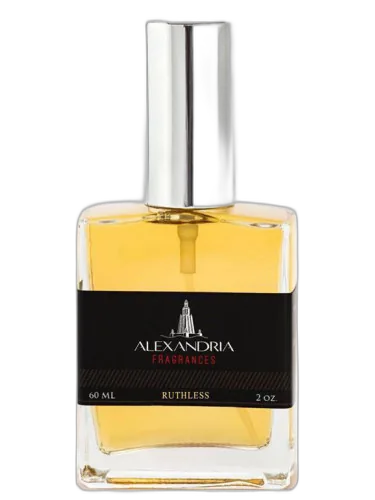
Alexandria Fragrances
Ruthless Alexandria Fragrances
Shared top notes: grapefruit, mandarin orange

Asad Siddiki
Restless Asad Siddiki
Shared top notes: mandarin orange