
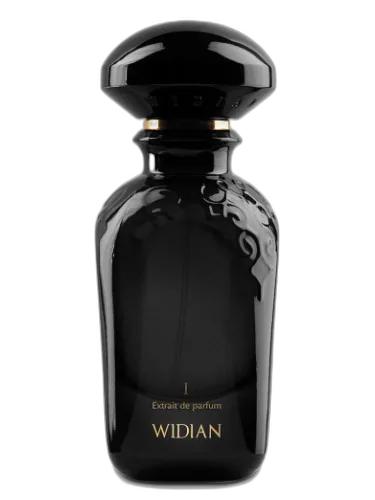

I Widian
At a glance
Is I Widian worth trying?
I by WIDIAN is a Oriental Woody fragrance for women and men.
- Best match
- Evening wear in Fall
- Performance feel
- Very Good longevity with Strong sillage
- Signature profile
- woody, warm spicy, aromatic with Cardamom, Cinnamon, Cypress
The first impression
I by WIDIAN is a Oriental Woody fragrance for women and men. I was launched in 2014. I was created by Ali Aljaberi and Jean-Claude Astier. Top notes are Cardamom and Cinnamon; middle notes are Cypress, Incense and Sandalowood; base notes are Cedar and Musk.
What shapes the scent
The perfumer behind it

Ali Aljaberi
Ali Aljaberi is a perfumer known for his work with the niche house Widian, where he has crafted a series of distinctive fragrances. His style often blends rich, opulent notes with a refined balance, creating scents that feel both luxurious and wearable. Notable creations from this collaboration include the Gold I and Gold II compositions, as well as the numbered Widian series from I through VII.
Notes pyramid
Top Notes
First impression · 15-30 min
 Cardamom
 Cinnamon
Heart Notes
Core character · 2-4 hours
 Cypress
 Incense
 Sandalowood
Base Notes
Lasting impression · 4+ hours
 Cedar
Cedar
 Musk
Musk
The mood it creates
The Alchemist Archetype: Portrait of I Widian
Essence
To wear I Widian is to embrace an aura of transformation-a scent that is at once opulent and enigmatic, blending smoky woods with velvety florals, dark resins with luminous spices. It is a fragrance for those who refuse to be defined by the mundane, who seek to transmute the raw materials of existence into something richer, deeper. The person who chooses this scent is not merely a wearer of perfumes but a seeker of essences-an Alchemist in the Jungian sense, one who strives to turn the lead of ordinary life into gold.
Style & Aesthetic
Their aesthetic is one of deliberate contrast-a marriage of the baroque and the minimal. They might wear a sharply tailored black coat over a shirt embroidered with intricate patterns, or pair a sleek modern watch with an antique ring. Their home is likely a curated space where raw concrete meets rich velvet, where incense burns beside crisp, unadorned candles.
They appreciate craftsmanship but disdain ostentation. A handcrafted leather journal pleases them more than a flashy designer bag; a single, perfectly aged whiskey holds more value than a crowded bar. Their taste in art leans toward the symbolic-surrealism, dark romanticism, or even the occult-tinged works of Symbolist painters. Music, too, carries weight: dark jazz, neoclassical compositions, or the haunting ambience of experimental electronics resonate with them.
Relationships
The Alchemist does not love lightly. Their relationships are intense, layered, sometimes demanding. They seek partners who are not merely companions but fellow travelers in the search for meaning. Superficial charm does not move them; they crave depth, even if it comes with complexity.
Yet this very intensity can become their shadow. They may grow impatient with those who do not share their relentless introspection, dismissing simpler joys as naïve. Their love can be possessive, not out of jealousy, but from a desire to fully merge souls-an alchemical wedding in the truest sense. When disappointed, they may retreat into solitude, refining their own essence while the world moves on without them.
Shadow
The Alchemist’s greatest strength-their relentless pursuit of transformation-can also be their undoing. In their quest for perfection, they may lose sight of the present, always chasing an idealized version of life rather than living it. Their disdain for the mundane can make them elitist, detached from the simple pleasures that sustain most people.
There is also the danger of becoming lost in their own labyrinth. The same mind that deciphers symbols can also overcomplicate reality, seeing hidden meanings where none exist. They may grow cynical, mistaking their own disillusionment for wisdom. And when their experiments in self-reinvention fail, they may face a crisis of identity-for if the self is always in flux, what remains when the transformations cease to satisfy?
Conclusion
This is a mind that thrives on paradox. The Alchemist understands that beauty is often found in decay, that wisdom emerges from suffering, and that true luxury is not in excess but in refinement. They are drawn to the interplay of shadow and light, both in aesthetics and in thought. Their philosophy is not one of rigid dogma but of perpetual becoming-they believe in the fluidity of identity, the possibility of reinvention.
They may be fascinated by esoteric traditions, not out of superstition, but because they recognize the symbolic power of ancient wisdom. Hermeticism, Jungian psychology, or even the occult might intrigue them, not as literal truths but as maps of the psyche. They see life as a series of experiments, each experience a crucible in which the self is tested and refined.
If you like this, try these
Fragrances with a comparable profile - shared accords, notes, and character.
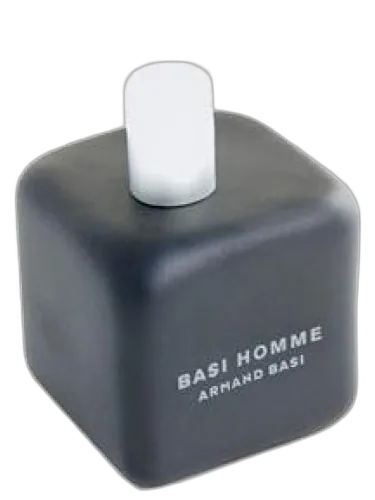
Armand Basi
Basi Homme Armand Basi
Shared top notes: cardamom, cinnamon
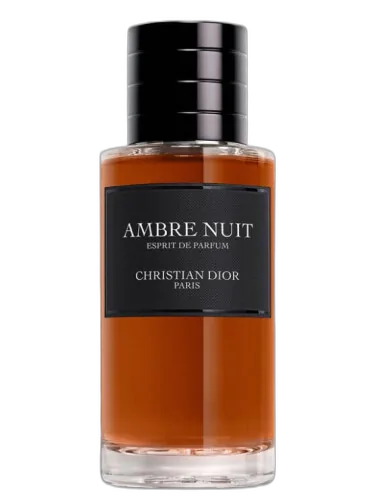
Dior
Ambre Nuit Esprit De Parfum Dior
Shared top notes: cardamom, cinnamon
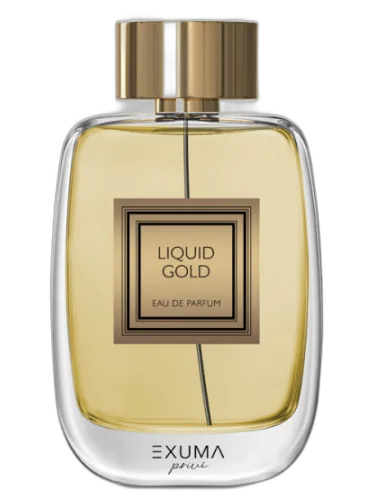
Exuma Parfums
Liquid Gold Exuma Parfums
Shared top notes: cardamom, cinnamon
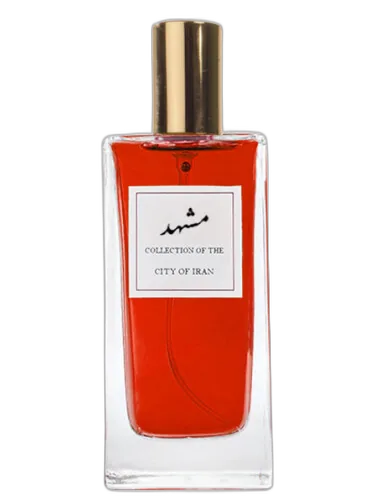
YANI
Mashhad Yani
Shared heart notes: incense

Parfumeide
Lacrima Parfumeide
Shared heart notes: incense