
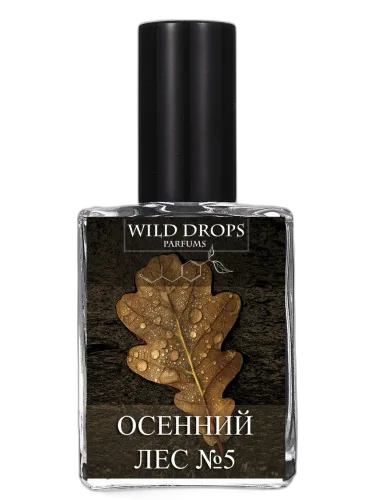
Autumn Forest 5 (осенний Лес 5) Wild Drops Parfums
Fragrance Story
Autumn Forest 5 (Осенний Лес 5) by Wild Drops Parfums is a Woody fragrance for women and men. Autumn Forest 5 (Осенний Лес 5) was launched in 2019. The nose behind this fragrance is Anna Nikishina.
Composition Profile
About the Perfumer

Anna Nikishina
Anna Nikishina is a perfumer known for her work with Wild Drops Parfums, where she creates fragrances that often explore natural and atmospheric themes. Her style blends earthy, woody, and gourmand elements, as seen in creations like Autumn Forest 5 and Caramel Forest, which evoke layered woodland scents. She also experiments with contrasting notes, such as the dark, tea-infused Bloody Tea and the fresh, green Chlorophyll, showcasing her versatility within nature-inspired compositions.
Fragrance Notes
All Notes
Complete scent profile
 Caramel
 Vanilla
 Wool
Wool
 Oak
Oak
 Cedar
Cedar
.jpg) Agarwood (Oud)
Agarwood (Oud)
 Musk
Musk
 Amber
Amber
 Guaiac Wood
 Moss
Moss
 Driftwood
Character Profile
The Wanderer Archetype: Portrait of Autumn Forest 5 (осенний Лес 5) Wild Drops Parfums
Essence
To wear Autumn Forest 5 (осенний Лес 5) is to carry the scent of transition-the crisp decay of leaves, the damp earth beneath, the faint smoke of distant fires. This fragrance is not for those who seek the comfort of eternal summer or the sterility of winter’s freeze. It is for the soul who thrives in the liminal, who finds beauty in impermanence. The one who chooses this scent is most closely aligned with the Wanderer archetype-the seeker, the solitary figure who moves between worlds, never fully at home in any.
This person is drawn to the edges of things-the border between forest and field, the hour between dusk and night. Their mind is a landscape of shifting moods, mirroring the autumn woods: sometimes golden and warm, other times shadowed and melancholic. They are introspective but not withdrawn, curious but not reckless. Their philosophy is one of movement-not for movement’s sake, but because stillness feels like stagnation.
They value authenticity above all else. Superficiality repels them; they can spot a forced smile, a hollow compliment, a life built on borrowed desires. Their relationships are few but deep, for they have little patience for trivial connections. They prefer conversations that last until dawn, where words are not just exchanged but excavated.
Their style is understated yet intentional-earth tones, textured fabrics, layers that suggest both warmth and readiness to shed them. They are not trend-driven; their aesthetic is an extension of their inner world, a visual echo of the forest they carry in their scent.
Shadow
Yet no archetype is without its darkness. The Wanderer’s greatest flaw is their reluctance to commit-not just to people, but to any fixed identity. They fear becoming stagnant, predictable, trapped. This can manifest as restlessness, an inability to enjoy stability without suspicion. They may sabotage relationships or opportunities simply because they feel too settled.
Their introspection can tip into isolation. When the world feels too loud, too false, they retreat entirely, leaving others confused by their sudden absence. Their honesty, while admirable, can sometimes be brutal-they forget that not everyone wants their illusions stripped away.
There is also a subtle arrogance in their self-sufficiency. They pride themselves on needing no one, yet this can harden into emotional detachment. They may dismiss those who crave security as weak, failing to see that roots, too, have their own kind of strength.
Conclusion
The Wanderer’s strength lies in their independence. They do not fear solitude; in fact, they often require it. Their mind is fertile ground for ideas, and they are unafraid to question conventions. They are the friend who asks, "Why do you believe that?" not to provoke, but to understand. Their intuition is sharp, honed by years of observing the unspoken currents in people and places.
They have a natural affinity for art, poetry, and music that evokes longing-songs of departure, paintings of half-lit paths. They are drawn to stories of transformation, myths of descent and return. Their taste in literature leans toward the philosophical, the ambiguous, the works that refuse easy answers.
In love, they are passionate but never possessive. They understand that all bonds are temporary, and so they cherish the present without clinging to it. Their partners must accept that they will sometimes vanish-not out of neglect, but because they need to wander, to breathe the air of unfamiliar streets before returning.
Similar Fragrances
Fragrances with a comparable profile - shared accords, notes, and character.
Wild Drops Parfums
Autumn Forest 5 (осенний Лес 5) Wild Drops Parfums
Shared accords: amber, caramel, musky
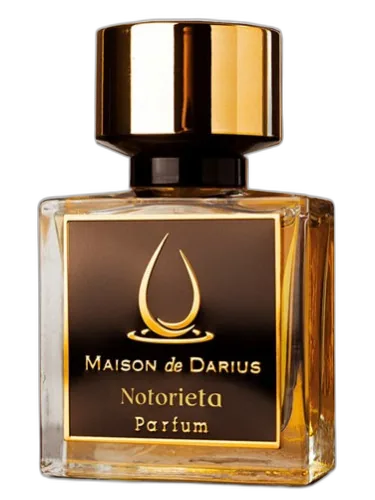
Maison de Darius
Notorieta Maison De Darius
Shared accords: amber, caramel, musky

Spirit Of Kings
Valor Spirit Of Kings
Shared accords: amber, caramel, musky
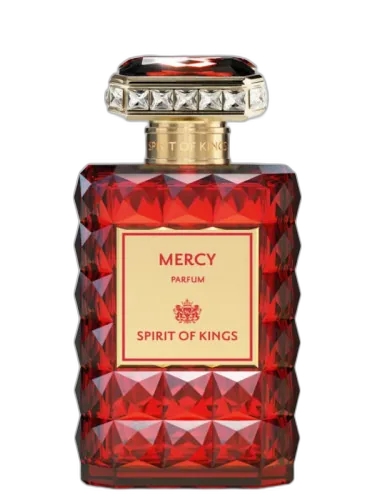
Spirit Of Kings
Mercy Spirit Of Kings
Shared accords: amber, caramel, musky
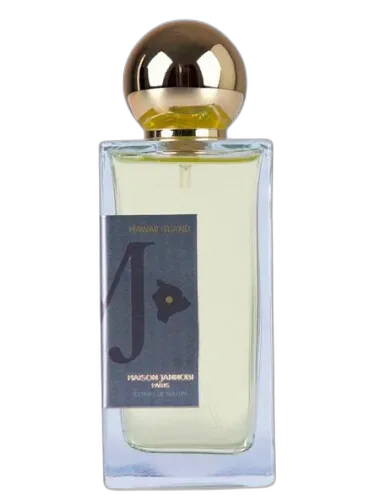
Maison Jannobi
Hawaii Island Maison Jannobi
Shared accords: amber, caramel, musky