
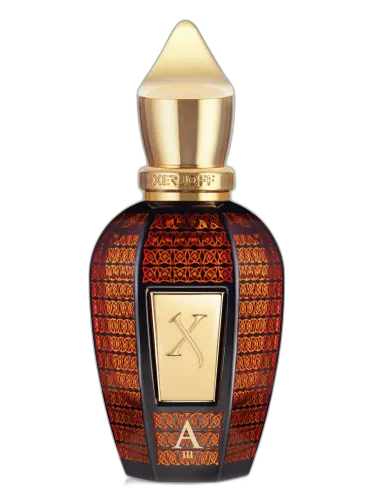

Alexandria Iii Xerjoff
At a glance
Is Alexandria Iii Xerjoff worth trying?
Alexandria III by Xerjoff is a Oriental Floral fragrance for women and men.
- Best match
- Evening wear in Winter
- Performance feel
- Excellent longevity with Strong sillage
- Signature profile
- woody, oud, rose with Lavender, Palisander Rosewood, Cinnamon
The first impression
Alexandria III by Xerjoff is a Oriental Floral fragrance for women and men. Alexandria III was launched in 2019. The nose behind this fragrance is Chris Maurice. Top notes are Lavender, Palisander Rosewood and Cinnamon; middle notes are Bulgarian Rose, Cedar and Lily-of-the-Valley; base notes are Laotian Oud, Thailand Oud, Sandalwood, Musk, Amber and Vanilla.
What shapes the scent
The perfumer behind it

Chris Maurice
Chris Maurice is a perfumer with a wide-ranging portfolio that includes work for Aqualis, Artal Perfumes, Assaf, Astrophil & Stella, Azman, and Bey Parfum. His creations include Egoli, Forbidden Rose, Darley, Love Is Lost, Moonage Daydream, Riad Jasmine, Song For A Wanderer, and Abyssoria. His style varies from floral and romantic to dark and mysterious.
Notes pyramid
Top Notes
First impression · 15-30 min
 Lavender
 Palisander Rosewood
 Cinnamon
Heart Notes
Core character · 2-4 hours
 Bulgarian Rose
 Cedar
Cedar
 Lily-of-the-Valley
Base Notes
Lasting impression · 4+ hours
 Laotian Oud
 Thailand Oud
 Sandalwood
 Musk
Musk
 Amber
Amber
 Vanilla
The mood it creates
The Alchemist Archetype: Portrait of Alexandria Iii Xerjoff
Essence
This person embodies the Ruler archetype, a figure of cultivated power, discernment, and an unshakable belief in their own refined taste. The Ruler does not seek dominance through brute force but through an aura of effortless authority-an understanding that true influence comes from mastery, not coercion. Xerjoff’s Alexandria III, with its opulent blend of vanilla, amber, and spices, is a scent of quiet command, a fragrance for someone who moves through the world as if it were their court.
Style & Aesthetic
Their wardrobe is a study in controlled decadence-tailored but never stiff, luxurious but never gaudy. Fabrics have weight; colors have depth. They favor textures that suggest history: cashmere, aged leather, silk that whispers rather than shouts. Their accessories are few but deliberate-a vintage watch, a signet ring, nothing that demands attention but everything that rewards it.
They wear Alexandria III because it is a fragrance of legacy, not trend. It does not announce itself; it is discovered. Like them, it is warm but never cloying, rich but never excessive.
Their home is a sanctuary of deliberate beauty-a place where every object has been chosen, where even the casual is choreographed. They drink aged spirits, read philosophy and poetry, and prefer music that rewards patience: jazz, classical, the kind of electronic compositions that unfold like architecture.
They are not a hedonist, but a connoisseur of experience. Pleasure, to them, is an art form-something to be refined, not indulged. They might collect rare books, own a single perfect leather chair, or spend years searching for the ideal espresso blend.
But this devotion to the exceptional can become a prison of their own making. When nothing is ever quite good enough, joy becomes conditional-always one perfect detail away.
Beneath their poise lies the danger of spiritual elitism. If left unchecked, their reverence for the exquisite can calcify into disdain for the ordinary. They may grow impatient with those who do not share their standards, mistaking their own preferences for universal laws.
The greatest challenge for this person is to remember that true sovereignty is generous. A ruler who cannot appreciate the unpolished is not noble but brittle-a curator of a museum, not a participant in life.
Philosophy & Values
They believe in order through elegance, that life should be curated, not merely lived. Their philosophy is one of aesthetic sovereignty-beauty is not frivolous but a discipline, a way of shaping reality into something more meaningful. They disdain chaos, not out of fear, but because they see it as a failure of vision. Their values are aristocratic in the classical sense: not mere privilege, but the responsibility of those who recognize refinement to uphold it.
Yet, this pursuit of perfection carries a shadow. They may mistake taste for truth, assuming that what is beautiful must also be right. Their disdain for the vulgar can harden into intolerance, a quiet contempt for those who lack their discernment.
Relationships
They are selective in affection, preferring depth to breadth. Their inner circle is small, composed of those who meet their exacting standards-not of status, but of substance. They are not cruel in their exclusions, merely precise. Romantic partners must understand that love, to them, is a pact of mutual elevation-not unconditional, but demanding in the best sense.
Yet this selectivity can curdle into aloofness. They may forget that not all worth is measured by refinement, that some of life’s richest textures are rough-edged. Their relationships, though deep, can feel like privileges granted rather than bonds forged.
Conclusion
They are not merely a lover of fine things but a philosopher of them, someone who understands that luxury is not about expense but intention. Alexandria III suits them because it is a fragrance of quiet power-one that does not scream but lingers, leaving an impression not of force but of inevitability.
Yet, like all rulers, they must beware the throne becoming a cage. The highest refinement is not in exclusion but in the ability to find majesty even in the imperfect.
If you like this, try these
Fragrances with a comparable profile - shared accords, notes, and character.
Xerjoff
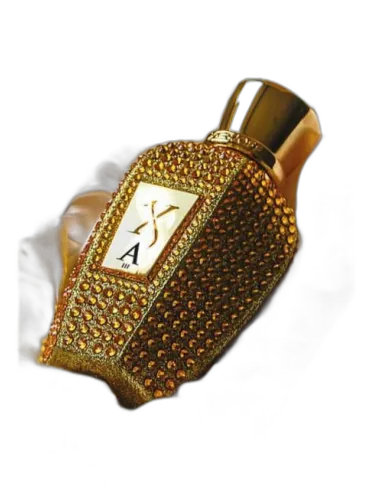
Alexandria Iii By Kostas Harrods Exclusive Xerjoff
Shared top notes: cinnamon, lavender, palisander rosewood
Alexandria Fragrances
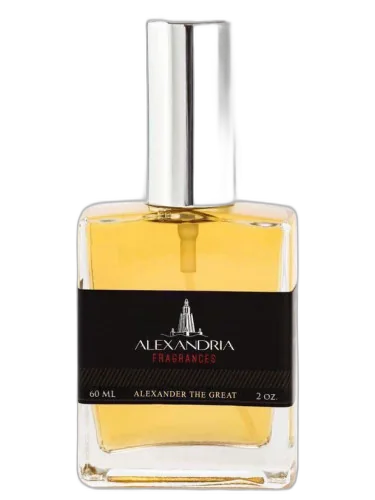
Alexander The Great Alexandria Fragrances
Shared top notes: cinnamon, lavender, palisander rosewood

Coisy B.
Dangerous Coisy B.
Shared top notes: lavender
Xerjoff
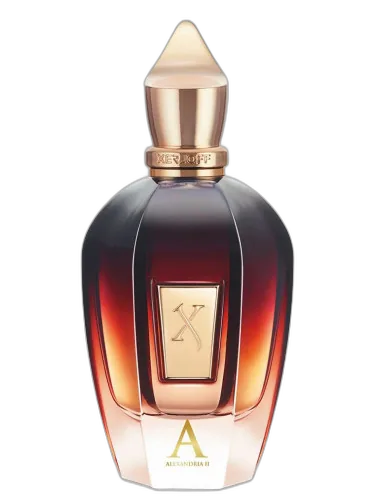
Alexandria Ii Xerjoff
Shared top notes: cinnamon, lavender, palisander rosewood
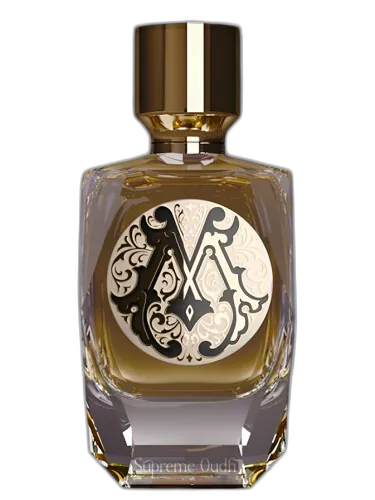
Parfum de Mahzen
Supreme Oudh Parfum De Mahzen
Shared top notes: cinnamon, lavender, palisander rosewood