
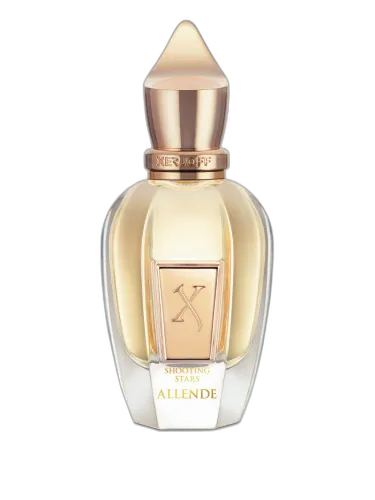

Allende Xerjoff
At a glance
Is Allende Xerjoff worth trying?
Allende by Xerjoff is a Oriental Floral fragrance for women and men.
- Best match
- Evening, Special Occasion wear in Fall, Winter
- Performance feel
- Very Good longevity with Moderate sillage
- Signature profile
- vanilla, cacao, floral with Madagascar Vanilla, Magnolia, Madagascar Vanilla
The first impression
Allende by Xerjoff is a Oriental Floral fragrance for women and men. Allende was launched in 2018. The nose behind this fragrance is Chris Maurice. Top notes are Madagascar Vanilla and Magnolia; middle notes are Madagascar Vanilla and Cacao; base note is Madagascar Vanilla.
What shapes the scent
The perfumer behind it

Chris Maurice
Chris Maurice is a perfumer with a wide-ranging portfolio that includes work for Aqualis, Artal Perfumes, Assaf, Astrophil & Stella, Azman, and Bey Parfum. His creations include Egoli, Forbidden Rose, Darley, Love Is Lost, Moonage Daydream, Riad Jasmine, Song For A Wanderer, and Abyssoria. His style varies from floral and romantic to dark and mysterious.
Notes pyramid
Top Notes
First impression · 15-30 min
 Madagascar Vanilla
 Magnolia
Heart Notes
Core character · 2-4 hours
Madagascar Vanilla
Cacao
Base Notes
Lasting impression · 4+ hours
Madagascar Vanilla
The mood it creates
The Sage Archetype: Portrait of Allende Xerjoff
Essence
Allende by Xerjoff is a fragrance of paradoxes-smoky yet luminous, dense yet ethereal, evoking the golden haze of a late summer afternoon. It is a scent for those who dwell in contemplation, who seek meaning beneath the surface of things. The person who cherishes this fragrance is most closely aligned with the Sage archetype-the seeker of wisdom, the quiet observer, the one who finds truth in the interplay of light and shadow.
They are not merely intelligent; they possess a rare kind of lucidity, an ability to see patterns where others see chaos. Their mind is a labyrinth of ideas, and their presence carries an air of quiet authority, as though they have already glimpsed the answers to questions most people have yet to ask.
Style & Aesthetic
Their philosophy is one of measured depth-they distrust dogma but revere knowledge. They are drawn to thinkers like Nietzsche, Jung, and Marcus Aurelius, not because they seek easy answers, but because they appreciate the tension between reason and intuition. They believe wisdom is not found in certainty but in the willingness to question.
In style, they favor refined minimalism-nothing ostentatious, but everything deliberate. Their wardrobe consists of well-tailored neutrals, perhaps a cashmere sweater or a perfectly fitted blazer, with a single striking accessory-a vintage watch, an heirloom ring-that hints at a deeper narrative. They appreciate craftsmanship, the kind that reveals itself slowly, like the layers of Allende itself.
Their tastes in art and literature lean toward the symbolic and layered. They might admire Borges for his labyrinths, Tarkovsky for his dreamlike imagery, or Miles Davis for his ability to say more with silence than with noise. They do not consume culture passively; they interrogate it, searching for the hidden threads that connect seemingly disparate ideas.
They structure their life around autonomy and meaning. They might work in academia, writing, psychology, or any field where thought is currency. If they choose a conventional career, they infuse it with their own philosophy-approaching business strategy like a chess game, or medicine as both science and art.
They are drawn to solitude, not out of misanthropy, but because they need space to think. Their home is a sanctuary-bookshelves lined with well-worn volumes, a record player spinning jazz or classical, perhaps a single piece of abstract art that invites interpretation. They enjoy slow rituals: brewing coffee in a Chemex, writing in a leather-bound journal, walking without a destination.
Relationships
In relationships, they are selective but profound. They do not surround themselves with many, but those they keep close are bound to them by mutual respect and intellectual kinship. Their love is not possessive but expansive-they seek a partner who can match their curiosity, someone who understands that intimacy is as much about shared silences as shared words.
Yet, their shadow emerges here. Their tendency to overanalyze can make them emotionally distant at times. They may retreat into their mind when faced with conflict, dissecting feelings rather than experiencing them. Their partners may occasionally feel like subjects of study rather than equals in passion.
Shadow
The Sage’s greatest strength-their intellect-can also be their prison. At their worst, they intellectualize emotions, treating life as a puzzle to solve rather than an experience to feel. They may struggle with existential melancholy, a sense that no matter how much they know, it will never be enough.
Their detachment can make them seem aloof or condescending, especially to those who prefer simplicity. They may dismiss passion as irrational, forgetting that wisdom without warmth is a cold fire. If they are not careful, they risk becoming isolated in their own mind, a prophet without disciples, a thinker without a world to act upon.
Conclusion
The Allende lover is neither purely cerebral nor purely sensual-they exist in the tension between the two. Their challenge is to integrate their wisdom with their humanity, to remember that truth is not only found in books but in lived experience. When they succeed, they become not just thinkers, but guides-those rare individuals who illuminate the path without insisting you follow it.
They are, in the end, like their favorite fragrance: complex, lingering, and impossible to forget.
If you like this, try these
Fragrances with a comparable profile - shared accords, notes, and character.

Victoria's Secret
Bombshell New York Fashion Show 2018 Victoria's Secret
Shared base notes: madagascar vanilla
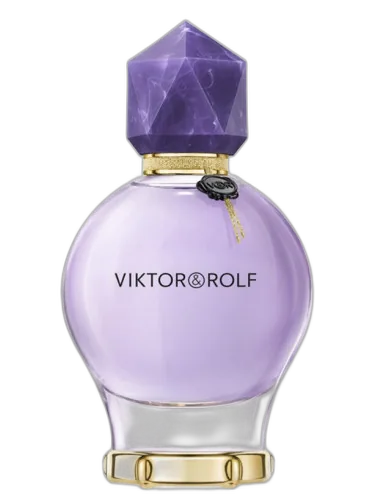
Viktor&Rolf
Good Fortune Viktor&rolf
Shared base notes: madagascar vanilla

Toni Cabal
023w - Peach & Vanilla Toni Cabal
Shared base notes: madagascar vanilla

Toni Cabal
054w - Cassis Rose Toni Cabal
Shared base notes: madagascar vanilla
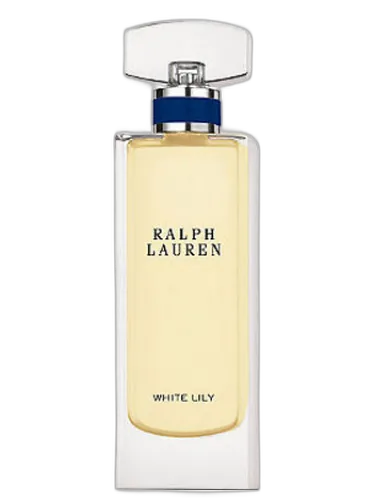
Ralph Lauren
Portrait Of New York - White Lily Ralph Lauren
Shared base notes: madagascar vanilla