


Birdie Xerjoff
At a glance
Is Birdie Xerjoff worth trying?
Birdie by Xerjoff is a Aromatic Fougere fragrance for women and men.
- Best match
- Casual wear in Spring
- Performance feel
- Moderate longevity with Moderate sillage
- Signature profile
- earthy, woody, green with Indian Patchouli, Soil Tincture, Grass
The first impression
Birdie by Xerjoff is a Aromatic Fougere fragrance for women and men. Birdie was launched in 2012. The nose behind this fragrance is Chris Maurice.
What shapes the scent
The perfumer behind it

Chris Maurice
Chris Maurice is a perfumer with a wide-ranging portfolio that includes work for Aqualis, Artal Perfumes, Assaf, Astrophil & Stella, Azman, and Bey Parfum. His creations include Egoli, Forbidden Rose, Darley, Love Is Lost, Moonage Daydream, Riad Jasmine, Song For A Wanderer, and Abyssoria. His style varies from floral and romantic to dark and mysterious.
Notes pyramid
All Notes
Complete scent profile
 Indian Patchouli
Soil Tincture
Indian Patchouli
Soil Tincture
 Grass
Grass
 Vetiver
 Lavender
 Sand
Sea Notes
Sand
Sea Notes
 Apple
Apple
 Pepper
The mood it creates
The Birdie Xerjoff Admirer Archetype: Portrait of Birdie Xerjoff
Essence
The one who chooses Birdie by Xerjoff is no mere lover of fragrance-they are a seeker of meaning, a curator of the intangible. This scent, with its juxtaposition of crisp pear and velvety vanilla, its play of lightness and depth, mirrors the duality of their soul. They are most closely aligned with the Sage, the archetype of wisdom, insight, and relentless curiosity. Like the owl that sees through the dark, they navigate life with an analytical eye, always searching for the hidden truth beneath the surface. Yet wisdom is not without its burdens, and the Sage’s shadow-dogmatism, detachment, and an over-reliance on intellect-can render them aloof, even to themselves.
Style & Aesthetic
Their tastes are refined but never ostentatious. They prefer the subtle over the obvious, the layered over the flat. In art, they gravitate toward symbolism-Klimt’s gold-leafed mysticism, the surreal dreamscapes of Magritte. In music, they favor compositions that unfold slowly, like Erik Satie’s Gymnopédies or the haunting minimalism of Nils Frahm. Their wardrobe is an exercise in controlled elegance: structured blazers, silk scarves, perhaps a single piece of antique jewelry-each item chosen not for trend but for narrative.
They do not follow fashion; they distill it into something personal. Their home is a sanctuary of curated objects-a well-worn first edition of Nietzsche’s Thus Spoke Zarathustra, a Japanese tea set, a single abstract painting that seems to shift in meaning with each viewing. They are drawn to spaces that feel both lived-in and timeless, where every object has been considered, yet nothing feels staged.
They move through the world with intention. Their mornings are rituals-black coffee in a handmade ceramic cup, a few pages of poetry, a moment of stillness before the day begins. They prefer travel that immerses rather than entertains: a quiet village in Tuscany over a crowded resort, a bookstore in Paris over a tourist trap. They indulge, but never excessively-a single glass of aged Scotch, savored slowly; a perfectly ripe fig, eaten with deliberate pleasure.
But their restraint can tip into repression. They may deny themselves joy out of a fear of losing control, mistaking austerity for virtue. They must learn that wisdom is not the absence of desire, but the art of balancing it.
Philosophy & Values
For them, life is a text to be deciphered. They believe in the power of knowledge, not as a means to status, but as a way to transcend superficiality. They are drawn to philosophy, psychology, and the occult-not as idle curiosities, but as tools for understanding the human condition. They may quote Jung’s "Until you make the unconscious conscious, it will direct your life and you will call it fate" with quiet conviction.
Yet their reverence for intellect can become a cage. They may dismiss emotion as irrational, mistaking detachment for wisdom. They might retreat into books and theories, using knowledge as armor against vulnerability. Their greatest challenge is to integrate feeling with thought-to realize that wisdom without warmth is merely cleverness in disguise.
Relationships
They are not the life of the party, but the one who lingers at the edges, watching, analyzing. Their friendships are few but profound, built on mutual respect for depth and authenticity. They despise small talk, preferring conversations that spiral into the existential. When they love, it is with a quiet intensity-they will remember the exact way you once phrased a thought, the book you mentioned in passing, the hidden meaning behind your hesitation.
Yet their analytical nature can make them distant. They may overthink intimacy, dissecting emotions until they lose their vitality. Partners may accuse them of being "too in their head," of treating love like a puzzle to solve rather than an experience to surrender to. Their shadow is the fear that if they stop observing, they will cease to understand-and without understanding, they fear they will be lost.
Shadow
Their brilliance is also their limitation. In their quest for understanding, they may forget that not everything can be dissected. They might grow impatient with those who don’t share their depth, dismissing them as shallow. Their greatest fear is ignorance-both in others and in themselves. But true wisdom lies not in knowing all, but in embracing the mystery of what cannot be known.
Conclusion
Birdie is not just a scent to them-it is a reflection. The way its bright top notes give way to something darker, more introspective, mirrors their own journey. They are the thinker, the seeker, the one who looks beyond the obvious. But if they are to truly embody the Sage, they must learn that wisdom is not just in the mind, but in the heart-not just in knowing, but in feeling. Only then will their knowledge become true understanding.
If you like this, try these
Fragrances with a comparable profile - shared accords, notes, and character.
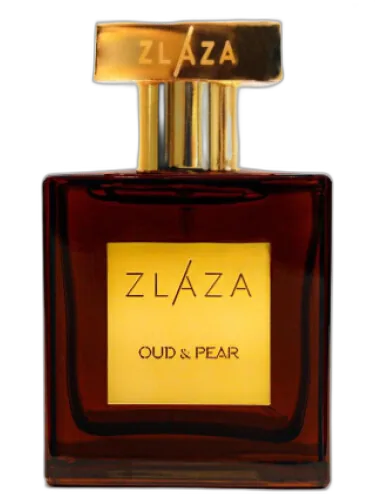
Zlaza
Oud & Pear Zlaza
Shared top notes: apple, lavender, pepper

Be. Colonias
Be. Marinho Be. Colonias
Shared top notes: lavender, vetiver

Eaux Parfums
Eau De Luiz Eaux Parfums
Shared top notes: lavender, vetiver
J.Hannah Co.
Upton J.hannah Co.
Shared top notes: lavender, vetiver

Abbott New York City
Big Sky Abbott New York City
Shared top notes: grass, sea notes