
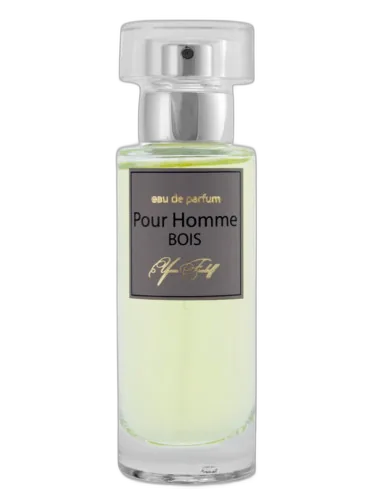

Bois Yanfroloff
At a glance
Is Bois Yanfroloff worth trying?
Bois by YanFroloff is a fragrance for men.
- Best match
- Evening wear in Fall
- Performance feel
- Very Good longevity with Strong sillage
- Signature profile
- woody, powdery with Cedar, Maple, Sandalwood
The first impression
Bois by YanFroloff is a fragrance for men. Bois was launched in 2016. The nose behind this fragrance is Yan Froloff.
What shapes the scent
The perfumer behind it

Yan Froloff
Yan Froloff is a Russian perfumer who collaborates with Valery Mikhalitcyn on the By Yan Froloff & Valery Mikhalitcyn line, featuring fragrances like Iris Invida, Jasminum Iratum, Magnolia Acida, and Osmantus Luxuriosus. He also creates under his own name YanFroloff, with scents such as Absinthe Hypnotique, Absinthe, Afrique, and Bergamote. His work often explores botanical and gourmand themes with a poetic, artistic approach.
Notes pyramid
All Notes
Complete scent profile
 Cedar
Cedar
 Maple
Maple
 Sandalwood
 Orange
 Red Wine
 Almond
 Rum
Rum
 Lily-of-the-Valley
 Mandarin Orange
The mood it creates
The Lover Archetype: Portrait of Bois Yanfroloff
Essence
The one who favors Bois Yanfroloff-a fragrance of deep woods, smoky resins, and a whisper of something indefinably ancient-is most closely aligned with the Sage. This archetype seeks truth, wisdom, and the hidden patterns beneath the surface of life. They are drawn to complexity, to the interplay of shadow and light, and to fragrances that evoke mystery rather than immediate pleasure. The Sage does not follow trends; they follow intuition, guided by an inner compass that values depth over dazzle.
Yet, like all archetypes, the Sage has a shadow. Their relentless pursuit of understanding can make them detached, even aloof, mistaking solitude for superiority. They may grow so enamored with the abstract that they forget the warmth of human touch, the necessity of imperfection.
Style & Aesthetic
Their aesthetic is one of quiet sophistication, favoring textures that age well-rough linen, worn leather, dark wood. They prefer muted colors, not out of melancholy, but because they find richness in restraint. Their home is a sanctuary of curated objects: an antique compass, a well-worn chess set, a single painting that seems to shift in meaning over time.
Music for them is an intellectual experience as much as an emotional one-ambient soundscapes, baroque fugues, or the dissonant beauty of avant-garde jazz. They do not dance often, but when they do, it is with a deliberate, almost ritualistic grace.
Philosophy & Values
To them, existence is a labyrinth to be deciphered, not a garden to be passively enjoyed. They read philosophy not for answers but for better questions, savoring the tension between certainty and doubt. Their bookshelves are lined with works by Jung, Nietzsche, and obscure alchemical treatises-texts that promise keys to hidden doors.
They do not believe in absolute truths but in layered meanings. A conversation with them is like peeling an onion: each layer reveals another question, another possibility. They are drawn to paradoxes, to the idea that wisdom often lies in holding two opposing thoughts at once.
Relationships
They are not gregarious, but neither are they hermits. Their friendships are few but profound, built on mutual respect for depth and authenticity. Small talk exhausts them; they crave conversations that spiral into the metaphysical, the psychological, the unspoken.
Romantically, they are drawn to those who are equally complex, who do not fear their intensity. Yet their shadow emerges here-they may idealize the idea of love more than the messy reality of it. They can be slow to commit, not out of fear, but because they are always waiting to see if something more profound might reveal itself.
Shadow
The Sage’s greatest weakness is their tendency to over-intellectualize life. They may mistake understanding for living, analysis for experience. There is a danger of becoming a spectator in their own existence, observing emotions rather than feeling them fully.
At their worst, they can grow cynical, dismissing simpler joys as naive. They may withdraw into their own mind, constructing elaborate theories about human nature while forgetting to engage with it directly. The challenge for them is to balance wisdom with warmth, to let knowledge serve life rather than replace it.
Conclusion
Bois Yanfroloff is their scent because it does not announce itself-it unfolds. Like them, it is layered, enigmatic, revealing its depths only to those who take the time to linger. It is a fragrance for those who find beauty in the unresolved, who are comfortable with the unknown.
They are neither saint nor cynic, but a seeker-sometimes lost, sometimes illuminated, always moving toward the next question. And in that endless pursuit, they find not just wisdom, but the bittersweet truth that to know much is to realize how little one truly knows.
If you like this, try these
Fragrances with a comparable profile - shared accords, notes, and character.

PERDRISÂT
Lucy Folk Couer De Bois Perdrisât
Shared top notes: cedar, sandalwood
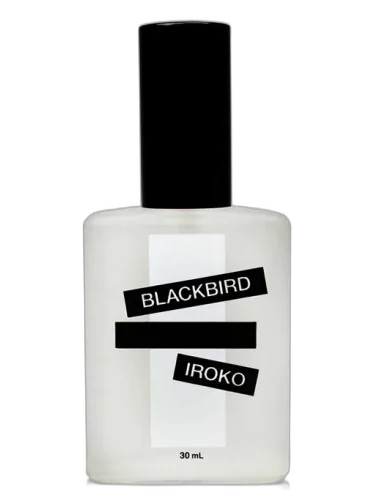
Blackbird
Iroko Blackbird
Shared top notes: cedar, sandalwood

DayNa Decker
Le Petit Parfum Khaya Dayna Decker
Shared top notes: sandalwood

Latherati
Alter Ego Latherati
Shared top notes: cedar, sandalwood

Raw Spirit Fragrances
Wild Fire Raw Spirit Fragrances
Shared top notes: cedar