
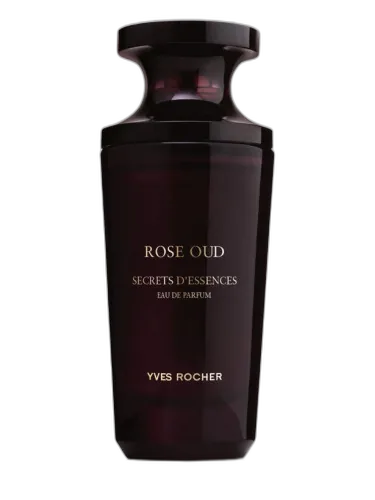

Rose Oud Yves Rocher
At a glance
Is Rose Oud Yves Rocher worth trying?
Rose Oud by Yves Rocher is a Oriental Floral fragrance for women.
- Best match
- Evening wear in Fall
- Performance feel
- Good longevity with Moderate sillage
- Signature profile
- rose, oud, amber with Damask Rose, Agarwood (Oud), Labdanum
The first impression
Rose Oud by Yves Rocher is a Oriental Floral fragrance for women. Rose Oud was launched in 2016. Rose Oud was created by Annick Menardo and Olivier Cresp.
What shapes the scent
The perfumer behind it

Annick Menardo
Annick Menardo is a French perfumer known for her work at Firmenich and her bold, modern compositions. She often blends gourmand, woody, and leathery accords, creating fragrances that are both striking and wearable. Her portfolio includes the rich, smoky Figment Man for Amouage and the sophisticated, floral-amber Portrayal Woman, as well as the iconic Azzaro Visit.
Notes pyramid
All Notes
Complete scent profile
 Damask Rose
 Agarwood (Oud)
 Labdanum
 Cumin
Cumin
The mood it creates
The Lover Archetype: Portrait of Rose Oud Yves Rocher
Essence
To wear Rose Oud Yves Rocher is to embrace a paradox-softness entwined with depth, delicacy fused with intensity. This fragrance, with its velvety rose and smoky oud, speaks to a soul who seeks beauty in contrasts, who is drawn to the interplay of warmth and mystery. The person who chooses this scent is, at their core, a Lover-not merely in the romantic sense, but in the Jungian archetypal one: a being driven by passion, connection, and the pursuit of the sublime.
Style & Aesthetic
Their world is one of curated elegance-rich textures, muted jewel tones, and an undercurrent of sensuality. They favor clothing that drapes rather than clings, fabrics that whisper against the skin rather than shout. Their home is a sanctuary of warm woods, flickering candlelight, and carefully chosen art-perhaps a vintage oil painting of a half-finished embrace, or a Persian rug with intricate floral motifs. They appreciate craftsmanship, the slow and deliberate creation of beauty.
Their taste in music leans toward the melancholic yet lush-Chopin nocturnes, the deep croon of Leonard Cohen, or the haunting strings of a Turkish ney flute. They are drawn to poetry that aches with longing, to films where desire is never fully satisfied but always deeply felt.
They move through life with a quiet magnetism, drawing people in without effort. Their days are structured around moments of indulgence-morning coffee sipped slowly, an evening bath scented with rose oil, the deliberate turning of pages in a well-loved book. They are not ascetics; they believe pleasure is sacred when approached with reverence.
Yet they are not mere hedonists. Their indulgence is tempered by a need for meaning. They may practice yoga not just for the body but for the soul, meditate not for calm but for transcendence. They seek ritual in the mundane, turning everyday acts into ceremonies of presence.
Philosophy & Values
For them, life is not merely to be lived but to be felt. They reject the superficial, the transactional, the purely utilitarian. Their philosophy is one of immersion-whether in love, art, or thought. They believe in the transformative power of intimacy, in the way a single moment of connection can alter the course of a life.
Yet this intensity is not without its burdens. They often struggle with the tension between their idealism and reality. They crave a love that is all-consuming, a beauty that is flawless, and when the world fails to meet these expectations, they may retreat into disillusionment. Their shadow emerges in their tendency to romanticize-to see people and experiences not as they are, but as they wish them to be.
Relationships
In love, they are both generous and demanding. They give freely-affection, attention, a willingness to lose themselves in another. But they also expect the same depth in return, and when they sense a lack of reciprocity, they may become possessive or melancholic. Their relationships are marked by passion, but also by a quiet volatility-moments of ecstasy followed by periods of withdrawal.
Friendships, too, are deep but few. They do not engage in casual camaraderie; they seek kindred spirits, those who understand the language of emotion without words. They are the confidant, the one who listens with an almost painful empathy, but they may also grow resentful if they feel their own emotional needs are neglected.
Shadow
The Lover’s greatest strength-their capacity for deep feeling-is also their greatest weakness. When unbalanced, their passion can curdle into obsession, their idealism into a refusal to accept imperfection. They may cling to relationships long after they have soured, or fixate on an unattainable ideal of love, art, or self.
Their shadow also manifests in a subtle arrogance-a belief that because they feel more deeply, they understand more deeply. This can lead to a dismissive attitude toward those they perceive as shallow or unfeeling, a blindness to the quiet depths in others who express themselves differently.
The lover of Rose Oud Yves Rocher is a creature of depth and contradiction-both tender and fierce, both giving and demanding. They walk the line between ecstasy and melancholy, between connection and solitude. Their life is a search for the moments that make the heart ache with their beauty, and their greatest challenge is learning to embrace imperfection without disillusionment.
In the end, they are not merely seekers of love, but of the sublime-the fleeting, intoxicating glimpse of something greater than themselves. And in that pursuit, they find both their greatest joy and their deepest sorrow.
If you like this, try these
Fragrances with a comparable profile - shared accords, notes, and character.
J.F. Schwarzlose Berlin
Trance J.f. Schwarzlose Berlin
Shared top notes: agarwood (oud), labdanum
Jo Malone London
Velvet Rose & Oud Jo Malone London
Shared top notes: agarwood (oud), damask rose
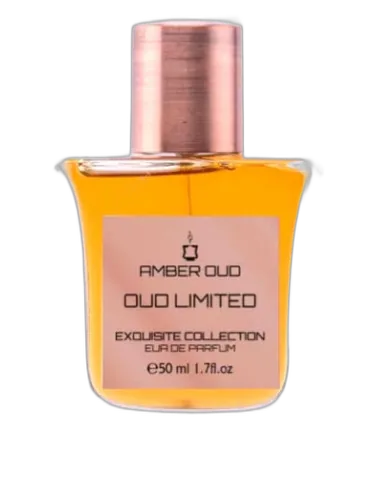
Amber Oud
Oud Limited Amber Oud
Shared top notes: agarwood (oud), damask rose
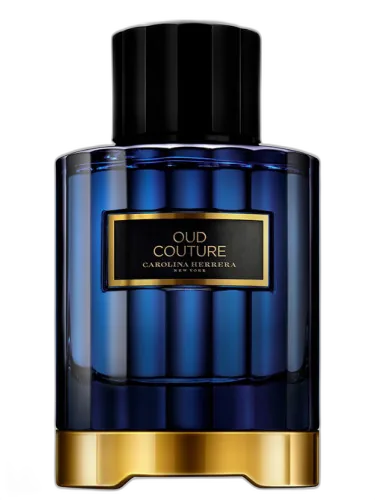
Carolina Herrera
Oud Couture Carolina Herrera
Shared top notes: agarwood (oud), damask rose
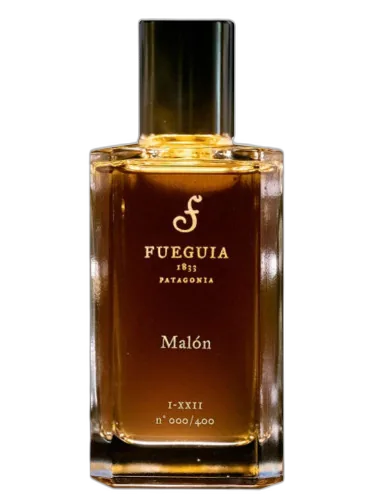
Fueguia 1833
Malón Fueguia 1833
Shared top notes: agarwood (oud), labdanum