


Sur La Lande Yves Rocher
At a glance
Is Sur La Lande Yves Rocher worth trying?
Sur La Lande by Yves Rocher is a Floral fragrance for women.
- Best match
- Casual wear in Spring, Summer
- Performance feel
- Moderate longevity with Moderate sillage
- Signature profile
- white floral, woody, herbal with Chamomile, Jasmine, Woody Notes
The first impression
Sur La Lande by Yves Rocher is a Floral fragrance for women. This is a new fragrance. Sur La Lande was launched in 2022. The nose behind this fragrance is Caroline Dumur. Top note is Chamomile; middle note is Jasmine; base notes are Woody Notes and Seaweed.
What shapes the scent
The perfumer behind it

Caroline Dumur
Caroline Dumur is a perfumer who has collaborated with a wide range of houses including Bastille Parfums, Boucheron, By Far, and Carolina Herrera. Her catalog includes Demain Promis Bastille Parfums, Boucheron Singulier Boucheron, and several Daydream fragrances for By Far. She demonstrates versatility across both niche and designer perfumery.
Notes pyramid
Top Notes
First impression · 15-30 min
 Chamomile
Heart Notes
Core character · 2-4 hours
 Jasmine
Base Notes
Lasting impression · 4+ hours
 Woody Notes
 Seaweed
The mood it creates
The Archetype Archetype: Portrait of Sur La Lande Yves Rocher
Essence
Archetype: The Innocent
At their core, the person who favors Sur La Lande by Yves Rocher is guided by the Innocent archetype-a soul who seeks purity, simplicity, and harmony with nature. This fragrance, with its airy blend of heather, wild grasses, and a whisper of citrus, evokes an unspoiled landscape, untouched by the cynicism of modernity. The wearer is drawn to this scent because it mirrors their inner world: one of idealism, nostalgia, and a quiet yearning for a life unburdened by artifice.
Style & Aesthetic
Their tastes are refined but never ostentatious. They prefer soft, natural fabrics-linen, cotton, wool-in muted earth tones, as if they are trying to blend into the countryside even when navigating city streets. Their home is filled with dried flowers, well-worn books, and handmade ceramics, each object chosen for its quiet beauty rather than its status. They are drawn to art that captures fleeting moments-Impressionist paintings, haiku poetry, the delicate melancholy of Debussy’s Clair de Lune.
Philosophically, they believe in the inherent goodness of people, though this belief is sometimes tested. They see the world as a place that should be gentle, where kindness prevails over competition. Their values are rooted in authenticity-they despise pretense, though they themselves may occasionally retreat into romanticized illusions to avoid harsh truths.
Relationships
In love and friendship, they are nurturing, often playing the role of the quiet listener, the one who offers tea and a sympathetic ear. They do not seek the spotlight but are cherished for their warmth and constancy. Their relationships thrive in simplicity-long walks, shared silences, handwritten letters. Yet, their idealism can make them vulnerable. They may cling too long to fading connections, believing that if they love purely enough, the other person will reciprocate in kind. When betrayed, they do not rage but withdraw, nursing their wounds in solitude like a wounded animal retreating into the woods.
Shadow
The Innocent’s greatest strength-their optimism-is also their greatest weakness. Their refusal to acknowledge life’s darker dimensions can leave them unprepared for cruelty, manipulation, or even mundane disappointments. When reality clashes too violently with their ideals, they may spiral into passive disillusionment, becoming wistful and detached rather than confronting the problem directly.
At their worst, they may slip into a kind of naïve escapism, using nostalgia or fantasy as a shield against the complexities of adulthood. They might romanticize the past ("Things were simpler then") or an unattainable future ("Someday, everything will be perfect") to avoid the necessary struggles of the present.
Conclusion
The challenge for this dreamer is not to abandon their idealism but to temper it with discernment. They must learn that true innocence is not ignorance but a conscious choice to see beauty without denying reality. When they achieve this balance, they become not just a lover of heather-scented breezes but a quiet force of resilience-a soul who, though acquainted with sorrow, still believes in the possibility of light.
Their fragrance, then, is more than a preference-it is a declaration. A whisper to the world: "I remember what it means to be unbroken." And perhaps, in time, they will learn that fragility and strength are not opposites but companions, like heather bending-but never breaking-in the wind.
If you like this, try these
Fragrances with a comparable profile - shared accords, notes, and character.

Mark Buxton
Around Midnight Mark Buxton
Shared top notes: chamomile

Juliette Has A Gun
Anyway Juliette Has A Gun
Shared heart notes: jasmine
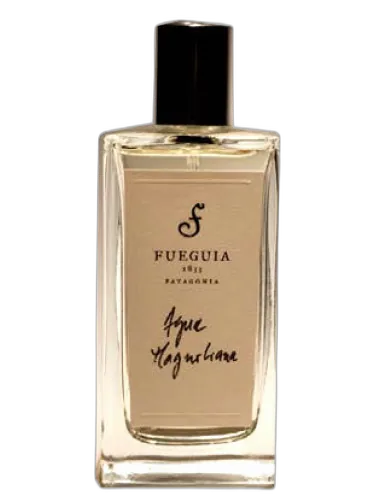
Fueguia 1833
Agua Magnoliana Fueguia 1833
Shared heart notes: jasmine

Dorin
Un Air De Damas Jasmine Dorin
Shared heart notes: jasmine

Zara
A Daisy Bouquet In London Zara
Shared heart notes: jasmine