
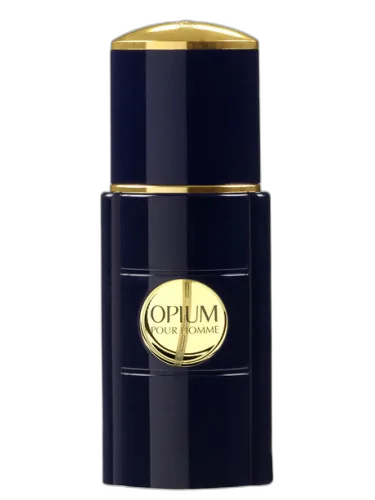
Opium Pour Homme Eau De Parfum Yves Saint Laurent
At a glance
Is Opium Pour Homme Eau De Parfum Yves Saint Laurent worth trying?
Opium Pour Homme Eau de Parfum by Yves Saint Laurent is a Oriental Spicy fragrance for men.
- Best match
- Evening, Special Occasion wear in Fall, Winter
- Performance feel
- Very Good longevity with Strong sillage
- Signature profile
- soft spicy, powdery, anis with Star Anise, Black Currant, Sichuan Pepper
The first impression
Opium Pour Homme Eau de Parfum by Yves Saint Laurent is a Oriental Spicy fragrance for men. Opium Pour Homme Eau de Parfum was launched in 1995. The nose behind this fragrance is Jacques Cavallier Belletrud. Top notes are Star Anise and Black Currant; middle notes are Sichuan Pepper and Galanga; base notes are Bourbon Vanilla, Tolu Balsam and Atlas Cedar.
What shapes the scent
The perfumer behind it

Jacques Cavallier Belletrud
Jacques Cavallier Belletrud is a master perfumer with a prolific career spanning multiple luxury houses. He created Apogée for Louis Vuitton, Kingdom for Alexander McQueen, and Opus V - Woods Symphony for Amouage. His portfolio also includes Initial and Trouble for Boucheron, as well as Allegra Magnifying Myrrh Essence for Bvlgari, demonstrating his expertise in both classic and contemporary compositions.
Notes pyramid
Top Notes
First impression · 15-30 min
 Star Anise
 Black Currant
Heart Notes
Core character · 2-4 hours
 Sichuan Pepper
 Galanga
Base Notes
Lasting impression · 4+ hours
 Bourbon Vanilla
 Tolu Balsam
 Atlas Cedar
The mood it creates
The Sovereign Archetype: Portrait of Opium Pour Homme Eau De Parfum Yves Saint Laurent
Essence
At the heart of the man who wears Opium Pour Homme lies the Sovereign archetype-a ruler of his own domain, commanding presence with quiet intensity. This is not the blustering king of old, but a modern incarnation: refined, self-assured, and deeply aware of the power of mystique. The fragrance itself-spiced, woody, with an intoxicating depth-mirrors his essence: bold yet controlled, sensual yet restrained.
Style & Aesthetic
His tastes are deliberate, curated with the precision of a connoisseur. He favors tailored suits in dark hues, fabrics that drape with weight and authority, yet he is not ostentatious. There is an undercurrent of the exotic in his choices-perhaps a vintage watch, a well-worn leather satchel, or a single piece of jewelry that carries personal significance. His surroundings reflect the same sensibility: a study lined with books on philosophy and history, a home that balances warmth with austerity. He is drawn to art that evokes depth-Caravaggio’s chiaroscuro, the brooding poetry of Rilke, the haunting compositions of Arvo Pärt.
Philosophy & Values
He believes in the power of presence-that a man is defined not by what he proclaims, but by what he embodies. His philosophy is one of disciplined hedonism: pleasure is not to be shunned, but mastered. He indulges in fine whiskey, the slow burn of a cigar, the quiet thrill of a midnight conversation. Yet he is not a slave to desire; he tempers it with intellect.
His values are rooted in autonomy. He respects tradition but refuses to be bound by it. He is drawn to Nietzsche’s concept of self-overcoming-the idea that one must continually refine and redefine oneself. Loyalty, to him, is earned, not given freely. He keeps a small circle, for intimacy is a privilege, not a right.
Relationships
In love, he is magnetic but elusive. He does not chase; he attracts. His relationships are intense but often fraught with tension-his need for independence can clash with deeper yearnings for connection. He is not cruel, but he is guarded. Those who penetrate his defenses find a man of surprising tenderness, though he will never fully relinquish control.
Among friends, he is the one who listens more than he speaks, but when he does, his words carry weight. He is not a leader in the conventional sense-he does not seek followers-but others naturally defer to him. His presence commands attention without demanding it.
Shadow
Yet the Sovereign’s strength is also his flaw. His self-sufficiency can curdle into arrogance, his discernment into disdain. There is a danger that he will retreat too far into his own world, mistaking solitude for superiority. He may grow impatient with those who do not meet his exacting standards, dismissing them as weak or unworthy.
At his worst, he becomes the tyrant-not of others, but of himself. His discipline hardens into rigidity; his independence becomes a cage. He may find himself alone not by choice, but by the slow erosion of patience for human frailty.
Conclusion
The man who wears Opium Pour Homme is a paradox: a ruler who must learn that true sovereignty includes the humility to bend. His challenge is to wield his strength without severing the threads that bind him to others. When he succeeds, he is not just admired, but deeply respected-a man who understands that power, like fragrance, is most potent when it lingers subtly, leaving an impression long after he has left the room.
If you like this, try these
Fragrances with a comparable profile - shared accords, notes, and character.
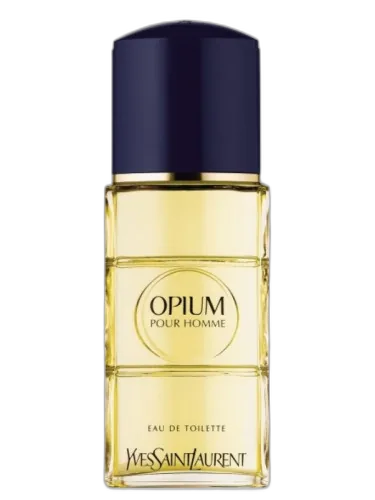
Yves Saint Laurent
Opium Pour Homme Yves Saint Laurent
Shared top notes: black currant, star anise

Ayala Moriel
Black Licorice Ayala Moriel
Shared top notes: black currant, star anise
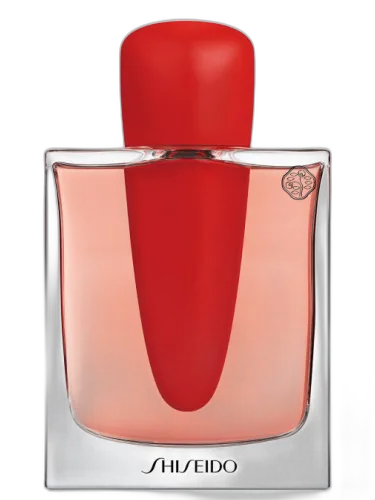
Shiseido
Ginza Intense Shiseido
Shared top notes: black currant
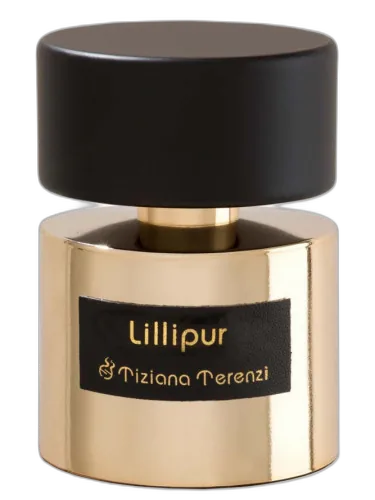
Tiziana Terenzi
Lillipur Tiziana Terenzi
Shared top notes: star anise
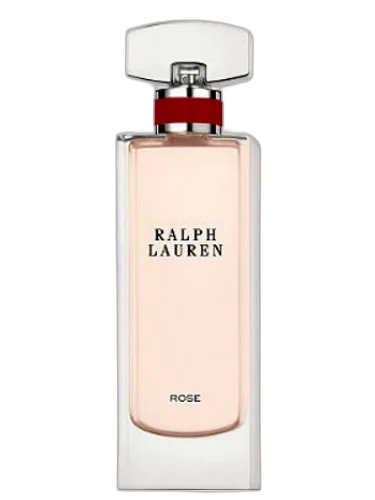
Ralph Lauren
Legacy Of English Elegance - Rose Ralph Lauren
Shared top notes: black currant