


Laboratori Di Saponi In Roma Zara
At a glance
Is Laboratori Di Saponi In Roma Zara worth trying?
Laboratori Di Saponi In Roma by Zara is a Chypre Floral fragrance for women.
- Best match
- Casual wear in Spring
- Performance feel
- Moderate longevity with Moderate sillage
- Signature profile
- citrus, floral, woody with Bergamot, Lemon, Mandarin Orange
The first impression
Laboratori Di Saponi In Roma by Zara is a Chypre Floral fragrance for women. Laboratori Di Saponi In Roma was launched in 2017. Top notes are Bergamot, Lemon, Mandarin Orange and Orange; middle notes are Rose, Freesia, Wild Berries and Reseda; base notes are Cedar, Patchouli and Amber.
What shapes the scent
The perfumer behind it

Notes pyramid
Top Notes
First impression · 15-30 min
 Bergamot
 Lemon
Lemon
 Mandarin Orange
 Orange
Heart Notes
Core character · 2-4 hours
 Rose
Rose
 Freesia
 Wild Berries
 Reseda
Base Notes
Lasting impression · 4+ hours
 Cedar
Cedar
 Patchouli
 Amber
Amber
The mood it creates
The Explorer Archetype: Portrait of Laboratori Di Saponi In Roma Zara
Essence
This person is most closely aligned with the Creator archetype-a soul driven by the need to shape beauty, experience sensory richness, and curate an existence that feels like an artful composition. The fragrance they favor, Laboratori Di Saponi In Roma, is not merely a scent but a statement: clean yet complex, refined yet unpretentious, evoking the timeless elegance of an Italian apothecary. Like the fragrance, they seek to craft a life that is both polished and deeply personal, where aesthetics and meaning intertwine.
Style & Aesthetic
Their wardrobe is a study in restrained elegance-neutral tones, natural fabrics, cuts that flatter without ostentation. They prefer textures that age beautifully: soft leather, raw linen, well-worn cashmere. Their home is an extension of this ethos: uncluttered but warm, with carefully chosen artifacts-a vintage typewriter, a single stem in a slender vase, shelves lined with well-loved books.
In music, they gravitate toward artists who balance sophistication with soul-Nina Simone, Nick Drake, or the melancholic refinement of Erik Satie. In literature, they favor writers who marry precision with profundity: Italo Calvino, Joan Didion, or the aphoristic clarity of Nietzsche himself.
Mornings are sacred: black coffee in a handmade mug, a few pages of a novel, the deliberate act of dressing well even when no one is watching. They thrive in cities that balance history and modernity-Rome, Lisbon, Kyoto-places where the past is alive in the streets but not fossilized. They may work in design, writing, or another field where creativity meets precision, though they chafe at corporate mundanity.
Travel is not about escapism but sensorial archaeology-seeking out hidden courtyards, small perfumeries, family-run trattorias where the pasta is made by hand. They document these moments not for social media, but for their own private archive, a mental gallery of experiences to be revisited like a favorite scent.
Philosophy & Values
Their worldview is rooted in the belief that life should be an intentional act of creation. They reject the vulgarity of excess, favoring instead the quiet luxury of well-made things-linen shirts, hand-thrown ceramics, a perfectly balanced espresso. They are drawn to the philosophy of sprezzatura, the art of studied nonchalance, where effort is concealed beneath effortless grace.
Yet, beneath this cultivated exterior lies a tension: a fear of banality. They despise clichés, mass-produced sentimentality, and anything that feels contrived. Their values are not those of ascetic minimalism nor decadent maximalism, but of curated harmony-a life where every object, every relationship, every experience has been carefully selected for its resonance.
Relationships
They do not collect people, but they do cultivate relationships with the same discernment they apply to their surroundings. Their friendships are few but deep, built on shared intellectual curiosity and mutual appreciation for the finer, quieter things in life. Romantic partners must pass an unspoken test: can they appreciate the poetry of a well-set table, the significance of a perfectly chosen gift, the weight of silence in conversation?
Yet, their selectivity has a shadow: an unconscious elitism. They may dismiss those who lack their aesthetic sensibilities as "unrefined," mistaking personal taste for moral superiority. Their pursuit of the exquisite can, at times, isolate them-leaving them longing for a connection that feels as effortless as the beauty they so carefully construct.
Shadow
For all their virtues, the Creator’s greatest flaw is their fear of imperfection. They can become paralyzed by the need for everything to be "just so," mistaking curation for control. When life refuses to conform to their aesthetic ideals-when a lover is messy, when a plan unravels, when age begins to etch itself onto their skin-they may retreat into dissatisfaction, as if reality itself has betrayed them.
At their worst, they risk becoming a prisoner of their own taste, so devoted to the ideal that they forget the raw, unpolished beauty of spontaneity. The very refinement they cherish can, in excess, sterilize their existence-leaving them longing for the very vitality they’ve unconsciously suppressed.
Conclusion
The true evolution for this person lies in learning that perfection is not the absence of flaws, but the integration of them. The scent they love-clean, yet with depth-mirrors the balance they seek: a life that is artful but alive, considered but not constrained. When they embrace this, they cease to be merely a curator of beauty and become its living embodiment-a soul who does not just admire the sublime but inhabits it.
If you like this, try these
Fragrances with a comparable profile - shared accords, notes, and character.

PerfumeBox
No Comments Perfumebox
Shared top notes: bergamot, lemon, mandarin orange

Gianfranco Ferre
Gieffeffe Gianfranco Ferre
Shared top notes: bergamot, lemon, mandarin orange

Vivasan
Passion Orange Vivasan
Shared top notes: bergamot, lemon, mandarin orange
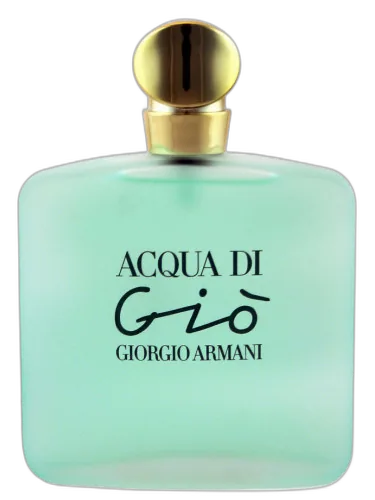
Giorgio Armani
Acqua Di Gio Giorgio Armani
Shared top notes: bergamot, lemon, mandarin orange
Fragrance Du Bois
Wild Orange Fragrance Du Bois
Shared top notes: bergamot, lemon, mandarin orange