
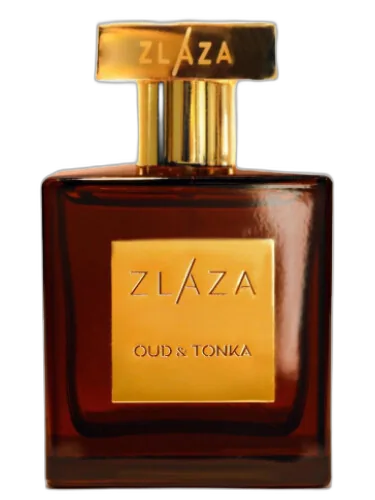

Oud & Tonka Zlaza
At a glance
Is Oud & Tonka Zlaza worth trying?
Oud & Tonka by Zlaza is a Oriental Vanilla fragrance for women and men.
- Best match
- Evening, Special Occasion wear in Fall, Winter
- Performance feel
- Very Good longevity with Moderate sillage
- Signature profile
- sweet, warm spicy, chocolate with Bergamot, Saffron, Chocolate
The first impression
Oud & Tonka by Zlaza is a Oriental Vanilla fragrance for women and men. This is a new fragrance. Oud & Tonka was launched in 2024. The nose behind this fragrance is Bertrand Duchaufour. Top notes are Bergamot and Saffron; middle notes are Chocolate, Geranium, Freesia and Tonka; base notes are Toffee, oak moss and Vanilla.
What shapes the scent
The perfumer behind it

Bertrand Duchaufour
Bertrand Duchaufour is a renowned French perfumer with a prolific career spanning many brands. He has created fragrances for Acqua di Parma, including Blu Mediterraneo - Cipresso Di Toscana and Colonia Assoluta, as well as for Aedes de Venustas, such as Café Tabac and Copal Azur. His style is known for its complexity and use of natural ingredients.
Notes pyramid
Top Notes
First impression · 15-30 min
 Bergamot
 Saffron
Heart Notes
Core character · 2-4 hours
 Chocolate
 Geranium
 Freesia
Tonka
Freesia
Tonka
Base Notes
Lasting impression · 4+ hours
 Toffee
oak moss
Toffee
oak moss
 Vanilla
The mood it creates
The Alchemist Archetype: Portrait of Oud & Tonka Zlaza
Essence
The person who gravitates toward Oud & Tonka Zlaza is most closely aligned with the Sage-a seeker of hidden truths, a connoisseur of depth, and a weaver of meaning. The Sage does not merely observe life; they dissect it, searching for the alchemical transformation within the mundane. Oud, with its smoky, ancient resonance, speaks to their reverence for tradition and mystery, while Tonka’s warm, vanillic sweetness reveals their softer, more sensual side-a duality that defines them.
This is not the Sage who sits in dusty libraries, though they may frequent them. Their wisdom is lived, not just studied. They are drawn to the esoteric, the rare, the things that demand patience to understand. Yet, unlike the Hermit, they do not fully retreat; they engage with the world, but on their own terms-always with an air of quiet authority.
Style & Aesthetic
Their tastes are deliberate, almost ritualistic. They prefer the weight of aged leather-bound books to digital screens, the slow burn of a single-malt whiskey to the immediacy of a cocktail. Their wardrobe leans toward timeless elegance-tailored wool, dark hues, perhaps an antique pocket watch or a signet ring passed down through generations. They are not ostentatious, but their choices carry intention.
In art, they favor symbolism over realism-Gustav Klimt’s gold-leafed mysticism, the haunting poetry of Rumi, the brooding compositions of Arvo Pärt. They are drawn to textures: the grain of aged wood, the roughness of unpolished stone, the supple touch of well-worn paper. Their home is a sanctuary of curated objects, each with a story, each chosen for its resonance rather than its trendiness.
They move through the world with a measured pace, avoiding the frenzy of modern life. Mornings might begin with black coffee and a journal, evenings with a single glass of something fine and a record spinning on a vintage turntable. They are not ascetics-they appreciate luxury, but luxury defined by authenticity, not excess.
Professionally, they thrive in roles that allow for introspection and mastery-perhaps as a historian, a perfumer, a therapist, or an antiquarian. They disdain corporate mundanity, but they are not impractical; they understand that even mystics must navigate the material world.
Philosophy & Values
They believe in the unseen architecture of life-that beneath the surface of things, there are patterns, meanings, hidden correspondences. They might dabble in astrology, Jungian psychology, or alchemical symbolism, not out of superstition, but as a framework to decode existence. Their faith is not in dogma, but in the pursuit itself.
Yet herein lies their paradox: the more they seek, the more they risk becoming detached from the immediate, the visceral. They value wisdom, but wisdom can become a fortress. They prize discernment, yet discernment can turn into skepticism so refined that it borders on cynicism.
Relationships
They do not collect acquaintances; they cultivate relationships with the same care they apply to their library. Their circle is small, but deep. They attract those who hunger for meaning, who are unafraid of silence, who appreciate the weight of a well-placed word.
Romantically, they are drawn to intensity-not the chaotic kind, but the slow, smoldering kind. They want a partner who can match their depth, who understands that love, like oud, must age to reveal its full richness. Yet their shadow emerges here: they can be so attuned to the metaphysical dimensions of connection that they neglect the simple, grounding acts of presence. A lover may accuse them of being "lost in their head," and they would not entirely disagree.
Shadow
Their greatest strength is also their greatest weakness. Their love of depth can become a refusal of lightness. They may dismiss joy as frivolity, laughter as naivety. In their quest for meaning, they sometimes forget that not everything must mean something-that some things simply are.
They can be accused of elitism, not out of malice, but because their standards are exacting. They might unintentionally alienate others with their intensity, their reluctance to engage in small talk, their impatience with superficiality. And if they are not careful, their introspection can curdle into isolation.
Conclusion
The admirer of Oud & Tonka Zlaza is neither entirely of this world nor entirely apart from it. They are the bridge between the seen and the unseen, the one who distills life’s chaos into something potent and rare. Their challenge is to remember that wisdom, like fragrance, is meant to be shared-not hoarded, not worshipped in solitude, but allowed to permeate the air, altering the atmosphere for those who breathe it in.
They are the Sage who must learn, again and again, that the deepest truths are often the simplest.
If you like this, try these
Fragrances with a comparable profile - shared accords, notes, and character.
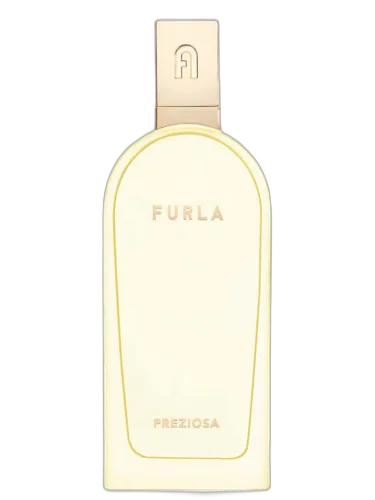
Furla
Preziosa Furla
Shared top notes: bergamot, saffron

Christian Provenzano Parfums
Santal Indien Christian Provenzano Parfums
Shared top notes: bergamot, saffron
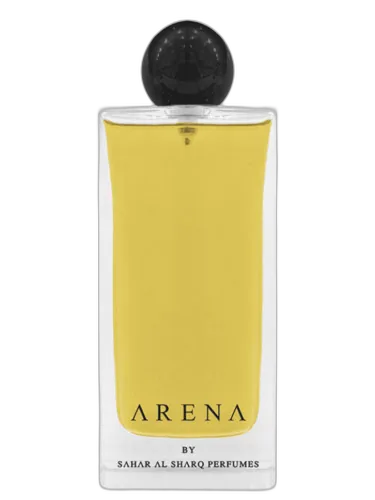
Sahar Al Sharq Perfumes
Arena Sahar Al Sharq Perfumes
Shared top notes: bergamot, saffron

A Lab on Fire
Liquidnight A Lab On Fire
Shared top notes: bergamot, saffron
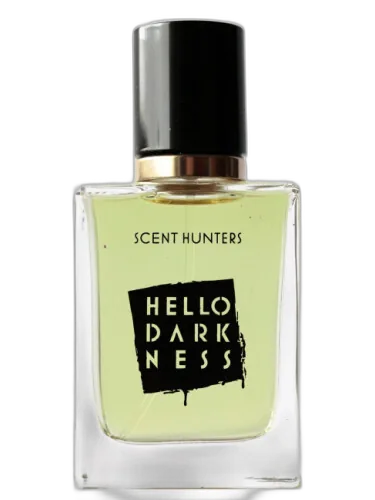
Scent Hunters
Hello Darkness Scent Hunters
Shared top notes: bergamot, saffron