
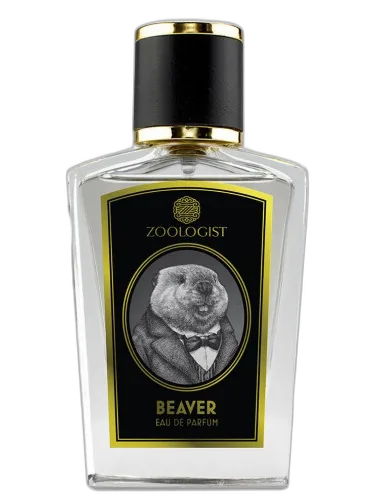

Beaver Zoologist Perfumes
At a glance
Is Beaver Zoologist Perfumes worth trying?
Beaver by Zoologist Perfumes is a Oriental fragrance for women and men.
- Best match
- Evening wear in Fall
- Performance feel
- Very Good longevity with Strong sillage
- Signature profile
- smoky, musky, woody with Musk, Lime (Linden) Blossom, Citruses
The first impression
Beaver by Zoologist Perfumes is a Oriental fragrance for women and men. Beaver was launched in 2014. The nose behind this fragrance is Chris Bartlett. Top notes are Musk, Lime (Linden) Blossom and Citruses; middle notes are Castoreum, Iris and Vanila; base notes are Musk, Ash, Cedar and Amber.
What shapes the scent
The perfumer behind it

Chris Bartlett
Chris Bartlett is a British perfumer and the founder of Pell Wall Perfumes, where he creates a wide range of fragrances. His catalog includes classics like 1953 Eau De Toilette and 1953 Pour Homme, as well as more unique offerings such as Anjin, Devana, Equistem, Green Carnation, Jacinth, and Lasting Lavender. His work often explores traditional and modern perfumery techniques.
Notes pyramid
Top Notes
First impression · 15-30 min
 Musk
Musk
 Lime (Linden) Blossom
 Citruses
Heart Notes
Core character · 2-4 hours
 Castoreum
 Iris
Iris
 Vanila
Base Notes
Lasting impression · 4+ hours
Musk
 Ash
Ash
 Cedar
Cedar
 Amber
Amber
The mood it creates
The Lover Archetype: Portrait of Beaver Zoologist Perfumes
Essence
This person is most closely aligned with the Wild Sage-a blend of the Sage and the Outlaw archetypes. They are drawn to knowledge, but not the sterile kind found in libraries; theirs is the wisdom of the untamed, the scent of damp earth and animal musk, the quiet intelligence of creatures who survive by instinct. The Beaver fragrance, with its aquatic depth, leathery warmth, and animalic intrigue, mirrors their essence: a thinker who refuses to be domesticated.
Style & Aesthetic
Their aesthetic is organic elegance-structured but never stiff. They favor natural textures: wool, linen, worn leather, and raw silk. Their wardrobe is a mix of vintage and avant-garde, always with a hint of the untamed-perhaps a fur-lined collar or boots that look like they’ve trekked through a forest.
In art, they are drawn to works that blur the line between beauty and strangeness-Dürer’s engravings of animals, the unsettling surrealism of Leonora Carrington, the dark romanticism of Caspar David Friedrich. Their music tastes lean toward the atmospheric: neofolk, ambient drones, or the deep growl of baritone singers.
They thrive in environments that allow for solitude and stimulation-a cabin near a river, a loft in an old industrial district, or a small house with an overgrown garden. Their daily rituals are sacred: morning coffee brewed strong, long walks where they observe the world like a naturalist, evenings spent reading by candlelight.
They may have an unconventional career-wildlife biologist, perfumer, artisan leatherworker, or even a philosopher who writes about the ethics of ecology. Whatever they do, it must engage both their mind and their senses.
Philosophy & Values
They reject the notion that civilization must mean the suppression of nature. For them, the wild is not something to conquer but to commune with. Their philosophy is one of harmonious duality-they see no contradiction in wearing a finely tailored coat while smelling of castoreum and birch tar. They believe in balance: between intellect and instinct, between refinement and rawness.
Their values are rooted in authenticity-not the performative kind, but the deep, sometimes uncomfortable truth of existence. They admire those who embrace their primal selves without shame, yet they are not reckless hedonists. Their wildness is deliberate, a choice rather than an impulse.
Relationships
They are not a social butterfly, but neither are they a recluse. Their friendships are few but fierce, built on mutual respect for depth rather than surface charm. They attract those who sense their quiet magnetism-people who are tired of artifice and crave something more visceral.
Romantically, they are drawn to partners who are self-possessed but not domineering. They disdain games and prefer relationships where both parties retain their independence. Their love is intense but never suffocating; they understand that passion, like the beaver’s habitat, requires both depth and boundaries.
Shadow
For all their wisdom, they risk falling into isolation disguised as enlightenment. Their disdain for superficiality can harden into contempt, making them dismissive of those who don’t share their depth. At their worst, they become the very thing they despise-a dogmatic purist, unwilling to bend, convinced of their own superiority.
They must remember that the wild is not just a retreat but a place of interconnection. The beaver does not dam the river out of selfishness but as part of a greater ecosystem. So too must they learn that wisdom without compassion is just another cage.
Conclusion
To wear Beaver Zoologist is to declare allegiance to the wild within. This person is neither beast nor scholar but something in between-a thinker who knows that truth is found not just in books but in the musk of animals, the rush of water, the quiet decay of leaves. They walk the line between civilization and wilderness, and in that balance, they find their strength.
If you like this, try these
Fragrances with a comparable profile - shared accords, notes, and character.

Agent Provocateur
Agent Provocateur Agent Provocateur
Shared base notes: amber, cedar, musk

Agent Provocateur
Diamond Dust Edition Agent Provocateur
Shared base notes: amber, cedar, musk

Bath House
Damask Rose & Violet Bath House
Shared heart notes: iris

Lubin
Grisette Lubin
Shared top notes: citruses
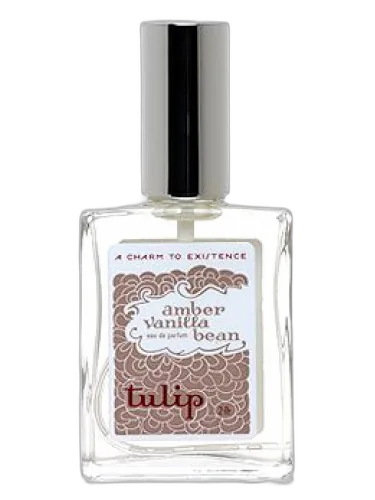
Tulip
Amber Vanilla Bean Tulip
Shared top notes: citruses