
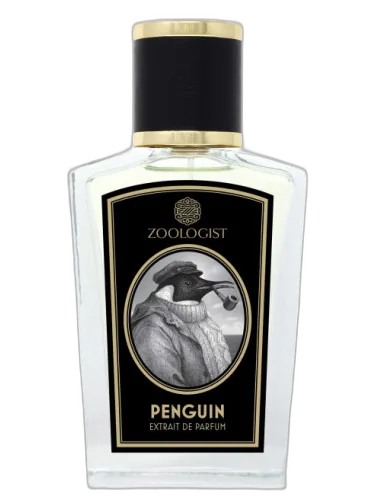

Penguin Zoologist Perfumes
At a glance
Is Penguin Zoologist Perfumes worth trying?
Penguin by Zoologist Perfumes is a fragrance for women and men.
- Best match
- Evening wear in Winter
- Performance feel
- Good longevity with Moderate sillage
- Signature profile
- ozonic, fresh, woody with Ozonic notes, Ice, juniper berry
The first impression
Penguin by Zoologist Perfumes is a fragrance for women and men. This is a new fragrance. Penguin was launched in 2024. The nose behind this fragrance is Chiaki Nomura. Top notes are Ozonic notes, Ice and juniper berry; middle notes are Pink Pepper, Saffron and Labdanum; base notes are Suede, Moss, Musk and Sandalwood.
What shapes the scent
The perfumer behind it

Chiaki Nomura
Chiaki Nomura is a Japanese perfumer known for crafting evocative scents that often draw on natural and minimalist themes. She created Elysée Nuit for O Boticário, a warm and sensual fragrance, and Hinoki In Hinoki for Scents of Wood, which centers on the aromatic wood. Her work for Zoologist Perfumes includes Penguin, a fresh and aquatic composition inspired by the Antarctic bird.
Notes pyramid
Top Notes
First impression · 15-30 min
 Ozonic notes
 Ice
juniper berry
Ice
juniper berry
Heart Notes
Core character · 2-4 hours
 Pink Pepper
 Saffron
 Labdanum
Base Notes
Lasting impression · 4+ hours
 Suede
Moss
Suede
Moss
 Musk
Musk
 Sandalwood
The mood it creates
The Sage Archetype: Portrait of Penguin Zoologist Perfumes
Essence
The one who wears Penguin by Zoologist Perfumes is a seeker of clarity, a mind drawn to the crisp, icy purity of thought. The Sage archetype defines them-not merely as a scholar, but as an observer of life’s vast, untouched landscapes, both within and without. Penguin’s fragrance, with its mineralic chill, salty marine whispers, and faint warmth beneath the frost, mirrors their essence: a thinker who thrives in solitude, yet carries the quiet fire of curiosity.
They are not the loud philosopher, nor the dogmatic intellectual. Their wisdom is fluid, like the shifting ice floes-adaptable, yet unyielding in its core principles. They seek truth, not for dominance, but for the sheer pleasure of understanding.
Style & Aesthetic
Their aesthetic is functional elegance. A well-tailored wool coat, a watch that tells time without ostentation, boots that can weather both city streets and coastal cliffs. They appreciate craftsmanship but disdain excess. In art, they favor the stark beauty of monochrome photography, the haunting silence of ambient music, the precision of haiku.
They drink black coffee or smoky tea, never sweetened. Their palate prefers the briny tang of oysters, the crispness of chilled cucumber, the umami depth of miso. They eat slowly, savoring each sensation as if it were a fleeting thought to be examined before dissolving.
Philosophy & Values
Their world is one of deliberate restraint. They prefer the sharp, clean lines of minimalist design-uncluttered spaces, neutral tones, the occasional striking contrast. Their bookshelf is a curated temple: philosophy, marine biology, perhaps some Arctic exploration memoirs. They admire stoicism but do not preach it; they live it in measured breaths.
Philosophically, they are drawn to thinkers who embrace paradox-Nietzsche’s ice and flame, Camus’ absurdity, the Zen koan that dissolves logic. They do not fear contradiction; they relish it, for life itself is a contradiction. The ocean is vast yet contained, the Arctic both barren and teeming with unseen life. So too is their mind.
Relationships
They are not a hermit, but connections are few and carefully chosen. Friends value them for their quiet insight, their ability to listen without judgment. They do not offer platitudes; when they speak, it is with precision. Romantic partners are drawn to their calm intensity, though some may mistake their reserve for coldness.
Their love is not effusive, but it is deep-like the ocean beneath the ice. They show affection in acts of service, in shared silence, in the way they remember small, meaningful details. Yet their shadow emerges here: they can be emotionally elusive, retreating into their mental fortress when vulnerability threatens.
Shadow
The Sage’s greatest strength is also their flaw. Their love of detachment can become isolation. They observe life so keenly that they sometimes forget to participate in it. When challenged emotionally, they rationalize rather than feel, analyzing their own heart as if it were a specimen under glass.
There is also a subtle arrogance in their self-sufficiency. They may dismiss those who live by passion rather than reason, seeing them as chaotic, unrefined. But life is not only ice-it is also fire, and the Sage must learn that wisdom without warmth is merely a frozen artifact.
Conclusion
The Penguin wearer is a paradox-a soul that thrives in solitude yet is drawn to the edges of human experience. They are the quiet scholar, the patient observer, the one who finds beauty in the spaces between words. Their challenge is not to forsake reason, but to let it breathe, to allow the ice to melt just enough so that life, in all its messy glory, can flow through them.
They are not cold. They are waiting-for the right moment, the right thought, the right person to share the depths they guard so carefully. And when that moment comes, even the Arctic yields to spring.
If you like this, try these
Fragrances with a comparable profile - shared accords, notes, and character.
Memoize London
Veritas Memoize London
Shared base notes: moss, musk, sandalwood
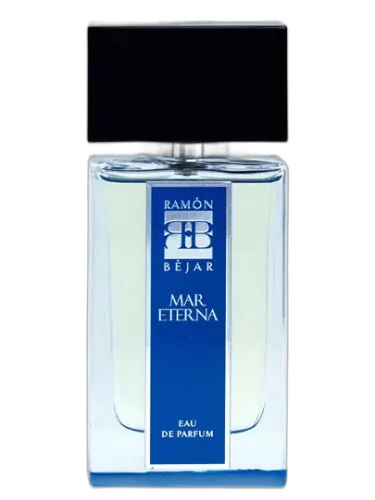
Ramón Béjar
Mar Enterna Extrait De Parfum Ramón Béjar
Shared top notes: ozonic notes
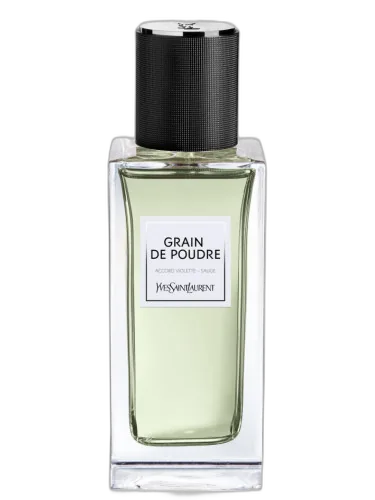
Yves Saint Laurent
Grain De Poudre Yves Saint Laurent
Shared base notes: musk, suede
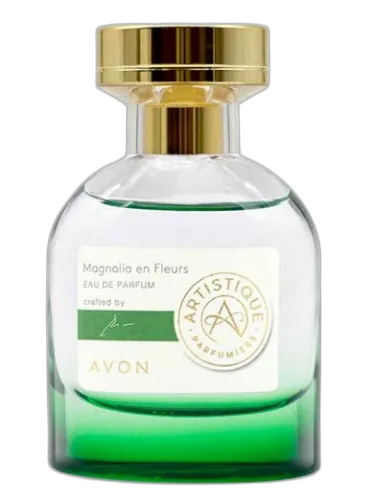
Avon
Magnolia En Fleurs Avon
Shared base notes: moss, musk, sandalwood
![#self[ie] Yellow Uz Água De Cheiro by Água de Cheiro](https://images.olfactoryarchetype.com/fragrances/self-ie-yellow-uz-agua-de-cheiro-for-women-and-men.webp)
Água de Cheiro
#self[ie] Yellow Uz Água De Cheiro
Shared base notes: moss, musk, sandalwood