
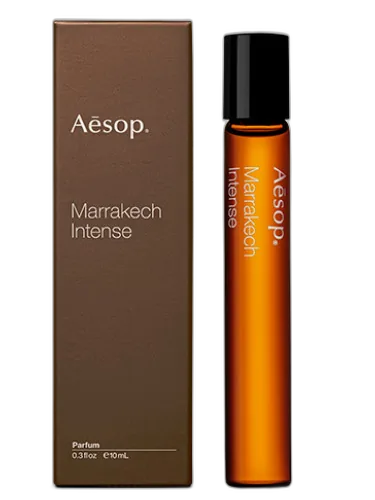

Marrakech Intense Parfum Aesop
At a glance
Is Marrakech Intense Parfum Aesop worth trying?
Marrakech Intense Parfum by Aesop is a Oriental Woody fragrance for women and men.
- Best match
- Evening, Special Occasion wear in Fall, Winter
- Performance feel
- Very Good longevity with Strong sillage
- Signature profile
- warm spicy, woody, citrus with Clove, Cardamom, Neroli
The first impression
Marrakech Intense Parfum by Aesop is a Oriental Woody fragrance for women and men. Marrakech Intense Parfum was launched in 2014. The nose behind this fragrance is Barnabe Fillion.
What shapes the scent
The perfumer behind it

Barnabe Fillion
Barnabe Fillion is a French perfumer who trained at Givaudan and now works closely with Aesop, where he has become a defining creative force. His style is known for blending raw, mineral-like accords with earthy and aromatic notes, often evoking landscapes and natural textures. He created several of Aesop’s most distinctive fragrances, including the green, citrusy Erémia, the smoky, woody Karst, and the dark, resinous Miraceti.
Notes pyramid
All Notes
Complete scent profile
 Clove
Clove
 Cardamom
 Neroli
 Sandalwood
 Bergamot
 Cedar
Cedar
 Rose
Rose
 Jasmine
The mood it creates
The Sage Archetype: Portrait of Marrakech Intense Parfum Aesop
Essence
The one who favors Marrakech Intense by Aesop is, at their core, a Sage-an archetype defined by wisdom, introspection, and a relentless pursuit of depth. This fragrance, with its smoky, woody, and subtly spiced composition, mirrors their essence: complex, layered, and resistant to superficiality. The Sage seeks truth not in grand proclamations but in quiet observation, in the slow unfurling of meaning. They are drawn to the scent’s blend of myrrh, sandalwood, and vetiver-notes that evoke ancient libraries, dimly lit chambers of contemplation, and the quiet hum of a mind always at work.
Yet, like all archetypes, the Sage has a shadow. Their love of wisdom can curdle into dogmatism, their introspection into detachment, their depth into elitism. The one who wears Marrakech Intense is not immune to these pitfalls.
Style & Aesthetic
Their tastes are deliberate, never accidental. They prefer minimalism with texture-raw linen, unpolished wood, the weight of a well-bound book in hand. Their home is a sanctuary of muted tones, where every object serves a purpose or tells a story. They disdain clutter, not out of austerity, but because excess distracts from meaning.
In art, they favor the abstract and the timeless-Mark Rothko’s color fields, Agnes Martin’s quiet grids, the poetry of Rilke or Pessoa. Music is an intellectual exercise as much as an emotional one: Arvo Pärt’s sacred minimalism, the structured chaos of free jazz, the deep hum of a cello.
Their days are structured but not rigid. They rise early, savoring the quiet before the world intrudes. Coffee is ritual, not caffeine-prepared with care, sipped slowly. They read voraciously, but never frivolously; every book must offer something to ponder.
They travel, but not for escapism. They seek places with history, texture, gravity-Marrakech itself, Kyoto’s temples, the mist-covered hills of Scotland. They do not collect souvenirs; they collect sensations, impressions, shifts in perspective.
Philosophy & Values
They believe in knowledge as liberation, but not in the naive sense of enlightenment. For them, wisdom is a burden as much as a gift-once you see, you cannot unsee. They value authenticity above all, though their definition of it is exacting. Superficial conversation bores them; they crave dialogue that cuts to the marrow of existence.
Yet their shadow lurks here: they can mistake cynicism for insight, dismissing joy as frivolity. Their love of depth sometimes blinds them to the beauty of simplicity.
Relationships
They are not gregarious, but they are not solitary either. Their friendships are few but intense, built on mutual respect for intellect and integrity. They attract those who seek guidance, though they often resist the role of mentor-not out of humility, but because they fear the responsibility.
Romantically, they are drawn to equals, partners who challenge them without exhausting them. Passion, for them, is cerebral before it is physical; they need a meeting of minds before a meeting of bodies. Their shadow here is emotional guardedness-they analyze love before they feel it, dissecting affection until it loses its warmth.
Shadow
Their greatest strength-discernment-is also their greatest weakness. In their quest for depth, they risk becoming disdainful of lightness. They may dismiss laughter as shallow, pleasure as distraction, optimism as naivety. Their intellect, so sharp, can cut them off from the raw, unpolished beauty of life.
They must learn that wisdom is not only in the solemn but also in the spontaneous, not only in the profound but in the passing. Marrakech Intense is not just a scent of contemplation-it is also one of warmth, of spice, of life. The Sage must remember to inhale, not just analyze.
Conclusion
To wear Marrakech Intense is to embrace a paradox: the scent is both meditative and sensual, both ancient and immediate. The Sage who wears it must strive for the same balance-to be wise without being cold, deep without being inaccessible, discerning without being dismissive.
In the end, their journey is not toward knowledge alone, but toward wisdom that breathes, that allows for both the weight of thought and the lightness of being.
If you like this, try these
Fragrances with a comparable profile - shared accords, notes, and character.
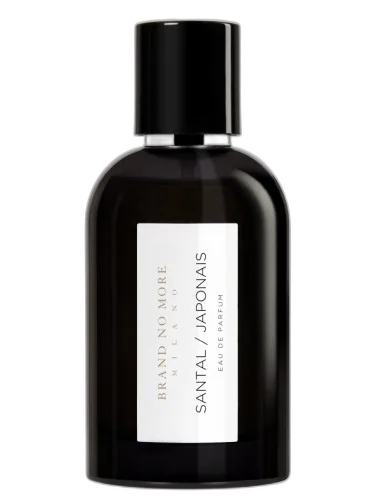
Brand No More
Santal / Japonais Brand No More
Shared top notes: bergamot, cardamom, neroli
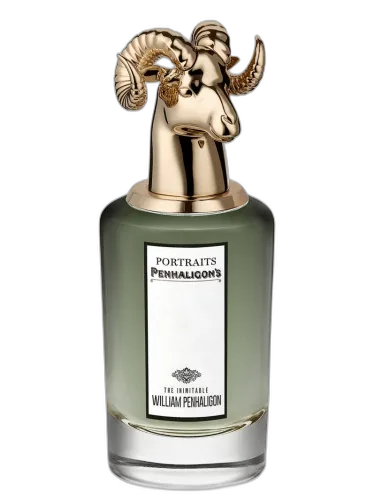
Penhaligon's
The Inimitable William Penhaligon Penhaligon's
Shared top notes: bergamot, jasmine

The Dua Brand
Deset Reflection The Dua Brand
Shared top notes: cedar, jasmine, neroli

West Third Brand
Belgium Linen West Third Brand
Shared top notes: bergamot, cedar, neroli

Victorio & Lucchino
Agua De Rocio Victorio & Lucchino
Shared top notes: bergamot, cedar, neroli