


Parfum De Peau Aime
At a glance
Is Parfum De Peau Aime worth trying?
Parfum de Peau by Aime is a Floral Woody Musk fragrance for women and men.
- Best match
- Evening wear in Fall
- Performance feel
- Excellent longevity with Strong sillage
- Signature profile
- musky, woody, amber with Almond, White Musk, Mock Orange
The first impression
Parfum de Peau by Aime is a Floral Woody Musk fragrance for women and men. Parfum de Peau was launched during the 2020's. Top note is Almond; middle notes are White Musk, Mock Orange and Freesia; base notes are Indian Sandalwood, Himalayan Cedar, Ambroxan and Haitian Vetiver.
What shapes the scent
The perfumer behind it

Unknown Perfumer
Notes pyramid
Top Notes
First impression · 15-30 min
 Almond
Heart Notes
Core character · 2-4 hours
 White Musk
 Mock Orange
 Freesia
Base Notes
Lasting impression · 4+ hours
 Indian Sandalwood
 Himalayan Cedar
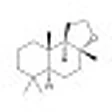 Ambroxan
Haitian Vetiver
Ambroxan
Haitian Vetiver
The mood it creates
The Lover Archetype: Portrait of Parfum De Peau Aime
Essence
To wear Parfum de Peau Aime is to embrace the world through the senses-to seek beauty not as an abstract ideal but as a living, breathing force. This fragrance, with its lush florals and animalic warmth, is the olfactory signature of one who worships at the altar of experience, who believes that life is meant to be tasted, touched, and savored. Their soul is ruled by the Lover archetype, the eternal seeker of passion, connection, and aesthetic transcendence.
Style & Aesthetic
This person moves through the world as if it were a grand opera, each moment an aria of texture, scent, and sensation. Their style is deliberate, never ostentatious but always evocative-a silk blouse that catches the light just so, a vintage ring with a history whispered in its patina. They are drawn to the decadent and the refined: the weight of a well-bound book, the slow burn of a single-malt whiskey, the way candlelight flickers against aged wood.
Their home is a sanctuary of curated pleasures-antique mirrors, fresh flowers in blown-glass vases, a record player spinning jazz or baroque compositions. They disdain the mass-produced, the soulless, the hurried. For them, beauty is not mere decoration but a moral imperative, a way of resisting the vulgarity of an indifferent world.
Philosophy & Values
They do not believe in asceticism. To deny the flesh is to deny life itself. Their philosophy is one of immersion-they do not merely observe the world; they merge with it. Love, for them, is not just an emotion but a sacrament, an act of devotion. They are drawn to thinkers like Rilke and Baudelaire, poets who understood that ecstasy and melancholy are two sides of the same coin.
Yet, theirs is not a philosophy of mere hedonism. They seek meaning in pleasure, depth in desire. They believe that to truly love-a person, a place, a moment-is to touch the divine.
Relationships
In love, they are both artist and muse. They do not merely fall for others; they compose relationships with the care of a sculptor shaping marble. Their partners are chosen for their ability to appreciate nuance, to engage in the silent dialogue of glances and gestures. They are not possessive, but they are demanding-they expect their lovers to meet them in that rarefied space where passion and intellect intertwine.
Friendships, too, are curated. They have little patience for small talk or superficial bonds. Their inner circle consists of those who understand the sacredness of a shared silence, the intimacy of a perfectly timed glance.
Shadow
But the Lover, when unbalanced, risks drowning in their own depths. Their pursuit of intensity can become a hunger that consumes rather than nourishes. They may grow restless, always chasing the next thrill, the next intoxication, never satisfied. Relationships may suffer under the weight of their idealism-no mortal can forever embody the divine.
There is also the danger of vanity, of mistaking aesthetic refinement for moral superiority. They may disdain those who lack their sensibilities, forgetting that beauty is subjective, that not all souls are stirred by the same harmonies.
Conclusion
To know this person is to know the world more vividly. They remind us that life is not merely to be endured but reveled in. Yet, their greatest challenge is balance-to love without obsession, to seek beauty without disdain for the ordinary, to worship the senses without becoming their slave.
In the end, they are neither saint nor sybarite, but a human who has chosen to walk the razor’s edge between ecstasy and excess. And in that tension, they find their truth.
If you like this, try these
Fragrances with a comparable profile - shared accords, notes, and character.

Honore des Pres
Sexy Angelic Honore Des Pres
Shared top notes: almond
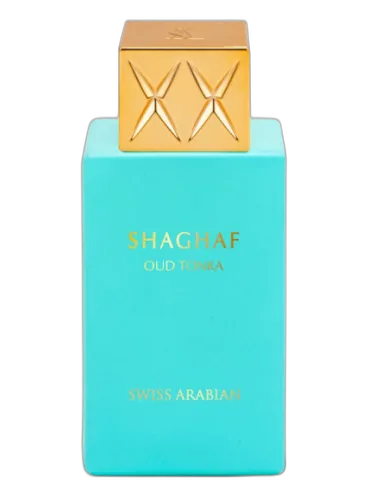
Swiss Arabian
Shaghaf Oud Tonka Swiss Arabian
Shared top notes: almond
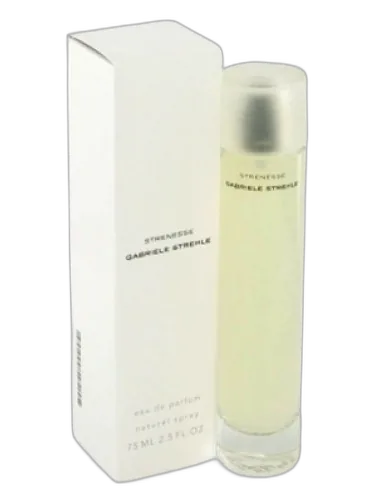
Strenesse
Strenesse Strenesse
Shared top notes: almond
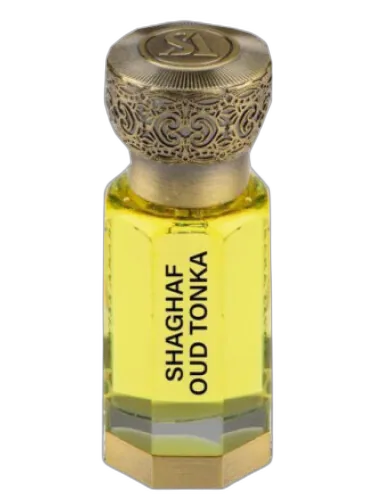
Swiss Arabian
Shaghaf Oud Tonka Oil Swiss Arabian
Shared top notes: almond
Michael Paul Fragrances
Vantablac Michael Paul Fragrances
Shared top notes: almond