
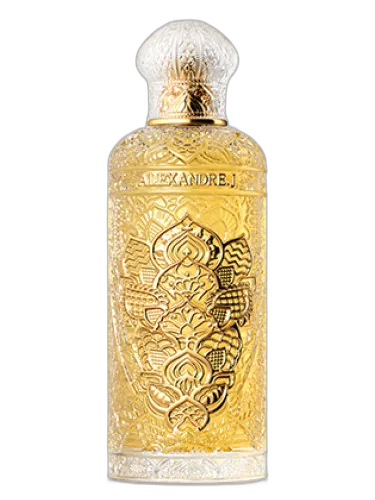

Ode To Rose Alexandre.j
Fragrance Story
Ode to Rose by Alexandre.J is a Floral fragrance for women and men. This is a new fragrance. Ode to Rose was launched in 2022. Top notes are May Rose, Ylang-Ylang and Jasmine; middle notes are Geranium, Violet Leaves and Orange Cassia Tree; base notes are Sandalwood and Patchouli.
Composition Profile
About the Perfumer

Unknown Perfumer
Fragrance Notes
Top Notes
First impression · 15-30 min
 May Rose
 Ylang-Ylang
 Jasmine
Heart Notes
Core character · 2-4 hours
 Geranium
Violet Leaves
Geranium
Violet Leaves
 Orange Cassia Tree
Base Notes
Lasting impression · 4+ hours
 Sandalwood
 Patchouli
Ode To Rose Alexandre.j by Alexandre.J offers a distinctive olfactory experience that stands out from other fragrances in its category.
Crafted with the finest ingredients and a blend of traditional and modern perfumery techniques, this fragrance represents the pinnacle of the perfumer's art.
Ode To Rose Alexandre.j embodies the distinctive style of Alexandre.J while adding a unique chapter to their fragrance portfolio.
Character Profile
The Lover Archetype: Portrait of Ode To Rose Alexandre.j
Essence
This person is most closely defined by The Lover archetype-a soul drawn to beauty, passion, and deep emotional resonance. The Lover does not merely seek pleasure but pursues an almost sacred connection to the aesthetic and sensual dimensions of life. The fragrance Ode to Rose Alexandre.J-a scent that balances the velvety richness of rose with an earthy, almost mystical depth-mirrors their essence: romantic yet grounded, delicate yet enduring.
Shadow
But every archetype has its shadow. The Lover’s flaw is their capacity for melancholic obsession. When their passions turn inward, they risk becoming prisoners of their own yearning. A love unrequited, a dream deferred-these wounds fester in them longer than in most. They may romanticize suffering, believing that pain is the price of true feeling. At their worst, they indulge in self-created tragedies, mistaking intensity for meaning.
They can also be selectively indulgent, dismissing practicality as vulgarity. A budget ignored for the sake of a perfect bottle of wine, a responsibility neglected for an evening of stargazing-these are their small rebellions against the mundane. Yet, life demands balance, and their refusal to engage with its harsher realities can leave them adrift when beauty alone is not enough.
Their greatest strength-their capacity for deep feeling-is also their greatest vulnerability. They walk the line between ecstasy and despair, often in the same breath. But when they learn to temper their idealism with wisdom, they become not just dreamers but alchemists of experience, turning ordinary moments into something sacred.
They are the kind of person who, upon smelling Ode to Rose Alexandre.J, does not merely think "This is pleasant" but "This is a memory I have not yet lived." And in that thought lies the essence of who they are-forever reaching for the sublime, forever dancing between the real and the imagined.
Conclusion
Their tastes are refined but never ostentatious. They prefer the understated elegance of a well-worn leather-bound book over the gloss of newness, the quiet intensity of a Chopin nocturne over the clamor of modern pop. Their wardrobe leans toward timeless pieces-soft cashmere, tailored wool, perhaps a silk scarf draped with effortless grace. They are drawn to textures that invite touch, colors that whisper rather than shout: deep burgundies, muted olives, the faint blush of a fading sunset.
Philosophically, they believe in the transformative power of beauty. To them, a single rose is not just a flower but a testament to life’s fleeting yet profound moments. They may quote Rilke or Neruda in conversation, not to impress but because poetry is the language that best captures their inner world. Their values revolve around authenticity-they despise artifice, yet they are not naive. They understand that love, like a rose, has thorns.
In relationships, they are both tender and demanding. They do not love lightly; when they commit, it is with an almost devotional intensity. They seek partners who appreciate depth, who can engage in midnight conversations about art, desire, and the meaning of existence. Yet, their idealism can be a double-edged sword-they are prone to disappointment when reality fails to match their romantic visions.
Similar Fragrances
Fragrances with a comparable profile - shared accords, notes, and character.

Fiilit
Waka - Madagascar Fiilit
Shared accords: aromatic, balsamic, fresh spicy

Xerjoff
Ivory Route Xerjoff
Shared accords: aromatic, balsamic, fresh spicy

Alexandre.J
Ode To Rose Perfume Extract Alexandre.j
Shared accords: aromatic, floral, fresh spicy

Etat Libre d'Orange
Rossy De Palma Eau De Protection Etat Libre D'orange
Shared accords: aromatic, floral, fresh spicy

Suhad Perfumes
Suad Suhad Perfumes
Shared accords: aromatic, fresh spicy, herbal