

Autumn Ayala Moriel
At a glance
Is Autumn Ayala Moriel worth trying?
Autumn by Ayala Moriel is a Chypre Fruity fragrance for women.
- Best match
- Evening, Special Occasion wear in Fall
- Performance feel
- Good longevity with Moderate sillage
- Signature profile
- woody, yellow floral, iris with Ylang-Ylang, Brazilian Rosewood, Chamomile
The first impression
Autumn by Ayala Moriel is a Chypre Fruity fragrance for women. The nose behind this fragrance is Ayala Moriel. Top notes are Ylang-Ylang, Brazilian Rosewood and Chamomile; middle notes are Iris, Jasmine and Rose; base note is Patchouli.
What shapes the scent
The perfumer behind it

Ayala Moriel
Ayala Moriel is an independent perfumer and natural fragrance specialist based in Vancouver, Canada. Her olfactory style emphasizes botanical ingredients and complex, evocative compositions that often draw from nature, art, and cultural traditions. Notable creations from her catalog include the resinous and woody <3, the dark and licorice-forward Black Licorice, and the seasonal, earthy Autumn. Her work has helped define the modern natural perfumery movement, inspiring a deeper appreciation for plant-based scent artistry.
Notes pyramid
Top Notes
First impression · 15-30 min
 Ylang-Ylang
 Brazilian Rosewood
 Chamomile
Heart Notes
Core character · 2-4 hours
 Iris
Iris
 Jasmine
 Rose
Rose
Base Notes
Lasting impression · 4+ hours
 Patchouli
The mood it creates
The Sage Archetype: Portrait of Autumn Ayala Moriel
Essence
To wear Autumn by Ayala Moriel is to embrace the season of transformation-not as an ending, but as a slow, deliberate burn. This fragrance, with its rich tapestry of spices, woods, and resins, speaks to a person who finds beauty in decay, wisdom in impermanence, and depth in the passage of time. They are not merely observers of life’s cycles but active participants, shaping meaning from the ephemeral.
The Sage does not seek truth in absolutes but in the interplay of light and shadow. They are drawn to knowledge, not as dogma, but as an ever-unfolding mystery. The lover of Autumn embodies this archetype-contemplative, introspective, and attuned to the unseen currents beneath the surface. Their mind is a library of half-formed theories, poetic fragments, and quiet revelations. Yet, unlike the rigid scholar, their wisdom is intuitive, drawn from the scent of fallen leaves as much as from books.
Style & Aesthetic
Their wardrobe is a muted symphony of earth tones-deep burgundies, forest greens, charcoal grays. Fabrics are textured: wool, raw silk, aged leather. They favor vintage pieces, not out of nostalgia, but because they appreciate the weight of history in well-worn things. Jewelry, if worn at all, is understated-a single amber pendant, a signet ring passed down through generations. Their home is a sanctuary of books, dried botanicals, and candlelight, where every object tells a story.
Mornings are sacred. They rise early, not out of discipline, but because dawn holds a quiet magic. They may keep a journal, not as a record of events, but as a map of their inner landscape. Their work, whether creative or analytical, is driven by curiosity rather than ambition. They are drawn to professions that allow solitude and depth-writing, research, herbalism, art restoration. Weekends are spent wandering forests or bookshops, always with an eye for the overlooked detail.
Philosophy & Values
For them, life is a dialogue between permanence and transience. They may quote Heraclitus or Rilke, but their true philosophy is written in the way they linger over a cup of tea, watching steam curl into the air like incense. They value depth over speed, substance over spectacle. Authenticity is their creed; they despise artifice, though they understand its necessity in the world. Their morality is not black and white but layered-a recognition that even the most virtuous soul carries shadows.
Relationships
They are not gregarious, but neither are they reclusive. Their friendships are few but profound, built on mutual understanding rather than convenience. In love, they seek a partner who can match their intensity-someone who does not flinch at silence or shy away from the darker corners of the psyche. They are loyal but demand intellectual and emotional independence. Small talk exhausts them; they thrive in conversations that spiral into the abstract, the existential, the poetic.
Shadow
Yet the Sage is not without their burdens. Their love of depth can become detachment, their introspection a form of evasion. They may withdraw too far, mistaking solitude for superiority. At their worst, they grow cynical, dismissing the mundane joys of life as beneath them. Their pursuit of wisdom can become a prison, where they hoard knowledge but fail to act upon it. The very richness of their inner world may isolate them, leaving them stranded in their own mind.
Conclusion
The true test of the Sage is not in knowing, but in bridging the gap between thought and life. When they succeed, they become guides-not with answers, but with better questions. Their love of Autumn is no accident: it is the scent of change, of things both dying and being reborn. They understand that wisdom is not a destination, but a season-one that must, in time, give way to another.
If you like this, try these
Fragrances with a comparable profile - shared accords, notes, and character.
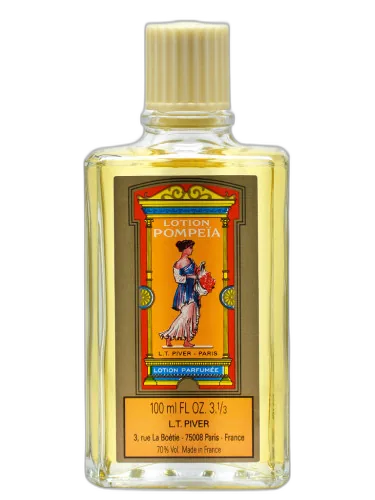
L.T. Piver
Pompeia L.t. Piver
Shared heart notes: iris, jasmine, rose

Dior
Miss Dior Cherie Eau De Printemps Dior
Shared heart notes: jasmine, rose

Jil Sander
Sunset Jil Sander
Shared heart notes: rose

Salvatore Ferragamo
F For Fascinating Salvatore Ferragamo
Shared heart notes: jasmine

Diptyque
Eau Capitale Eau De Parfum Diptyque
Shared heart notes: rose