
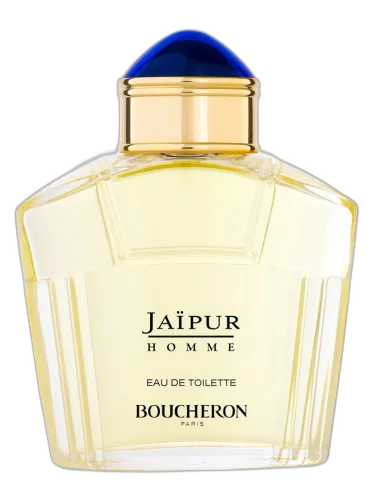
Jaipur Homme Boucheron
At a glance
Is Jaipur Homme Boucheron worth trying?
Jaipur Homme by Boucheron is a Oriental Spicy fragrance for men.
- Best match
- Evening wear in Fall
- Performance feel
- Excellent longevity with Strong sillage
- Signature profile
- warm spicy, amber, cinnamon with Cardamom, Lemon, Lime
The first impression
Jaipur Homme by Boucheron is a Oriental Spicy fragrance for men. Jaipur Homme was launched in 1998. The nose behind this fragrance is Annick Menardo. Top notes are Cardamom, Lemon, Lime and Bergamot; middle notes are Cinnamon, Carnation, Rose and Jasmine; base notes are Benzoin, Tonka Bean, Patchouli and Cedar.
What shapes the scent
The perfumer behind it

Annick Menardo
Annick Menardo is a French perfumer known for her work at Firmenich and her bold, modern compositions. She often blends gourmand, woody, and leathery accords, creating fragrances that are both striking and wearable. Her portfolio includes the rich, smoky Figment Man for Amouage and the sophisticated, floral-amber Portrayal Woman, as well as the iconic Azzaro Visit.
Notes pyramid
Top Notes
First impression · 15-30 min
 Cardamom
 Lemon
Lemon
 Lime
Lime
 Bergamot
Heart Notes
Core character · 2-4 hours
 Cinnamon
 Carnation
 Rose
Rose
 Jasmine
Base Notes
Lasting impression · 4+ hours
 Benzoin
 Tonka Bean
 Patchouli
 Cedar
Cedar
The mood it creates
The Sovereign Archetype: Portrait of Jaipur Homme Boucheron
Essence
The man who chooses Jaipur Homme Boucheron as his signature scent is not merely selecting a fragrance-he is declaring an ethos. This is a scent of opulence, warmth, and quiet authority, a blend of spices, vanilla, and amber that lingers like the presence of a ruler who does not need to raise his voice. He is, above all, the Sovereign-an archetype of mastery, dignity, and control.
The Sovereign does not seek power for its own sake; he assumes it naturally, as if it were his birthright. He is not a tyrant, nor a conqueror, but a man who understands that true leadership is an art-one that requires discernment, generosity, and an unshakable sense of self. Yet, like all archetypes, the Sovereign has his shadow: the risk of becoming rigid, detached, or imperious when his authority is challenged.
Relationships
In love, he is neither a romantic nor a cynic, but a man who understands that devotion is a choice, not a fleeting emotion. He does not chase; he attracts. His partner must be his equal-someone who respects his autonomy but is unafraid to challenge him. His friendships are few but deep, built over years of mutual trust. He does not indulge in gossip or idle chatter; when he speaks, it is with intention.
Yet, his strength can become his weakness. His natural authority may intimidate, his self-assurance may read as arrogance. He expects much from others, sometimes forgetting that not everyone shares his discipline. In his shadow, he risks isolation-mistaking solitude for strength, detachment for wisdom.
Shadow
The Sovereign’s greatest flaw is his reluctance to show vulnerability. To admit doubt, to ask for help-these are acts that feel like surrender. He may grow impatient with those who cannot match his standards, dismissing them as weak rather than recognizing their different struggles. If unchecked, his dignity can curdle into pride, his self-possession into emotional distance.
But when balanced, he is a force of stability-a man who does not merely exist in the world but shapes it, subtly and surely. His presence is not loud, but it is undeniable. He wears Jaipur Homme not because he seeks attention, but because it is an extension of himself-complex, enduring, and impossible to ignore.
Conclusion
The Sovereign does not need to declare himself; his essence does it for him. In Jaipur Homme, he finds a scent that mirrors his nature-spiced but smooth, bold but never brash. It is a fragrance for a man who understands that true power is not in domination, but in the quiet certainty of one who knows his worth.
Yet, he must remember: even kings must kneel sometimes-if only to remind themselves they are still human.
If you like this, try these
Fragrances with a comparable profile - shared accords, notes, and character.
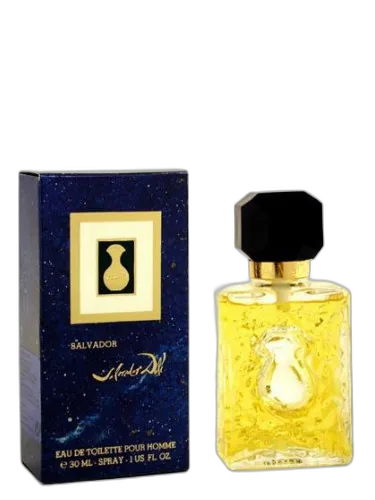
Salvador Dali
Salvador By Salvador Dali (1992) Salvador Dali
Shared top notes: bergamot
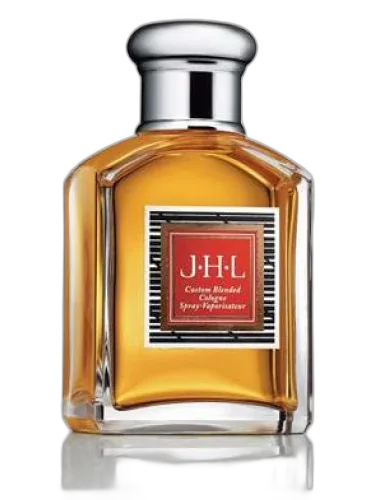
Aramis
Jhl Aramis
Shared top notes: bergamot, lemon

Pierre Cardin
Enigme Pierre Cardin
Shared top notes: bergamot, lemon
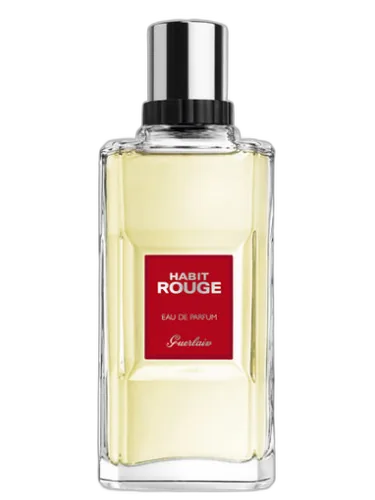
Guerlain
Habit Rouge Eau De Parfum Guerlain
Shared top notes: bergamot, lemon, lime

Jacques Bogart
Witness Jacques Bogart
Shared top notes: bergamot, lemon