
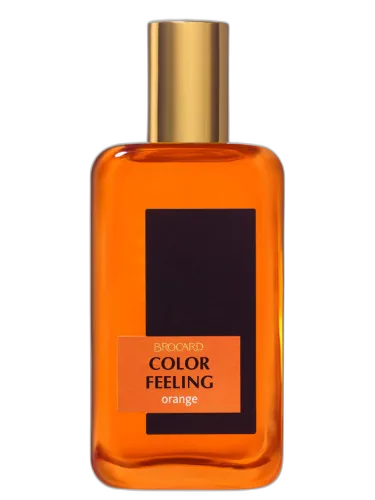

Color Feeling Orange Brocard
At a glance
Is Color Feeling Orange Brocard worth trying?
Color Feeling Orange by Brocard is a Woody Spicy fragrance for women and men.
- Best match
- Casual wear in Summer
- Performance feel
- Moderate longevity with Moderate sillage
- Signature profile
- citrus, warm spicy, sweet with Marigold, Orange, Amber
The first impression
Color Feeling Orange by Brocard is a Woody Spicy fragrance for women and men. Color Feeling Orange was launched in 2020. The nose behind this fragrance is Bertrand Duchaufour.
What shapes the scent
The perfumer behind it

Bertrand Duchaufour
Bertrand Duchaufour is a renowned French perfumer with a prolific career spanning many brands. He has created fragrances for Acqua di Parma, including Blu Mediterraneo - Cipresso Di Toscana and Colonia Assoluta, as well as for Aedes de Venustas, such as Café Tabac and Copal Azur. His style is known for its complexity and use of natural ingredients.
Notes pyramid
All Notes
Complete scent profile
 Marigold
 Orange
 Amber
Amber
 Ground Cherry
 Mango
Mango
 Chili Pepper
 Saffron
 Iris
Iris
 Citron
 Sandalwood
 Cedar
Cedar
 Patchouli
 Rose
Rose
The mood it creates
The Lover Archetype: Portrait of Color Feeling Orange Brocard
Essence
The one who favors Color Feeling Orange Brocard is most closely aligned with the Creator archetype-a force of imagination, sensuality, and unapologetic self-expression. This fragrance, with its bright citrus top notes, warm floral heart, and grounding woody base, mirrors their essence: a being who thrives on the interplay of energy and depth. The Creator is not merely an artist in the traditional sense but a sculptor of experience, shaping life into something vivid, textured, and intoxicating.
They reject the mundane, not out of arrogance, but because they cannot breathe in stale air. Their world must pulse with color, scent, and meaning-anything less is a slow death.
Relationships
In love and friendship, they are magnetic, drawing others into their orbit with effortless charm. They do not seek followers but fellow travelers-those who understand that passion is not a phase but a way of being. Their relationships are intense, sometimes fleeting, because they demand authenticity above all else. Superficial bonds wither in their presence; only those who can match their depth remain.
Yet, their warmth is not without shadows. They can be impatient with those who move too slowly, dismissive of caution, and prone to idealization. When reality fails to meet their vision, they may withdraw, leaving others bewildered by their sudden coldness.
Shadow
Every archetype has its dark twin, and for the Creator, it is the Hedonist-the part of them that mistakes intensity for meaning, mistaking the rush of sensation for true fulfillment. They may chase novelty to the point of exhaustion, leaving a trail of half-finished projects and half-loved people in their wake. Their greatest fear is stagnation, but their remedy-constant reinvention-can become its own prison.
At their worst, they may struggle with commitment, not out of malice but because they fear that settling into one form will mean the death of all others they could have been.
Conclusion
Their tastes are bold but refined-a paradox of extravagance and discernment. They might be drawn to mid-century modern furniture, where clean lines meet unexpected bursts of color, or to fashion that balances structure with fluidity: tailored blazers in burnt orange, silk scarves that catch the light like flames. Their home is not a shelter but a stage, each object chosen with deliberate care, as if life itself were a curated exhibition.
Philosophically, they believe in the aesthetics of existence-that beauty is not frivolous but essential, a language that speaks where words fail. They are drawn to thinkers like Nietzsche (not in dogma, but in spirit) who saw art as the highest form of human expression. For them, pleasure is not indulgence but a form of wisdom.
If you like this, try these
Fragrances with a comparable profile - shared accords, notes, and character.
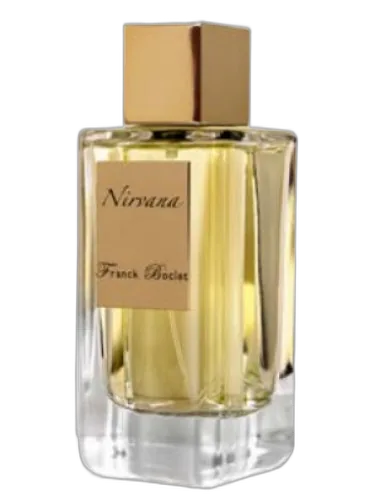
Franck Boclet
Nirvana Franck Boclet
Shared top notes: orange

Coty
L'origan Coty
Shared top notes: amber, sandalwood
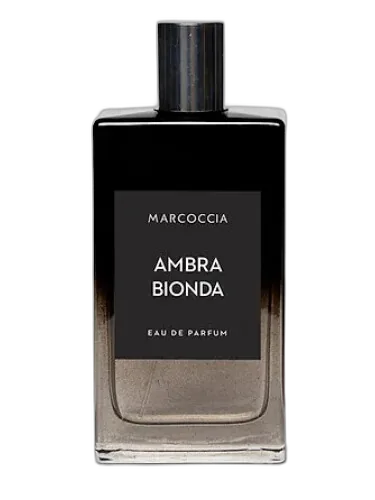
Marcoccia
Ambra Bionda Marcoccia
Shared top notes: amber

Librery Parfum
Mango Wave Librery Parfum
Shared top notes: mango, orange, saffron

V Canto
Temptatio V Canto
Shared top notes: amber, iris, patchouli