


Burnt Remedy Broken Anatomy Perfumes
At a glance
Is Burnt Remedy Broken Anatomy Perfumes worth trying?
Burnt Remedy by Broken Anatomy Perfumes is a fragrance for women and men.
- Best match
- Evening wear in Fall
- Performance feel
- Very Good longevity with Strong sillage
- Signature profile
- woody, green, smoky with Hay, Propolis, Cashmere Wood
The first impression
Burnt Remedy by Broken Anatomy Perfumes is a fragrance for women and men. Burnt Remedy was launched in 2020. The nose behind this fragrance is Ryan Handis.
What shapes the scent
The perfumer behind it

Ryan Handis
Ryan Handis is the founder and perfumer behind Broken Anatomy Perfumes. His creations often explore abstract concepts through scent, as seen in Brain Dance and Chasing Memories. Each fragrance in his catalog aims to evoke personal and emotional experiences. His work is known for its artistic and introspective approach.
Notes pyramid
All Notes
Complete scent profile
 Hay
Hay
 Propolis
 Cashmere Wood
 Smoke
Smoke
 Vetiver
 Tobacco
 Dark Chocolate
The mood it creates
The Alchemist Archetype: Portrait of Burnt Remedy Broken Anatomy Perfumes
Essence
The person who gravitates toward Burnt Remedy by Broken Anatomy Perfumes is an Alchemist-a seeker of transformation, drawn to the interplay of destruction and renewal. This fragrance, with its smoky, medicinal, and resinous layers, speaks to someone who finds beauty in the process of burning away the old to reveal something raw and potent beneath. The Alchemist does not fear decay; they court it, knowing that within the charred remnants lies the possibility of rebirth.
This archetype thrives on paradox: they are both healer and provocateur, drawn to the sacred and the profane in equal measure. Their life is an experiment, a continuous distillation of experience into wisdom. Yet, like all alchemists, they risk becoming lost in their own labyrinth-obsessed with transmutation, forgetting that some things must simply be lived, not dissected.
Relationships
Their relationships are intense, often polarized between deep loyalty and sudden detachment. They do not engage in superficial connections; every bond must have weight, friction, significance. They attract those who crave transformation-wounded souls, seekers, artists-but they also repel those who prefer stability.
Romantically, they are drawn to partners who mirror their own complexity: someone who can withstand their storms but also challenge their dogmas. Their love is not gentle; it is a slow burn, sometimes suffocating, sometimes illuminating. They struggle with vulnerability, preferring to intellectualize emotion rather than surrender to it. Their shadow here is a tendency to treat people as experiments-objects of fascination rather than equals.
Shadow
For all their insight, the Alchemist is not immune to self-deception. Their greatest flaw is hubris-the belief that they alone can transmute base experiences into gold. They may become lost in their own mythos, mistaking obsession for enlightenment. When unbalanced, they grow cold, detached, even cruel-burning bridges not out of necessity, but out of a perverse need to prove their own resilience.
They may also fall into escapism, using their intellectual or aesthetic pursuits as a way to avoid confronting unresolved wounds. The very smoke they love can become a veil, obscuring the parts of themselves they refuse to face.
Conclusion
Their tastes are unconventional, favoring the austere over the ornamental, the enigmatic over the obvious. They might be drawn to minimalist architecture with exposed brick, Japanese wabi-sabi aesthetics, or the stark beauty of industrial decay. Their wardrobe leans toward structured yet weathered textures-heavy wool, stiff leather, linen worn soft with time. They prefer muted tones, but with a single striking detail: a slash of deep crimson, a frayed edge, a piece of antique jewelry with an obscure history.
Philosophically, they are drawn to thinkers who embrace contradiction-Nietzsche’s amor fati, Jung’s shadow work, Bataille’s theories of excess. They believe in the necessity of suffering as a crucible for growth, yet they are not masochists; they seek meaning in the burn, not the pain itself. Their values revolve around authenticity, but not in the simplistic sense of "being oneself"-rather, in the relentless pursuit of uncovering deeper strata of truth, even when it unsettles.
If you like this, try these
Fragrances with a comparable profile - shared accords, notes, and character.
Soivohle
Tobacco Stick Soivohle
Shared top notes: hay, tobacco, vetiver

Aftelier
Curious Aftelier
Shared top notes: hay, smoke, tobacco
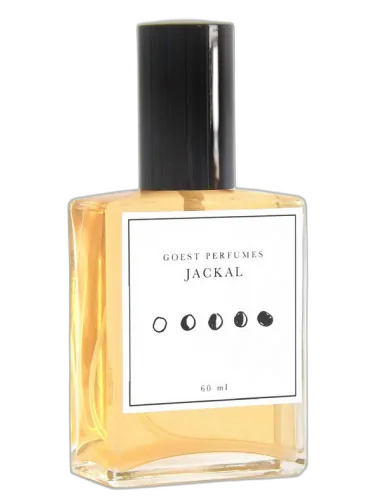
Goest
Jackal Goest
Shared top notes: smoke, tobacco
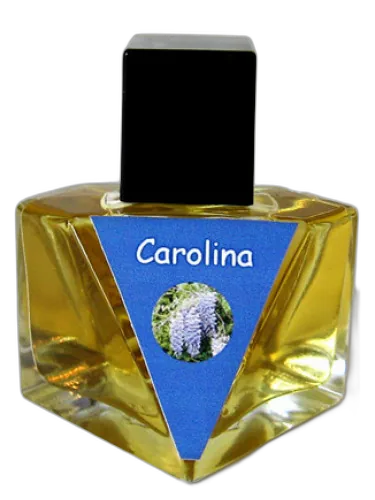
Olympic Orchids Artisan Perfumes
Carolina Olympic Orchids Artisan Perfumes
Shared top notes: hay, tobacco

Slumberhouse
Mur Slumberhouse
Shared top notes: hay, vetiver